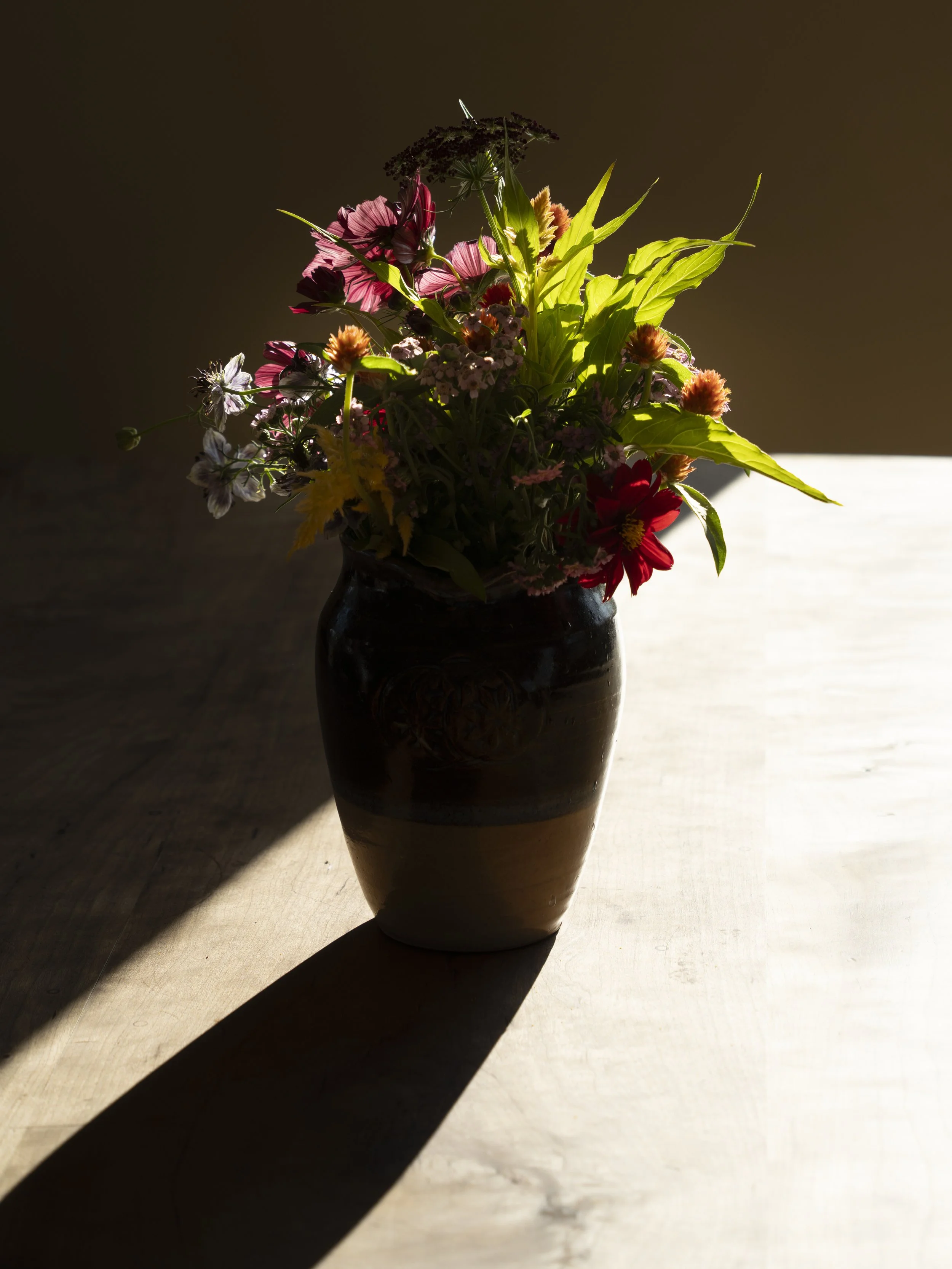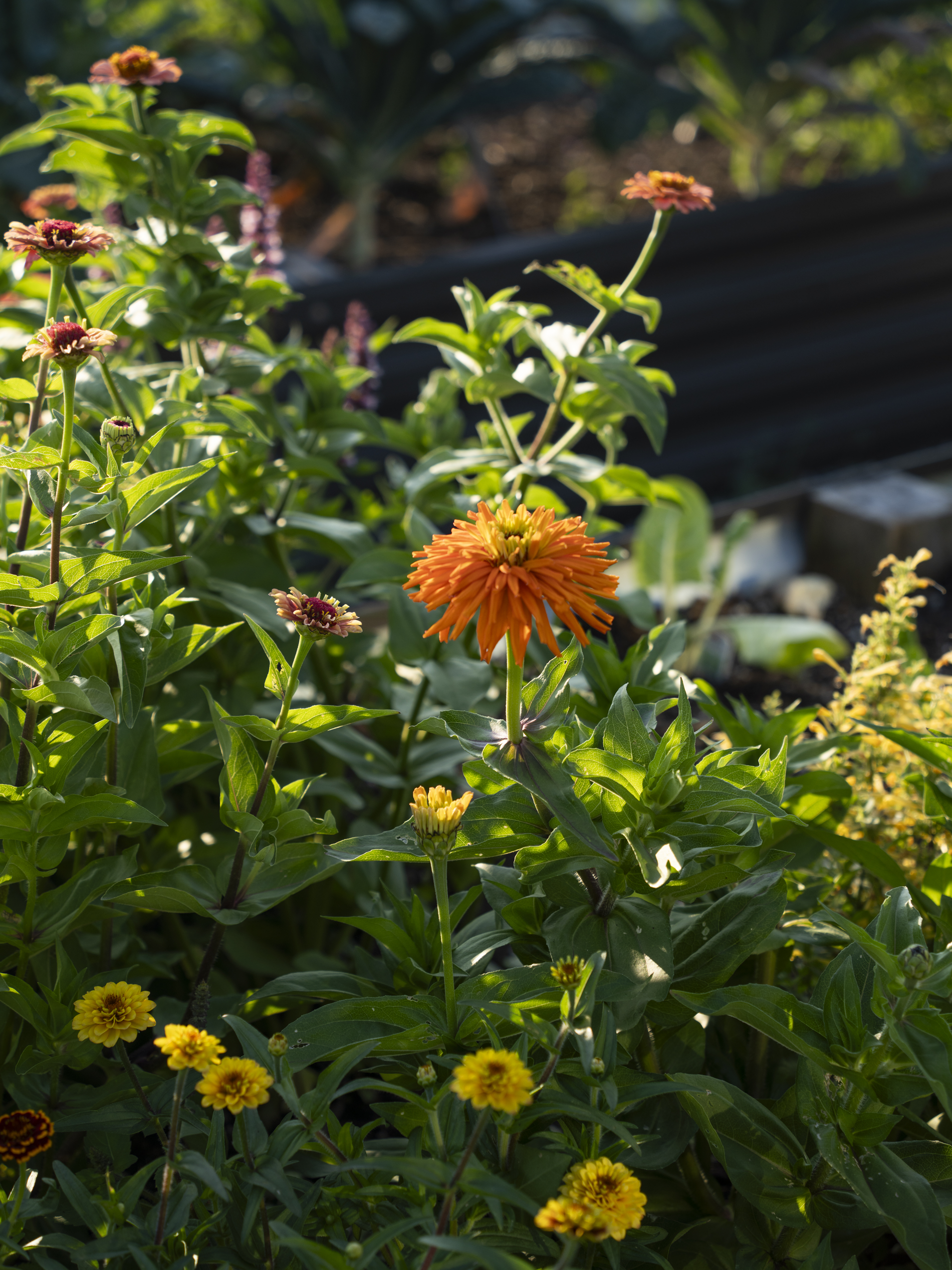
Mid to late summer is a busy time for the cut flower gardener. Many cut flower garden staples are now at their peak bloom and ready for harvest, or just about to pop. All the work you put into planting zinnias, cosmos, and sunflowers earlier in the season means now you get to enjoy bringing them inside or gifting them to others! Use these harvest tips to help make the most of your bouquets:
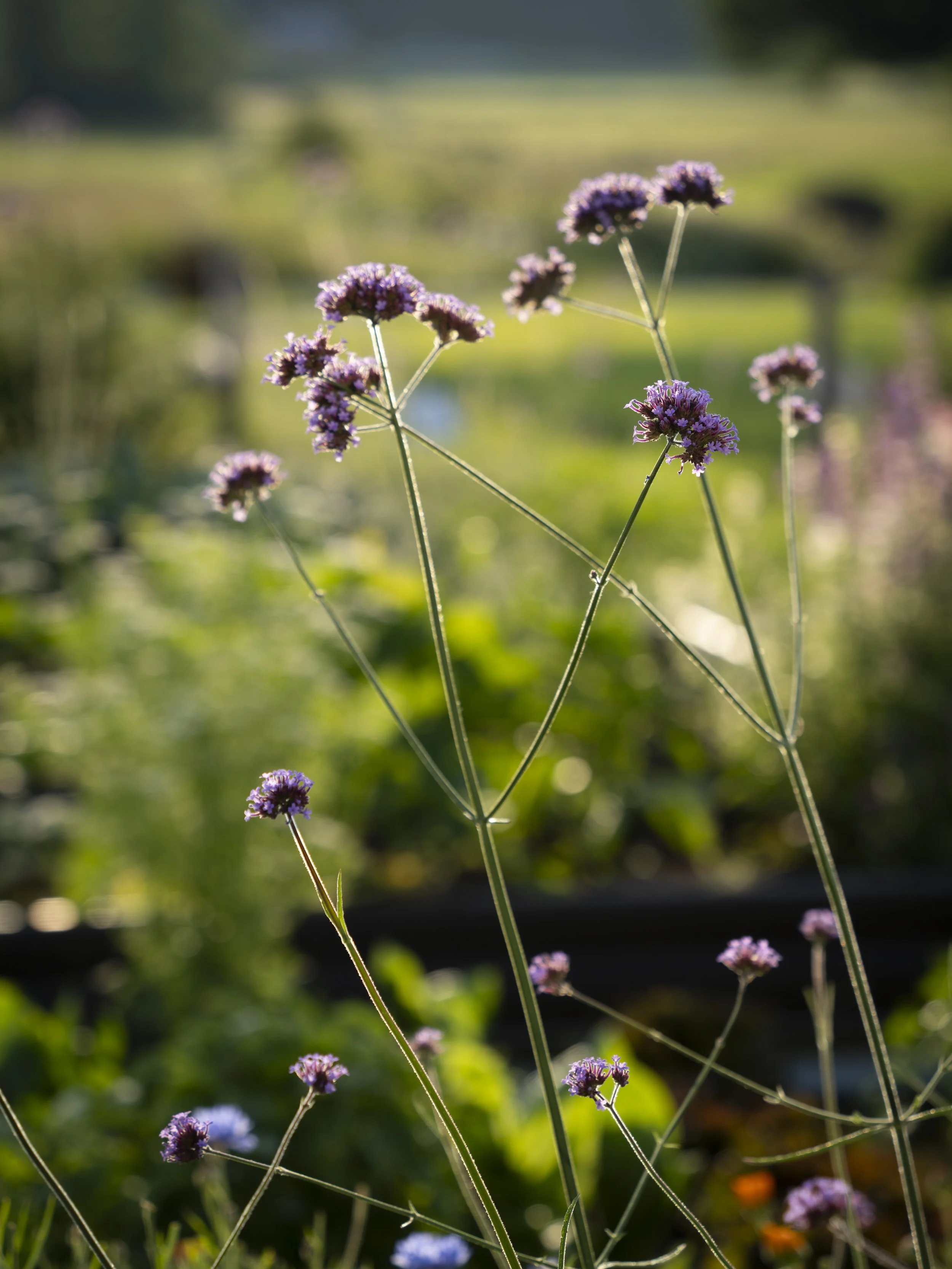
How do you know when a bloom is ready for harvest? Most flowers are at their best when they’re at the stage just before their petals fully open. They’ll gradually open more in the vase. One resource I like to use for specifics on when to harvest each flower is Johnny’s Seed catalog (link: www.johnnyseeds.com)
For most bouquets, you want to cut a length of stem about elbow length. Reach down and hold the stem so that the bloom sits at about the elbow, and use sharp snips or pruners to cleanly cut just below your fingers. Cutting at an angle allows for more surface area for the stem to absorb water in the vase, and also helps prevent a water “seal” that can happen if a flat stem sits flush with the bottom of the vase. Longer stems give you enough length to work with while arranging your bouquet, and you can always cut them shorter to fit their container.
For the longest vase life, harvest in the morning or the evening into a container of cool, clean water. This helps the flowers stay hydrated and prevents pre-mature wilting.
Similar to dead-heading, harvesting flowers can encourage another flush of blooms. Zinnias, cosmos, dahlias, snapdragons and others will produce more branches and flowers when they’re regularly harvested. Other species, like most types of sunflowers, are single-stem flowers that put their energy into producing one large bloom and will not regrow.
Strip each stem of leaves to prevent crowding. For many flowers it’s as easy as sliding your fingers from the top of the stem to the bottom in one motion, stripping the leaves downward. You can also experiment with leaving a little foliage at the top of the stem for some added interest in the bouquet, just avoid any leaves sitting in water since wet leaves will eventually rot.
Do you have too many flowers ready all at once? Some flowers preserve well by pressing the flower heads or petals between sheets of paper, or hanging the stems in bundles to dry. If you’re already maxed out on fresh bouquets, you can preserve your flowers now and use them for making bouquets and crafts into the winter. Smaller flowers and individual petals are best for pressing, like cosmos, violas, or the individual flowers of hydrangea clusters. Flowers that dry well are ones that are naturally low moisture or have tougher structures, like gomphrena, lavender, celosia, and strawflower. Drying or pressing your flowers can lead to surprising results like changes in texture or deepening colors.
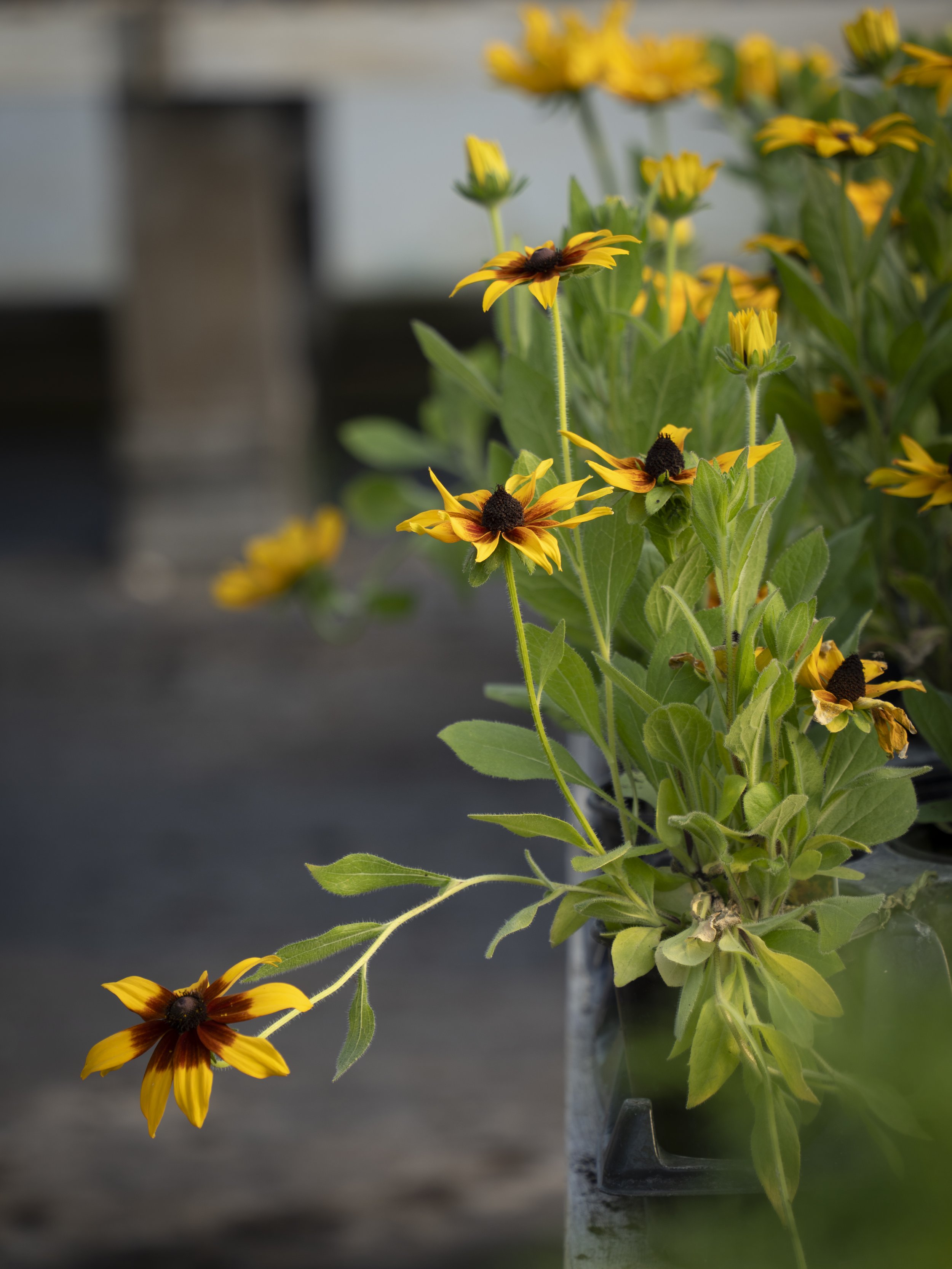
Arranging your bouquet
Florists arrange bouquets following a “recipe”, such as 3 dahlia stems, to 5 zinnias, 3 yarrow, and 3 sprigs of basil. Generally a bouquet is made up of components from these three categories: “focal flowers,” your largest or boldest centerpiece flowers, “secondary” flowers that add in some complementary colors and textures, and “filler” or greenery to add more structure, movement, or even an aromatic component. Following those guidelines when arranging your bouquet will help create something balanced and harmonious, but you can choose to arrange them however you like!
The technical process of building a bouquet can take some practice. Begin by holding your focal flower in one hand, then add the next stem by feeding it into your hand and crossing the first stem in an “x” shape. The secret to making a balanced, rounded bouquet is to then hold the stems where they cross, but rotate the bundle by a quarter turn before adding the next stem. Then alternate between your focal, support, and filler stems, rotating with each addition. The less you handle your stems, the longer the flowers will last, so don’t fuss too much about the perfect arrangement. A slightly awkward bouquet will look better than one with bent stems or bruised petals from too much handling.
This post is written by Eva Anders, Retail Manager at Red Wagon Plants