
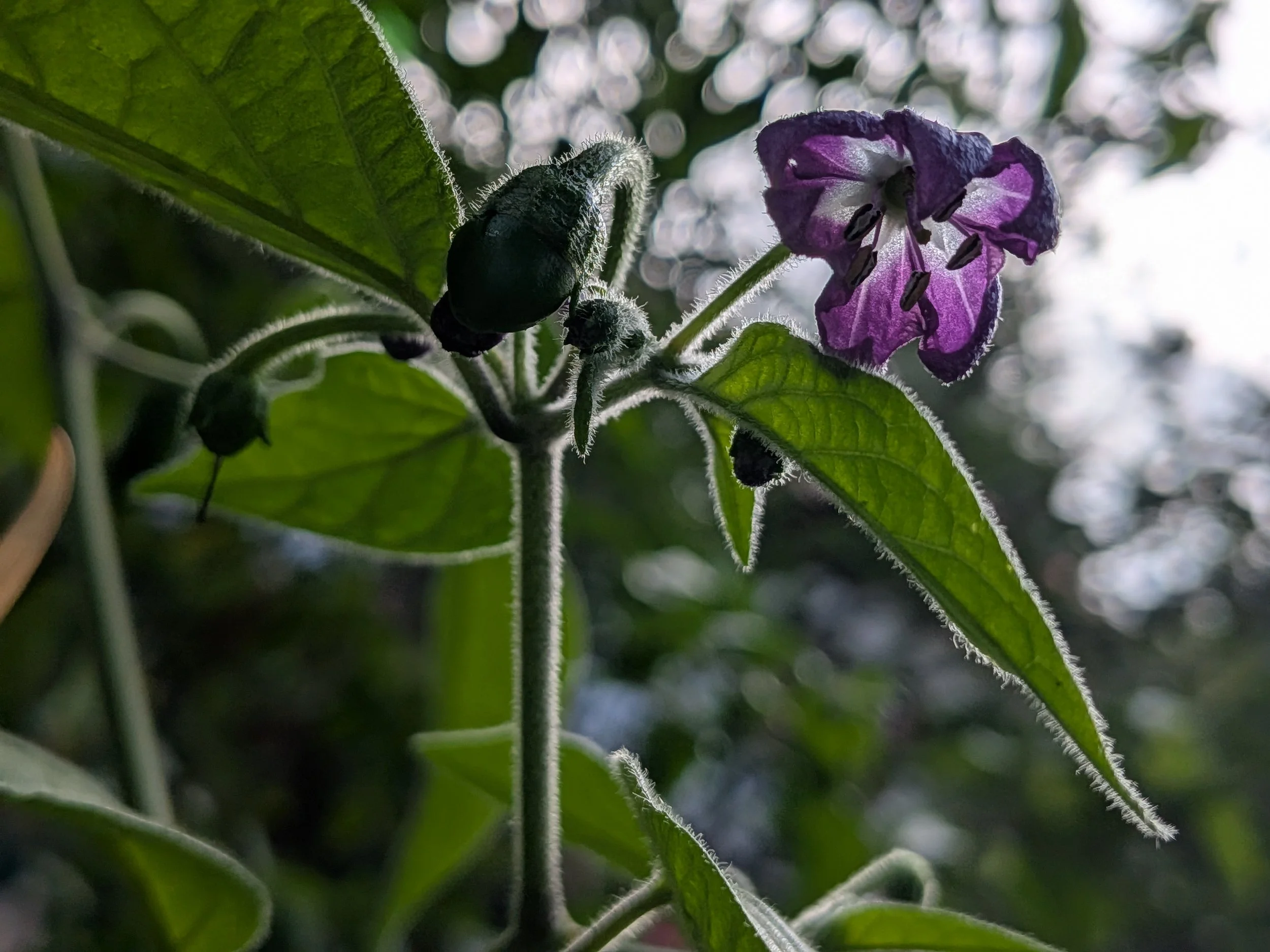
The ulupica in my yard, in bloom and fruiting
When I arrived in Cochabamba last August (early spring in Bolivia), my gardenmate Tatiana excitedly introduced me to a dry, leggy, woody weed, towering six feet tall in the middle of our garden bed. She assured me that, come the rainy season, we would be rich in tiny, spicy ulupica peppers. And so we were: as the months went by, small green pepper leaves were followed by beautiful dark purple flowers, which swelled into glossy, round berries with a serious sting for the palate. Tatiana taught me to smash one on the bottom of my bowl with the back of my spoon, and serve soup over it for an intensely spicy meal.
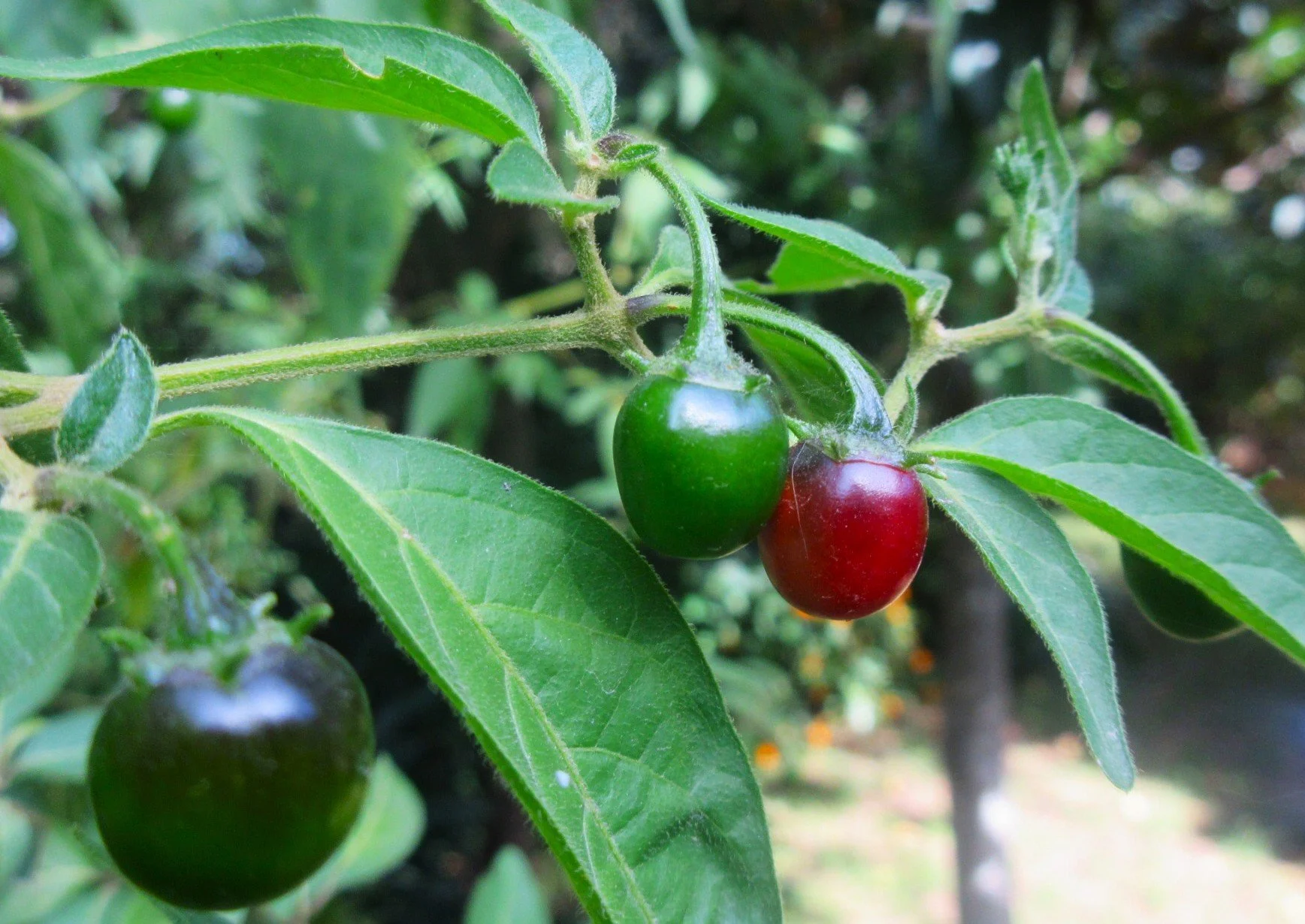
Our ulupicas turning red (aka even hotter!)
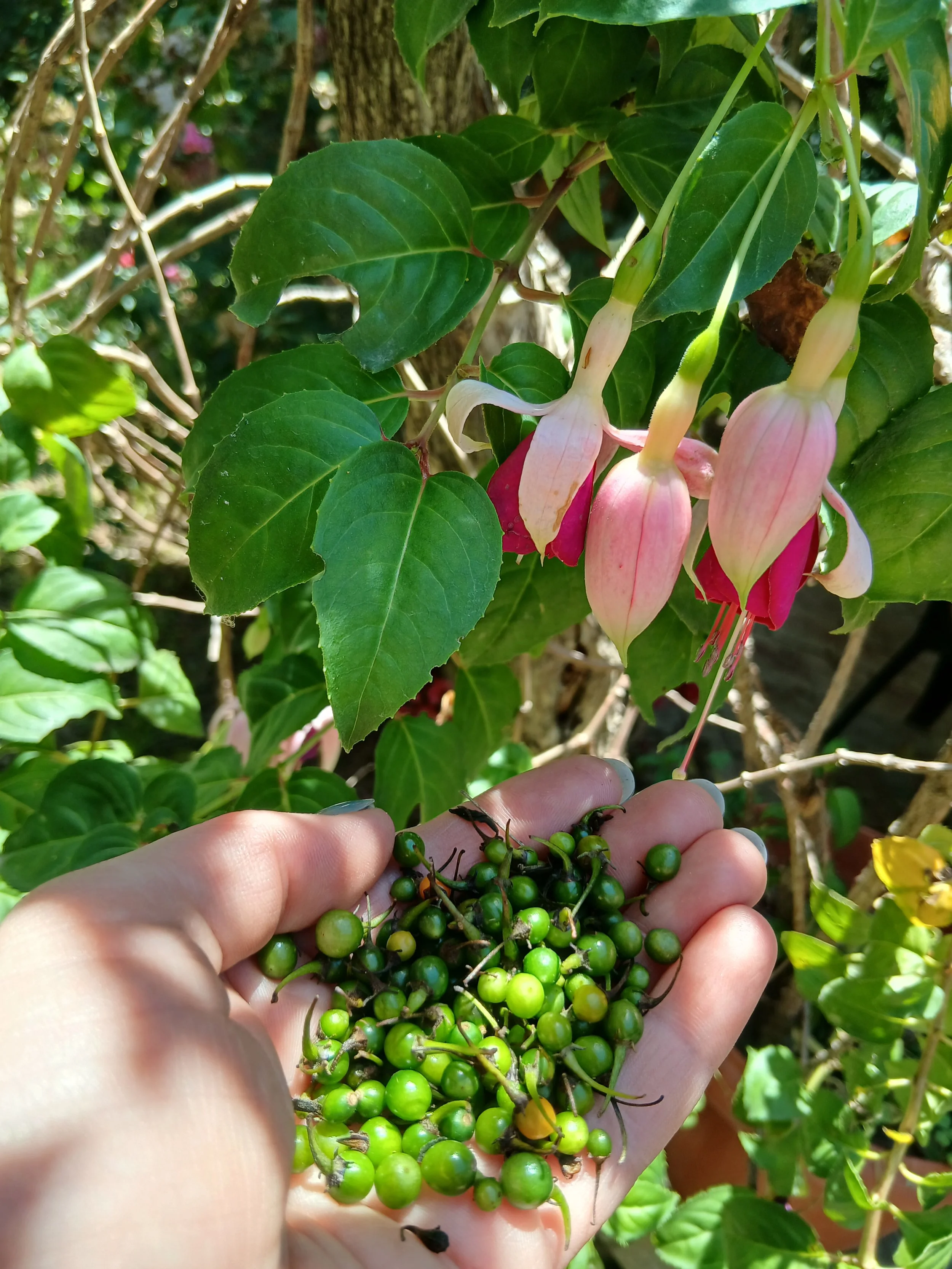
Months later, I saw a woman selling bunches of herbs and vegetables from a cloth on the sidewalk. There was also a small pile of pale green, peppercorn-sized berries, which she also called ulupicas, her side of the conversation translated from Quechua by her neighboring vendor. They both laughed wickedly when, after purchase, I comically pretended to toss my handful into my mouth. Those tiny ulupicas also proved to be very potent. It seems to me that, if served as pictured, this recipe for llama steak with ulupica sauce would be overpoweringly hot. Maybe they are mainly for show. Most estimates give ulupicas a 30,000 on the Scoville scale.
I am used to seeing hot peppers in Bolivia, called locotos, ajís, cumbarí, kituchos or uchus in the indigenous languages of Quechua and Aymara. Decades ago, I remember a housemate who used to alternate bites of her meal with bites from a fresh yellow, green or red locoto pepper, in absence of the ubiquitous Bolivian salsa called llajua. Llajua/llajwa/llasjua/yasgua/llasgua (indigenous languages haven’t all come to standardized spellings in Spanish) is made with locotos (though I have since learned, also with ulupicas or the distinctively shaped yellow ajís), an optional tomato (or tree tomato), and beloved herbs quirquiña (sold at Red Wagon as pápalo) and wacataya. Llajua is a required condiment at Bolivian meals, and is usually made in a blender these days, but traditionally made on a flat stone mortar, called a batan, mashed with a round stone pestle. In main dishes, dried red and distinctively shaped yellow ajís (chiles) make rich sauces for poultry, meat, potatoes and pasta. Fideos uchu, a popular Thursday lunch dish in Cochabamba, for which residents are willing to travel, serves several kinds of meat over noodles in a spicy broth.
But I had never seen, or even heard of, the ulupica before I met the one in my yard. I became even more enamored when light research revealed that botanists consider these wild-growing peppers, indigenous to the very valley I’m living in, to hold the genetic key to all the hot peppers of the world. In fact, Bolivia is still home to the greatest diversity of wild-growing hot peppers. Most varieties of wild peppers are not consumed by humans, but the ulupicas are, and have been for some time: archeologists have found hot peppers in Andean cooking vessels used over 6,000 years ago. Today, Bolivians continue to use Capsicum species in traditional medicine for colds, pain, digestion and inflammation.
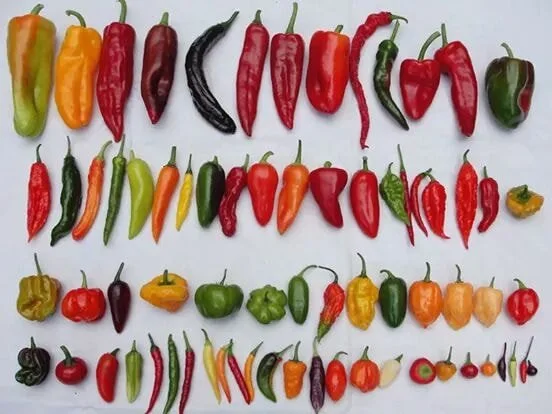
Some of the hot peppers grown in Bolivia
Ulupicas grow most happily in Andean valleys of 6,500 - 8,000 ft in altitude. Like many wild species, they have a natural resistance to sicknesses afflicting domesticated crops, and in this case, to the Tobacco Mosaic Virus (an infectious plant virus that primarily attacks Solanaceae crops like tomatoes, peppers, and tobacco). Plant breeders seeking to genetically fortify more contemporary Solanaceae species find this genetic trait of ulupicas very compelling.
For the taxonomically inclined, I found that ulupicas were very likely documented by non-Andean botanists beginning with the 1911 collection of German botanist Otto Buchtien (whose impressive herbarium of 45,600 Bolivian and Chilean species is now in the US Museum of Natural History), and then catalogued in 1953 by American Charles Bixler Heiser. Later botanists looking to identify the oldest species of hot peppers in the world, including American botanist W. Hardy Eshbaugh in the 1970’s, and more recently Bolivian botanists Rita del Solar y Lupe Andrade, have concluded that the southern valleys of Chuquisaca and Cochabamba, Bolivia are the origins of the genus Capsicum. Furthermore, many botanists agree that ulupica peppers belong to the exact ancestral group of wild Capsicum from which all domesticated hot and sweet peppers evolved and are the closest living relatives to an original progenitor pepper. In 2022, a national law declared 30 species of native hot peppers to be ‘immaterial cultural patrimony of Bolivia.’
As is often the case, I found that the common name ‘ulupica’ actually comprehends a range of Capsicum species, including but not limited to the two I’ve seen: the much taller plant, C. cardenasii, which which grew the plump 7-9 cm berries in my garden, and the smaller C. eximium, which produces the miniscule peppercorn-sized fruits I bought at the market… I think. A lovely publication of the Bolivian National Museum of Ethnography and Folklore, ‘El Uchu en padilla,’ lists the common names of nine different varieties of ulupica, all currently classified under the same scientific name: Capsicum eximium Hunz.
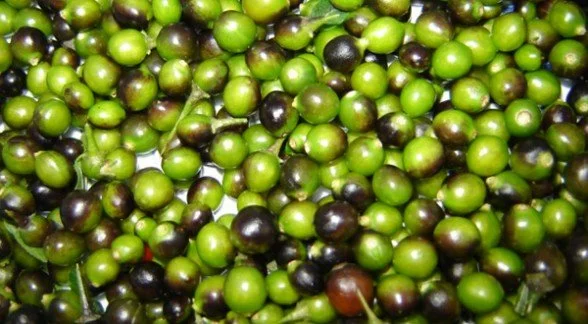
Bolivia’s ulupicas, grandmothers of peppers, are a quiet presence on the culinary scene, given that they grow mainly in the wild. Products made with foraged peppers are few and far between because the harvest is so seasonal. In a market in Cochabamba, where they are plentiful, a vendor might sell 4 pounds of ulupica per month. Some Bolivians might not come to know the ulupica in its vegetable state, but rather only as an idiomatic term for a person of small stature but irascible character.
It’s now mid- May. As Vermonters are now considering whether to plant their peppers or wait for warmer soil, the ulupica in my garden in the southern hemisphere is dropping its leaves and going dormant for the cool winter weather. I myself am starting to prepare to travel back to Vermont in early June, for my third summer in one year. I can imagine the tables of peppers at Red Wagon, having made their ways to us from across the globe, now labeled with their colorful tags, coveted by their dedicated pepper-growing fans. When I consider all of those wonderfully different pepper descendants, their range of sizes, rainbow of colors and diversity of cultural and culinary traditions, I’m so very honored to have had the chance to meet my ulupica in her ancestral home.
***
Do you have pepper stories? Do you have more information about ulupicas, Capsicum and botanical pepper origins? I would love to hear from you at april (at) redwagonplants.com.