
Epistle from April: On friendliness in the Bolivian marketplace
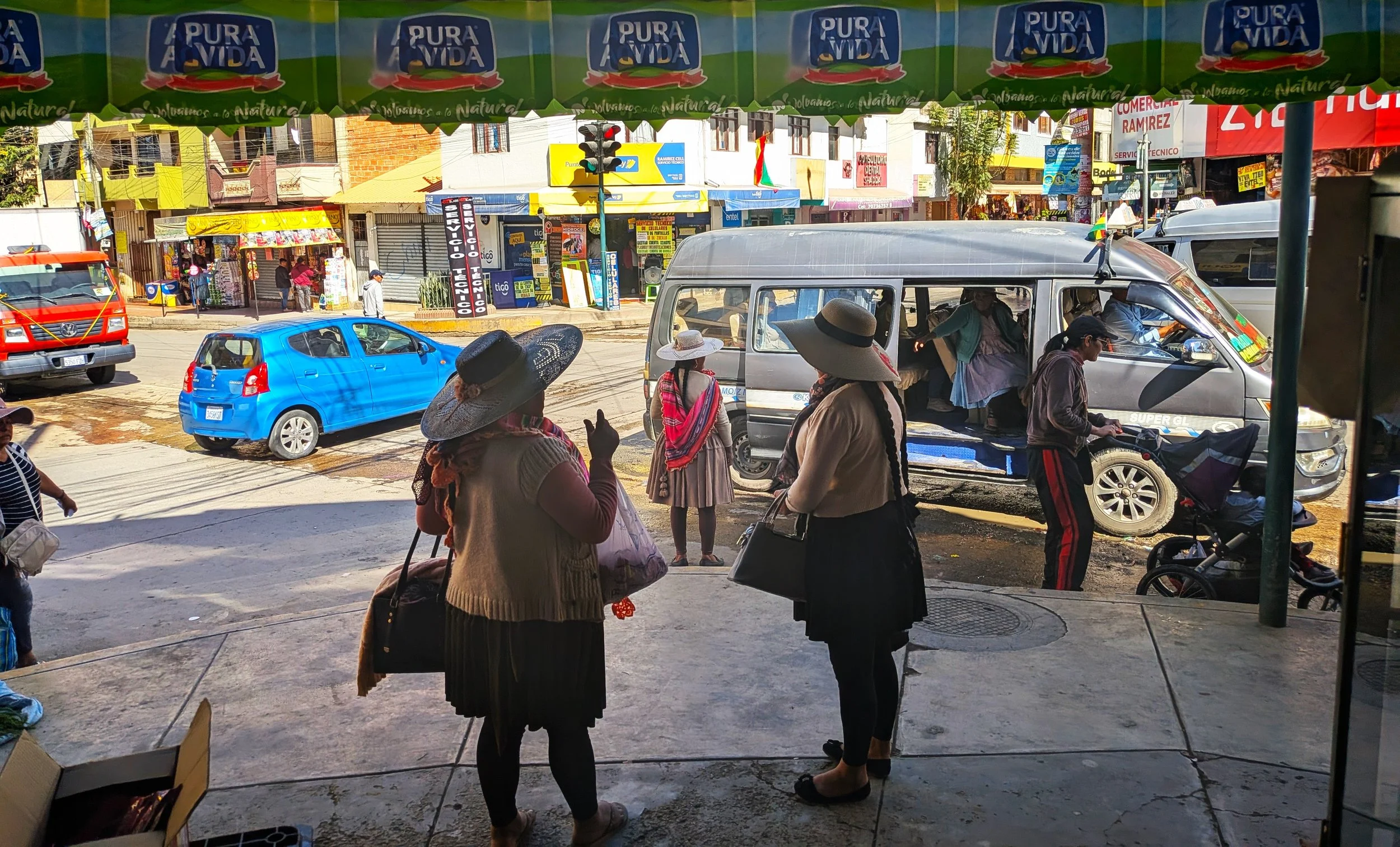
The epicenter of Tiquipaya, Bolivia, from the stoop of our most frequented market.
Last month I stopped with a friend at her local corner store in Cruce Taquiña, on the edge of the city of Cochabamba, Bolivia, and she congratulated the owners on their recent locally viral tiktok video promoting their housemade bizcochos (traditional easter breads). In this delightful piece of owner-made advertising, the husband proudly proclaims that they will be selling easter breads “in all flavors!” His wife smacks him in mock outrage, saying she is only making one. He turns cheerily to the camera and retracts: “Oh no, caseritos [loyal customers], I was mistaken!” They finish together, “There is just one flavor!” Obviously, I bought my bizcochos from them.
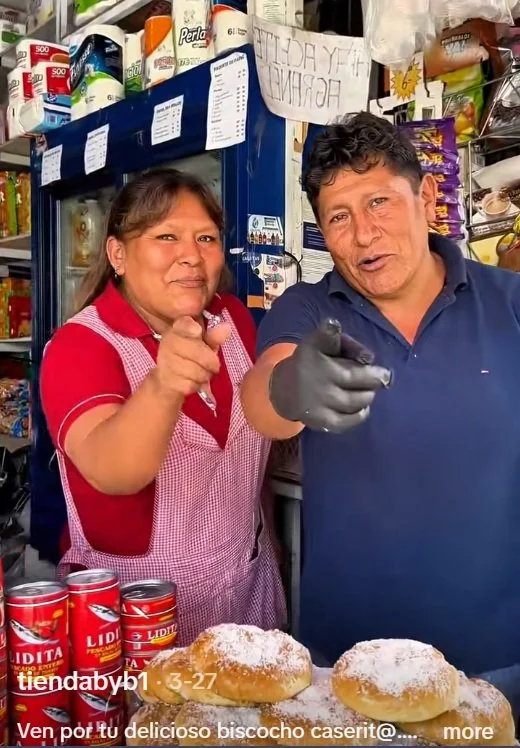
The inimitable caseros of the B&B Market.
In Spanish, ‘caserito’ technically means ‘householder,’ or perhaps ‘homebody,’ with the addition of an endearing diminutive suffix ‘ito.’ But, as a language nerd, the Andean use of the word ‘casero’ is one of my favorite parts of participating in the local economy. Here, “loyal customer” is the primary definition of ‘casero’ and all its variants: casero(s), caserito(s), casera(s), caserita(s), and the surprisingly non-gendered case(s) for short. However, the best part is that it also means “my favorite _____ vendor” - and thus the person who I tend to buy eggs from is ‘mi casera de huevo,’ but I am equally hers.
Since working in Red Wagon’s plant shop, after a long break from retail work, I’ve become much more aware of the potential beauty to be found in relationships between vendors and customers. Experiencing the nuances of that relationship in my town of Tiquipaya in Bolivia this year has added another layer to my appreciation for the dynamic. Beyond the mere functionality of buying and selling, street commerce here is defined by the pleasures of the lower-case ‘m’ marketplace, where transactions require and can create an intimacy and appreciation between people extending beyond a simple monetary exchange.
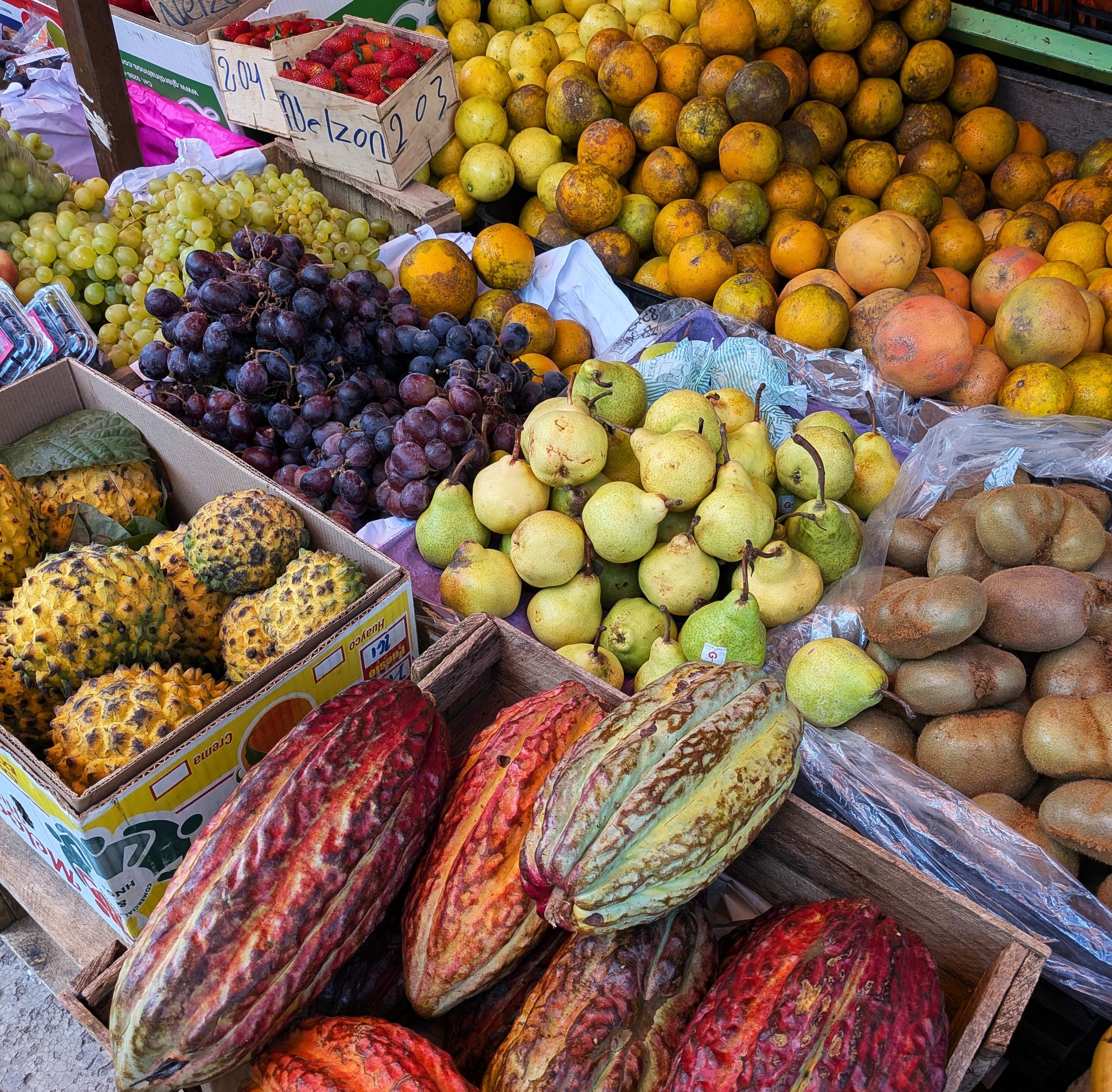
Cacao and chirimoya (the yellow slimy one that I don’t like as much as the firm, velvety green one) for sale at the stand of the casera who is so good at flattering me.
The word ‘casero,' a respectful title mutually apt for both buyer and seller, creates a name for their specific relationship and intimates a potential space for respect, loyalty, appreciation, affection and a responsibility to one another within that relationship. Regardless of past purchases, I can address any Bolivian vendor politely as ‘Case,’ and conversely they can address me as the same. Vendors can speak to unknown clients as ‘mi case,’ proposing a possible loyalty or familiarity that does not (yet) exist. After buying some vegetables this morning, the casera encouraged me to return: “Ven, no más, case!” [Come by anytime, Custi!]. Behind me, an older woman sang quietly to herself “Case, case, case!” I looked back at her and we smiled to one another.
My favorite fruit vendor (though not always my casera de frutas because her goods are sometimes wildly more expensive) has landed my business many times simply because, when I walk by her stall, she sends the most winning looks from under her intricately painted straw hat, calling to me “Buen día, mi caserita linda, hermosa! ¿Qué va a llevar hoy día? [Good morning my beautiful, lovely little customer! What are you going to buy today?]. I am a sucker for her style.
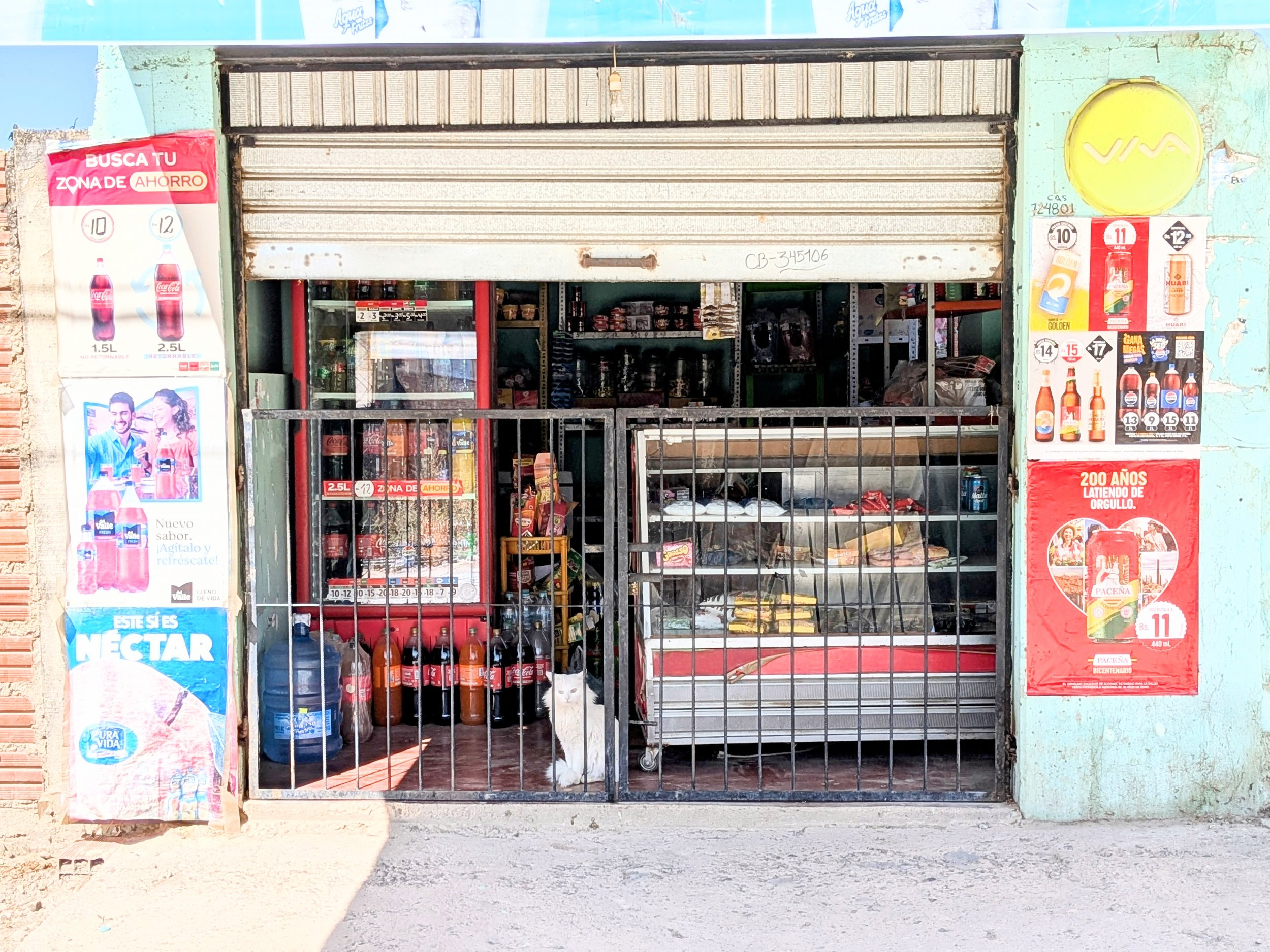
Many of my neighbors (including this one) have stores in the front of the first floor of their houses.
When there are people to enjoy buying from, and we have time to enjoy shopping, there’s always the opportunity to enjoy a meaningful human interaction between vendor and customer: a supra-monetary exchange between people who might not otherwise meet or mix socially. This can be a precious commodity in an age where people tend less to speak to or need each other in public. When I work as a casera in my own right, I love meeting new customers and greeting old ones, knowing who is going to be excited about what, seeing my middle school teachers and family friends, meeting caseros [customers] who are also my caseros [vendors] in other contexts.
The same friend who recently took me to her corner store for bizcochos also has a lovely mother, Rosita, in her 80’s, who always enjoyed her work in corner stores, and later being the proprietress of her own. Not only did she come to know everyone in the neighborhood, but she recounted a time when a local casera who was going through a hard time came often to stay with her in conversation. One day her casera was so distraught that Rosita invited her behind the counter and into the kitchen for lunch and a beer. Together they dubbed her store “La Tienda Radio Cocina” [The Radio Kitchen Store], in reference to call-in advice radio shows. Rosita was also able to give my historian partner an excellent account of local union leader Filemón Escóbar, including his favorite cigarette brand.
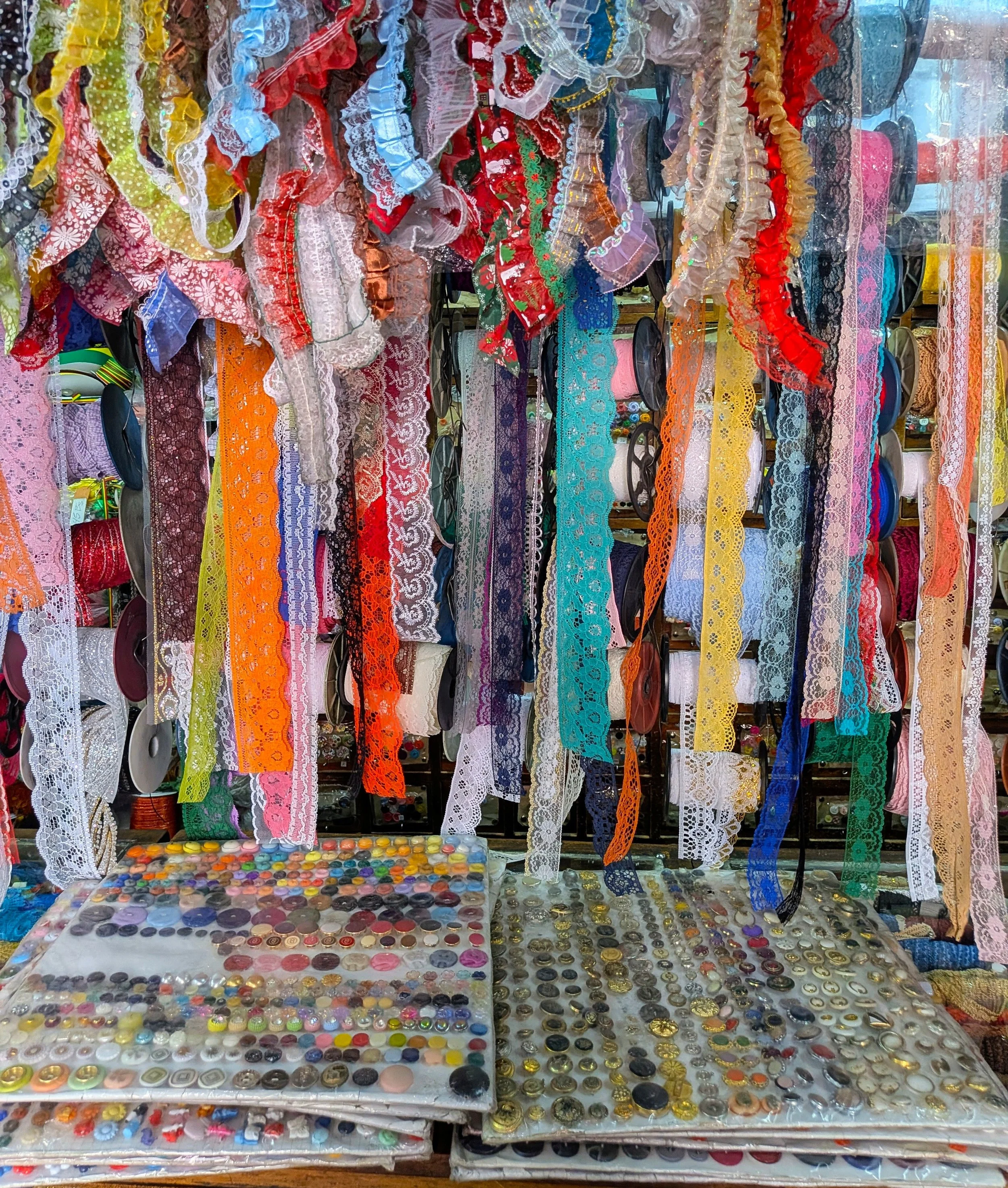
My favorite buttons and lace store.
Another appreciable aspect of the Andean marketplace, as experienced by me (though there are more theoretical essays written on the topic), is the delight of the yapa, a word in Quechua for “a little something extra” thrown in after a purchase, generally given to all customers, but especially those who know to ask for it. Yapas can be especially generous from your casera (favorite vendor), who might also reserve something in short supply if they know that you are likely to come for it and could be disappointed to find it gone. A yapa might come in the form of a small cucumber or apple (though understandably not always the prettiest ones), or an extra half-cup of rice or handful of new potatoes. One of my favorite yapas comes from the caseros of citrus juice, who have carts with mounted manual fruit peelers and squeezers, and from whom, after you drink half of your cup of juice, you can claim your right to a top-up with whatever remains in the recipient under the squeezer. ¿Y mi yapa, caserita?
Sometimes we purchase things according to pragmatics, and I can’t fault that. But I would argue that everything is more beautiful, tastier, more enjoyable, when it comes conjoined with its own story, its origin and subsequent procuration. Things with a tale of origin and/or their journey into our hands have an aura that confers a non-monetary value that can’t usually be enjoyed in goods procured from anonymous sources that appear in our lives anonymously. The often necessary convenience of having our purchases appear at our homes in boxes comes at the sacrifice of this aura, this yapa of meaning co-created in the friendly human exchange at the time of purchase.
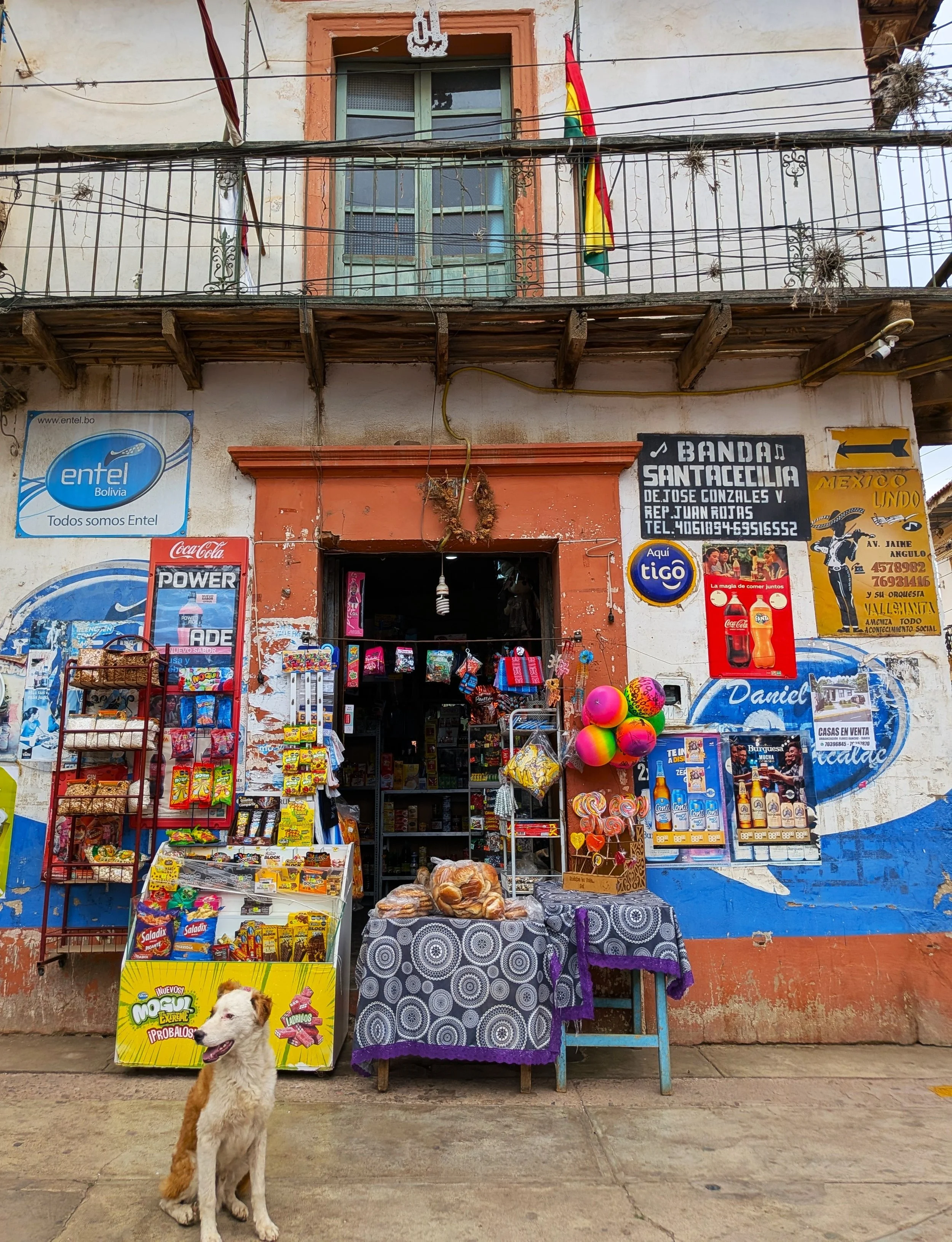
A general store in the nearby town of Tarata
On the other hand, I also enjoy being shown that for the Andean vendor, the customer is not always right. Vendors will often close their stores for a family member’s birthday party, or refuse to interact with customers because they are on the phone with a friend, or (though usually this is an unwilling family member forced to act as an employee) blithely state that they don’t have such and such an item when it is clearly visible on the shelf. Though this is usually less convenient for me as a customer, I get a thrill from witnessing the lack of subservience to the almighty dollar, and seeing small business owners and employees take full advantage of their autonomy in their own spaces, guiltlessly giving full priority to their personal lives, rather than sacrificing all to the unrealistic expectations of an automated, ever-available internet Marketplace.
Our bread caserita works in an unassuming bakery across from our kids’ morning bus stop, and their baguettes are our favorite in a country of seemingly endless bread varieties, each with the name of the town where it is made. This casera, however, is a young woman with an unbreakable poker face and no interest in pleasantries. She doesn’t care to show she recognizes me, or laugh at my jokes, let alone smile. Our housemate Fernando, who is now a baguette devotee as well, returned home one day, triumphant. “I made her smile!” he gloated. “It was more of a muscle spasm at one corner of her mouth, but I did it! …and then Tati punched me and said I always have to flirt with the caseras, but it’s not flirting - it’s just being friendly, polite, showing appreciation!” I have now redoubled my efforts to charm her myself, and met with similarly gratifying victory.
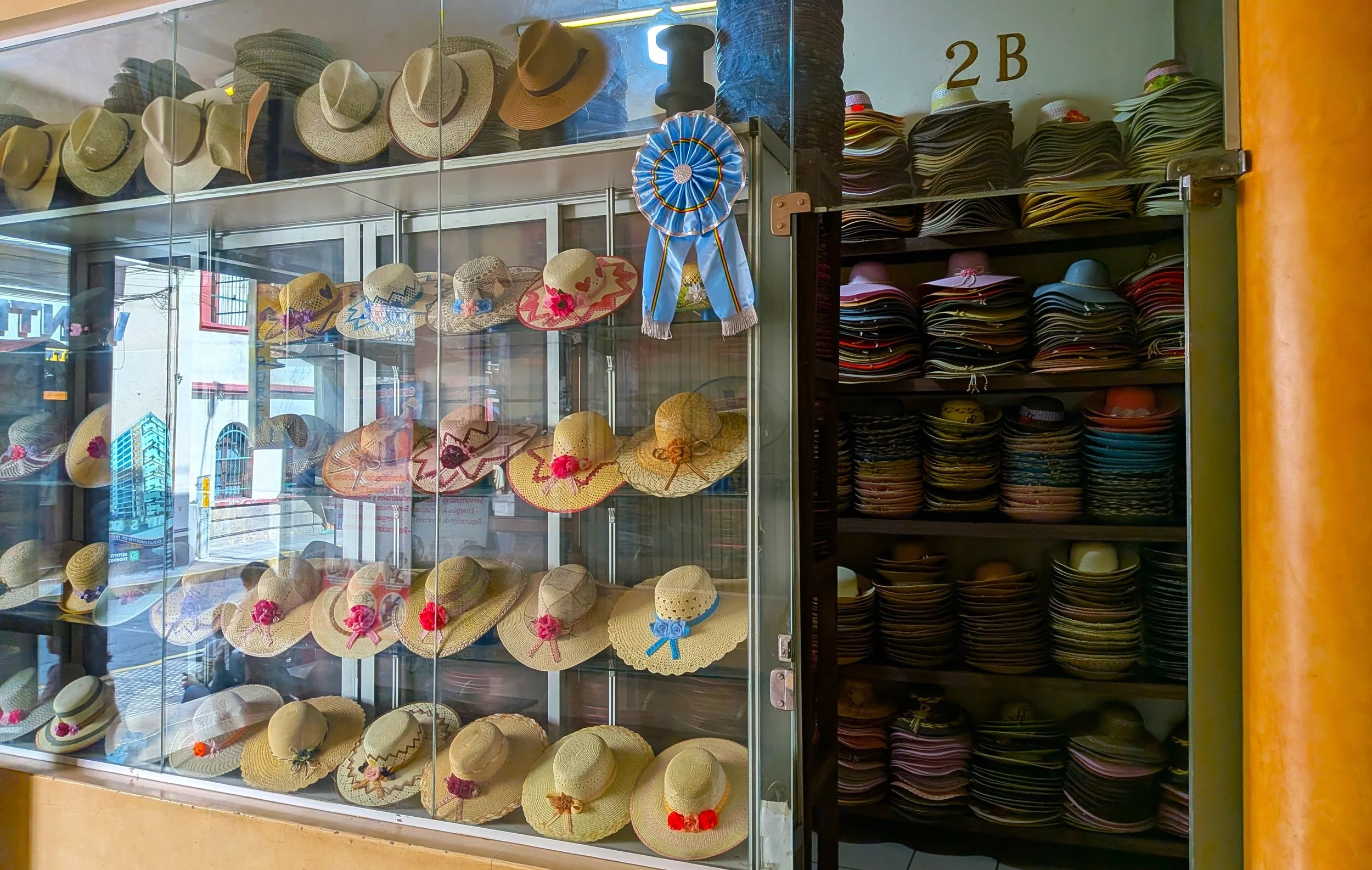
Cochabamban-style hats, for sale in the center of the city.
I feel the same sense of gratification as a vendor when I make a personal connection with a customer. Interactions that occur over a small purchase can allow for a greater display of friendliness than I might feel comfortable in showing a random stranger because both parties (buyer and seller) know our roles (though the vendor must stay, while the customer may leave!). The interaction already has a purpose (the transaction), and pleasantries are a low-stakes, optional adornment - just for the pleasure and fun of it. Or, taken a little farther, making connections in the marketplace can be a form of “Subversion Through Friendliness," a refusal to reduce our human interactions to only the functional and the monetary.
While at Red Wagon we certainly do our best to please our customers (and enjoy doing so!), I most enjoy working in the retail plant shop because it allows me, playing the most out-going version of myself, to meet and interact with a wide variety of the people in my community (and the special subset of plant-loving people, who are generally an excellent, not to say a superior, group). I like the beneficence of giving out our yapas during plant sales, and, when time allows, having longer and deeper conversations with customers. I love meeting and befriending my coworkers and watching community be created between employees and customers, and between customers themselves.
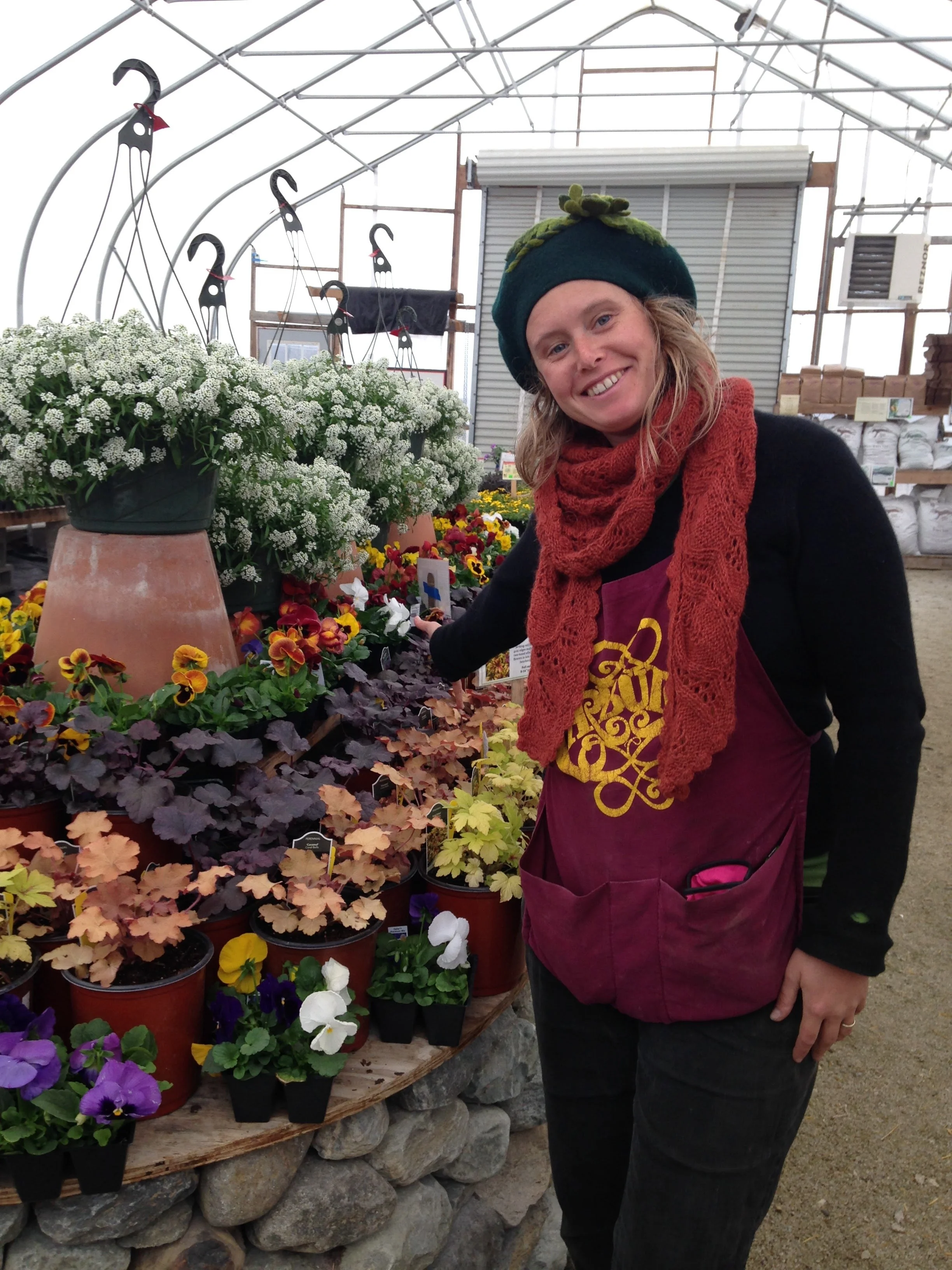
Me, April, at Red Wagon in 2015! Extra points if you can identify the apron (appropriated from my dad)
Red Wagon is a handmade business, created and maintained by humans, and supported by human customers, who can have names and personalities known to those of us behind the counter. In a time when there can be so much distance between the buyers and sellers of goods, and even community members in the same room, it is such a pleasure to participate in these interactions based on an appreciation for the miraculousness of the natural world. Thanks for having me (us) as your caseritas and caseritos de plántulas [plant starts], and for being caserit@s of ours.
***
Awww, did you read this all the way to the end? I’m so honored! If it made you think of something, let me know at april(at)redwagonplants.com