
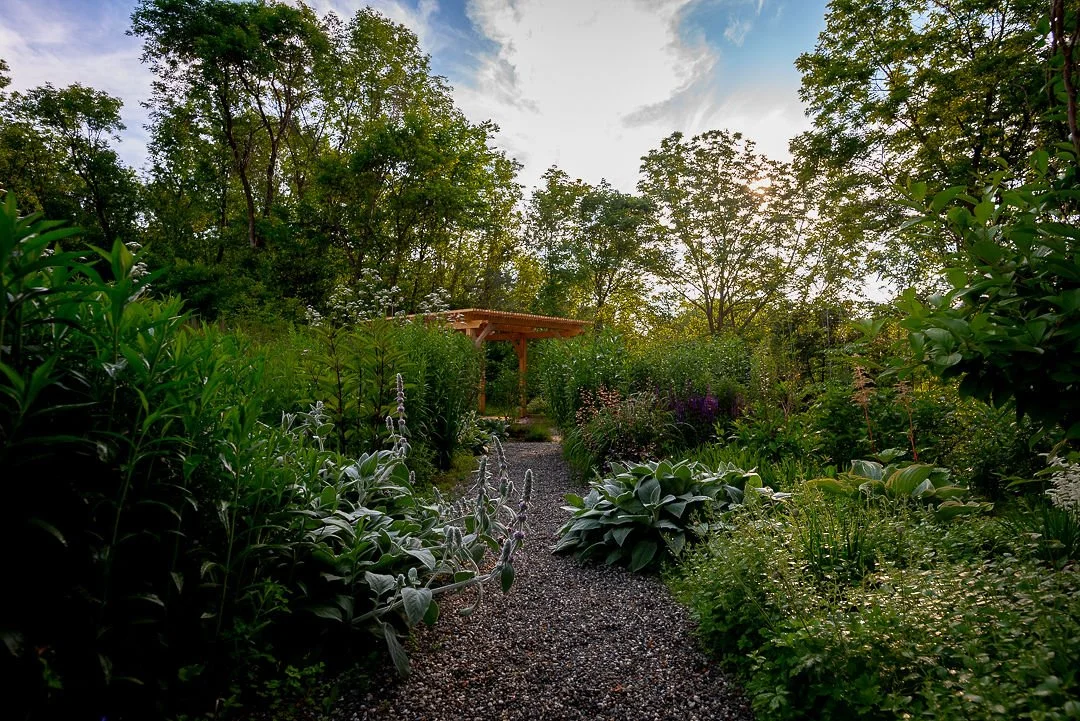
July is all about weeding, pruning, staking, and generally containing the jungle. Water all your new plantings daily or at least every few days, to help them get well-established. We are in jungle time, and weeds can grow remarkably fast, so staying on top of them as much as possible will help make sure that the plants you like are getting all the sun and water and nutrients available to them.
Now is definitely the time for staking perennials that fall over and, to feel extra fancy, take some notes for yourself that, next year, those floppy plants should be staked earlier (for self-awarded bonus points, even put it on the calendar). An alternative to staking leggy perennials, to consider for next year, is to prune them before mid-June - a technique the English called the ‘Chelsea Chop,’ because a good time for doing it is around the Chelsea Flower Show in late May.
This is an apt technique for plants with multiple stems with offshoots, and especially plants that tend to grow tall and leggy. By cutting them back in the late spring, you can encourage your perennials to be shorter, more sturdy, later blooming and even more floriferous. With a proper Chelsea Chop, they might not even need staking.
If you’re intrigued, check out this video from the Royal Horticultural Society on the Chelsea Chop, and even more information about how to do it here, and file these sources away for next May (we’ll try to remember to remind you, too).
Do you have an empty spot in the veggie garden? Maybe you harvested garlic this past week and you are wondering what to put in that place? In our Plant Shop, there are plenty of new generations of heat-tolerant lettuces and greens, a few summer squashes, sprouting broccoli, kale, mustards and chicories. Now is a great time to refresh your garden with a round of fresh vegetable plants for a fall crop, or to add to the color palette of your flower beds.
You could also give the bed a rest, and plant a cover crop. We have some buckwheat seed in the Plant Shop for just this purpose. It is a beautiful plant and pollinators love the flowers. Buckwheat grows in really thickly and smothers out other weeds. After it flowers, you just mow it or chop it down, and incorporate it into the soil. It will add lots of organic matter and give your soil a little boost for next year.