
By: Steven Colangeli
Thanks to Steve, who has lots of experience growing figs in Vermont, for writing this article for us!
Ficus carica is the scientific name for the common fig. It is in the mulberry family. The tree is native to Asia and the Middle East. Fig trees do not like temperatures much below 20 degrees F. and potted trees should not be exposed to temperatures below freezing. There are over 700 varieties of figs, many which can handle a wide range of temperatures. People all over New England as well Canada grow figs successfully. Many grow in containers but many also grow in the ground. The tree is known for its sweet fruit with many health benefits including many vitamins, minerals, and anti-oxidants.
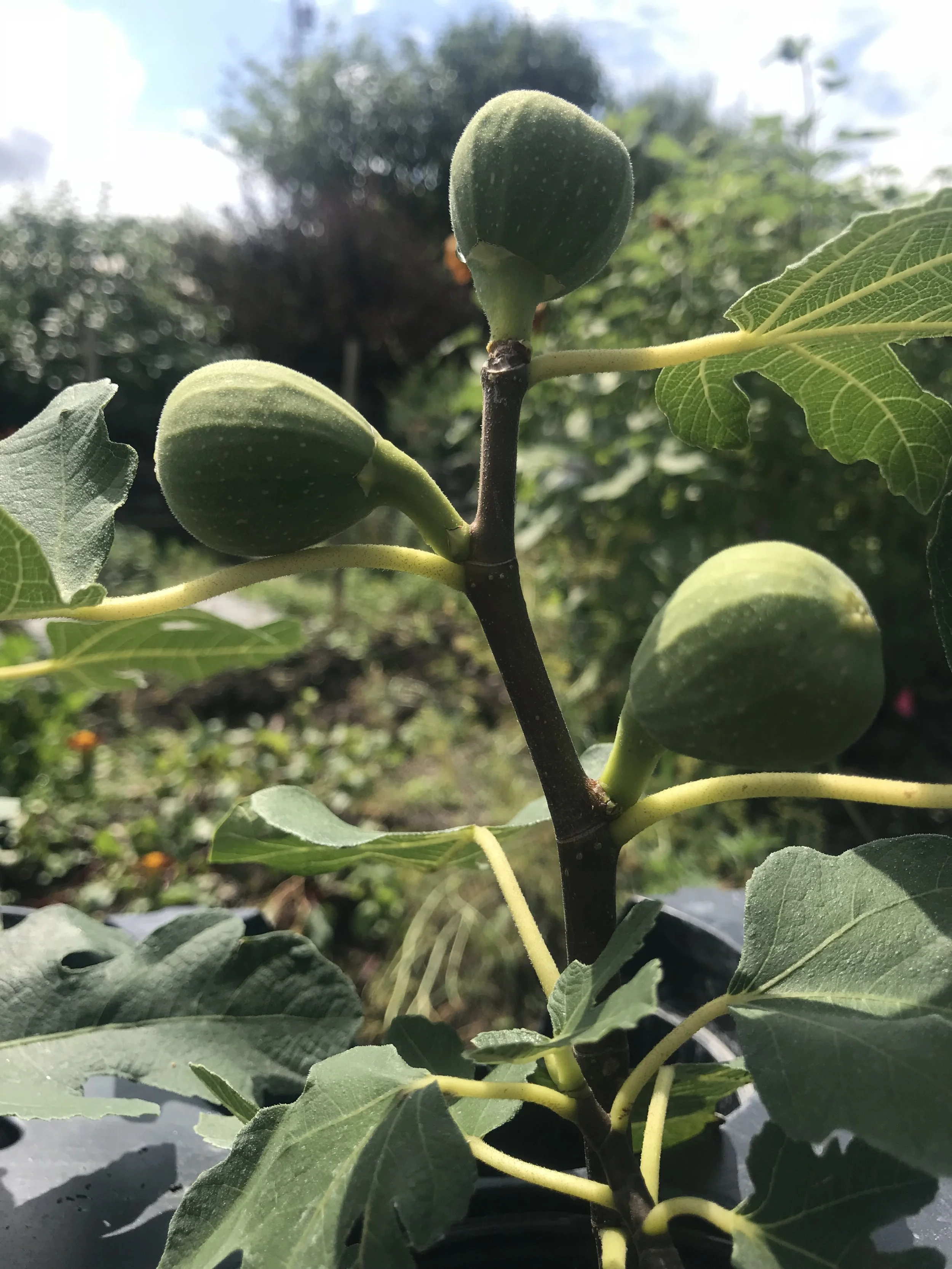
Fig trees like to go dormant: Fig trees are naturally deciduous and like to go through a cold dormant period in order to produce the most figs. For this reason they need to be allowed to drop their leaves in the fall and be brought into a cool dark area for the winter months. You will be pleasantly surprised in the spring as the tree comes back to life with many small figs being produced before the leaves come out. These are called the breba crop or first crop of figs, which are produced on last year’s growth. Later in the season the main crop of figs will be produced and will ripen in the early fall. The main crop tends to be sweeter and tastier and produces many more figs than the breba crop.
Why grow figs?
If you have never had a perfectly ripe fig off a tree, you don’t know what you are missing. Figs do not ripen once they have been picked, and a perfectly ripe fig only has a shelf life of about three days before it goes bad. This means that even if you purchase fresh figs from California, they had to be picked before they were truly ripe and do not taste the same. Most commercial figs are of only one or two varieties. Only by growing your own can you experience the amazing taste of some of the more exotic fig varieties like Italian Honey fig and Drop of Gold.
TWO WAYS TO GROW FIGS IN VERMONT
1. In the ground
Although this method is more difficult, if you have the correct conditions, certain varieties of cold hardy fig trees can survive in Vermont. Fig trees in the ground can handle temperatures down to
about 15 degrees F. The tree might die back to the ground, but it will re-sprout from the roots or lower trunk. A tree that dies back can still grow to 15 feet tall in one season and produce many figs. The problem is the season is not long enough for the figs to ripen and frost will damage many of them before they have a chance to ripen.
2. Grow in containers
In Vermont, fig trees in pots are the most practical way of growing them. During the winter, trees in containers can be stored in basements, attached garages, or insulated barns or sheds with some supplemental heat.
Pot size:
Figs should be transplanted into larger pots every couple of years until you reach a pot size that you can still move in and out of cold storage for the winter. A ten-gallon landscape pot is a nice size and you will have a large fig tree that can produce many figs. After about 3 years the pot will be completely root bound. In the spring when the tree is still dormant, pull the root ball out of the pot. Cut about a third of the root ball off with a saw and repot back into the container. Add new potting soil. The fig tree will push out more growth now that it has more space for roots to grow. I recommend drilling extra drainage holes in the bottom or lower sides of the pot. This will ensure proper drainage for the tree.
Soil type to use in pots:
I recommend a basic potting soil mixed with compost and some limestone. Figs like well-drained soils. Sand can also be added as well as a loamy soil mix.
Watering:
Fig trees grown in pots are water hogs. In the growing season they need to be watered everyday. If they start to get to dry they will start to wilt and drop their figs. I like to water until I see water coming out of the bottom of the pot. If you go away even for a couple of days, you will need a friend to water your trees. Reward them with fresh figs in the fall.
Fertilizer:
Growing figs in pots is more intensive and requires more fertilizer to be applied to the tree. I fertilize with an organic balanced granular and or a liquid organic fertilizer such as Neptune’s liquid fertilizer. I fertilize about every three to four weeks. As you move into the end of August you want to back off so the tree begins to harden off for the fall.
When to harvest your figs:
If you have taken good care of your fig tree with proper watering and fertilizer, you will be rewarded in the fall with an amazing crop of figs. Knowing when to pick your fig can be difficult. Patience pays when you eat a truly ripe fig. Wait for the fig to soften and droop. The eye of the fig will open and a drop of nectar can be seen. The fruit will also leave an impression of your fingerprint when ripe and the skin will start to tear.
WINTER STORAGE
Potted figs:
Fig leaves will start to turn yellow as the cooler temperatures of fall come. After some cold nights around freezing, the tree will drop its leaves. After this happens, take your tree into a cold storage area that stays dark and between 35 to 45 degrees F. Water only about once a month. Do not over apply water as this can kill the dormant tree. Check on your tree in late winter and make sure to expose to the light as the buds start to open. If you only have a couple of trees, you can put in a sunny window in your house.
Figs planted in the ground:
Fig trees planted in the ground should be wrapped in some sort of insulation and protect the ground around the tree with a heavy layer of mulch for insulation. Make sure the insulation is water tight so as not to get wet. A large plastic tarp will work. Make sure to wrap the base of the tree with some sort of protection from voles and other critters. Make sure to unwrap the tree in the spring before the tree starts to break dormancy.
Diseases and other pests:
The biggest problem I have had growing figs in Vermont is voles and mice eating my trees during their winter storage. Make sure to set traps. I have experimented with putting steel wool around the trunk of the trees as well with traps set around each tree. During the season the leaves can get fig rust, which is a fungal disease. The leaves will get rust colored spots and start to turn yellow. The tree can also drop its leaves if left unchecked. Make sure to keep the leaves dry when watering and use an organic copper spray labeled for rust if needed.
The fig tree is the most resilient plant I have ever worked with. Two winters ago, I had voles girdle about 10 of my largest trees. I was devastated and was convinced they were dead. Every plant expert will tell you once a tree is girdled it is dead. Well, spring came and the tree budded out and came to life. The bark started to heal and the trees survived and produced hundreds of figs!
For more information or questions please call or email Steve Colangeli.
Phone: 802-343-3423
Email: scolangeli1@gmail.com