Here is a fun fact! Some bananas can live through a Vermont winter outdoors! Our friend and permaculture garden expert, Jacob Holzberg-Pill has done it for a few years now and he has graciously written a description of his method. Jacob owns and operates a garden design business called Juneberry Landscaping, helping people create resilient and bountiful food scapes around their homes. While bananas won’t produce fruit here, they will grow into big tropical plants that will stop you in your tracks every time!
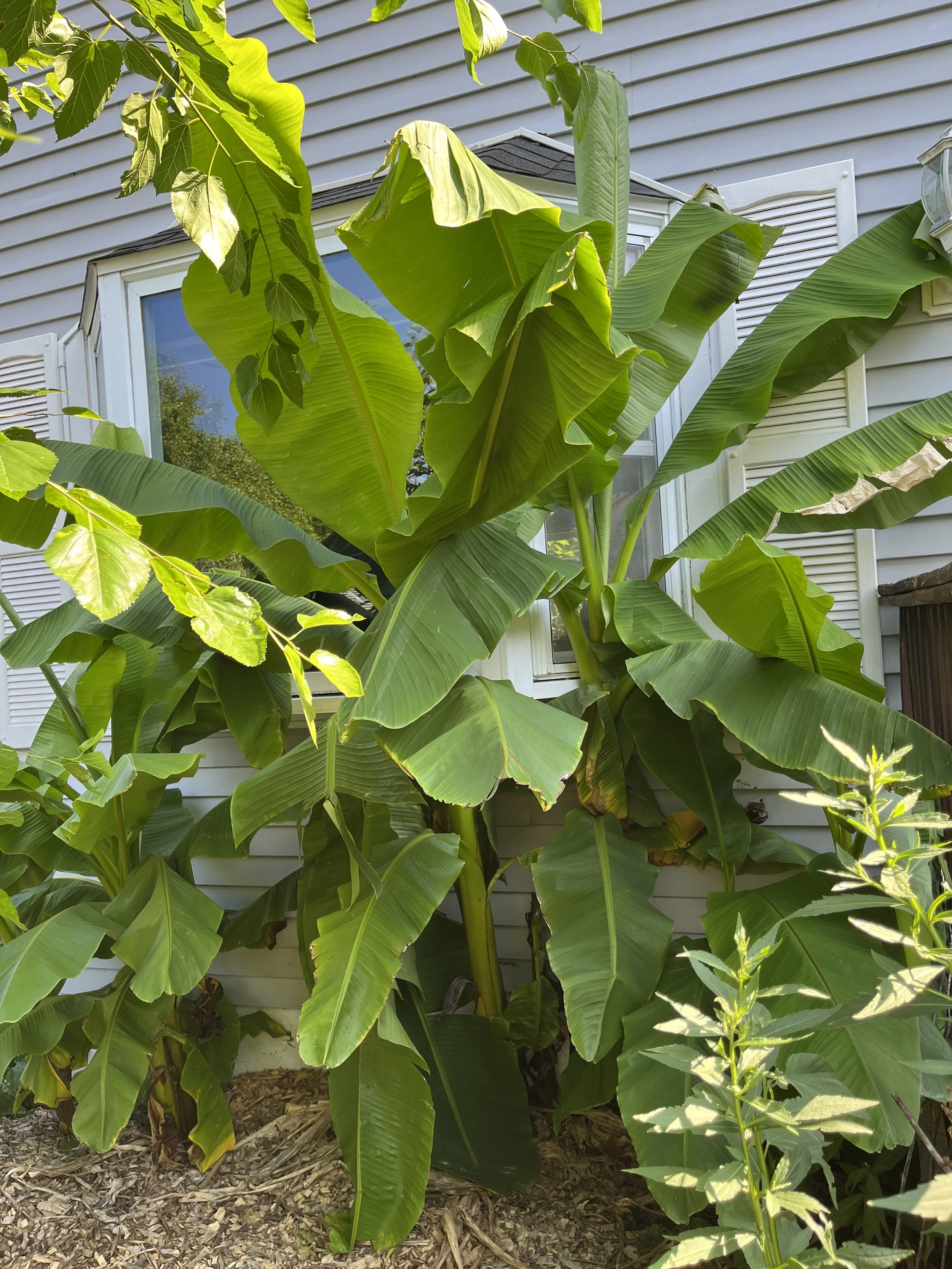
I planted two musa basjoo hardy fiber bananas at our house in Burlington in June 2018. I purchased them at the City Market Red Wagon Plants’ stand. I wanted to maximize warmth in summer and winter, and to minimize winter wet so I planted them on the south side of our house, near the foundation, under a bay window. We have excessively well drained sandy soil. I think wet heavy clay soil gets much colder in winter than dry sandy soil. When I planted the bananas, I dug a hole an extra foot deep and placed the bananas at the bottom of the hole and top-dressed them with a foot of compost. When I plant trees or shrubs, I match the soil level in the pot with the planting depth. In the late fall, I added a foot of woodchips on top of the few inches of mulch I had placed on the compost at planting. Every other year I add another six inches of woodchips. The hole was about a foot away from the foundation of our house. It’s not a willow tree, I’m not worried about the roots destroying the house. In winter when the stems freeze, I let the stems get brown and mushy and leave them on the ground. I drag them to the compost in the spring during cleanup. Each plant sends up 3-6 stems every year. Usually, they grow over ten feet tall. They would get much taller if I watered and or fertilized, but I don’t. They never flower. I love the large tropical leaves and the joy and surprise of visitors who recognize the plants.
Thanks, Jacob, for this and for all you do to bring wonder and beauty into this world! Want to try it at home? This is a great week to do it. All of our banana plants are 30% off!