Snapdragons (Antirrhinum spp.): While the flowers of this eye-catching species certainly aren’t going to win any taste tests (they are typically described as “bland” and “bitter”), they are in fact edible. Pluck the petals from the bitter base of the flower and arrange on a platter to create a showstopper garnish for any summer meal.
Nasturtium (Tropaeolum spp.): Nasturtiums are one of the most commonly used edible flowers, and are well known for their bright, spicy flavor. Add leaves and flowers to salads, infuse a flower vinegar, pickle the buds and seed pods… the possibilities are only limited by your imagination and affinity for their peppery bite.
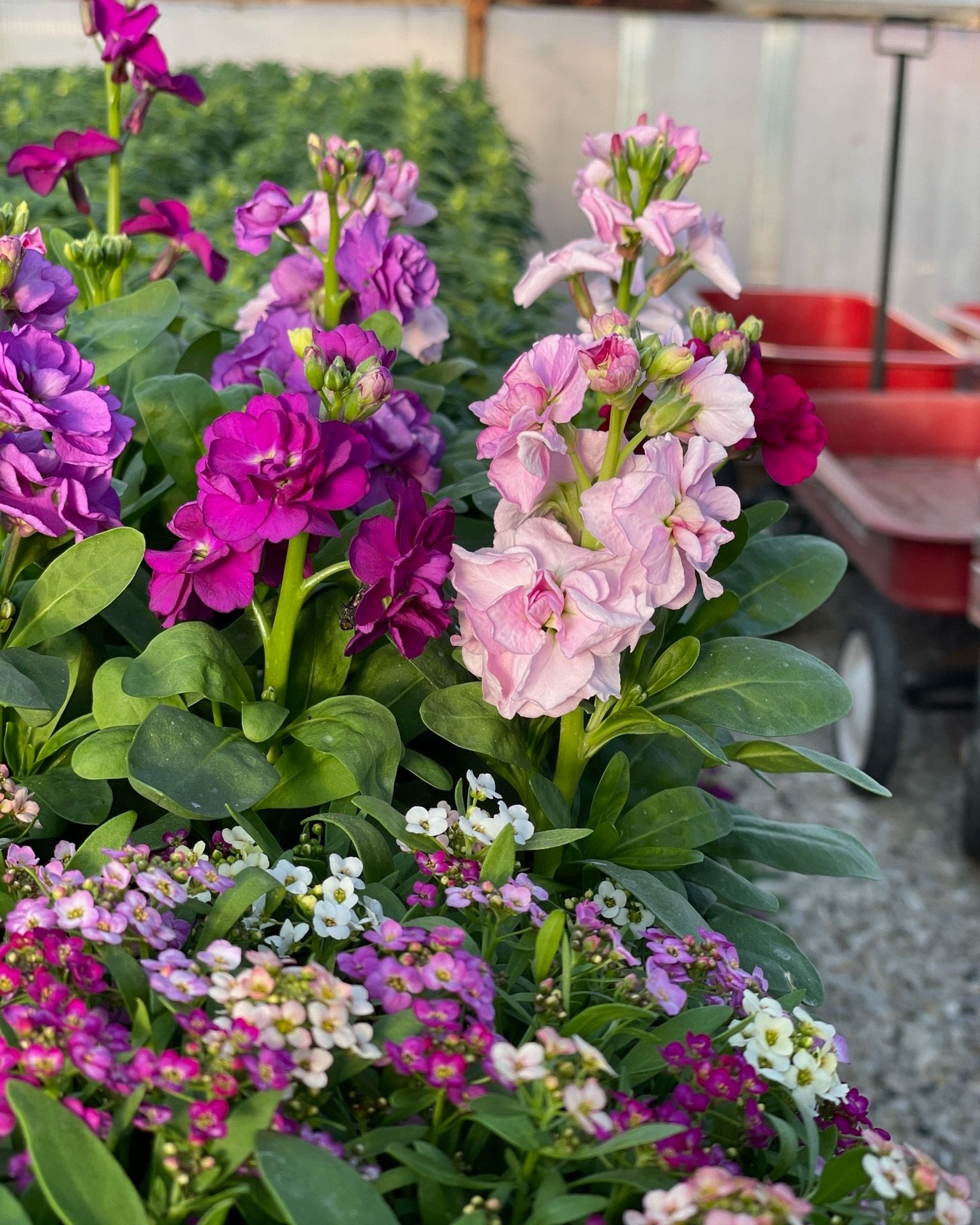
Stock (Matthiola incana): A longtime favorite of florists, four-petaled stock is in the Brassica family like sweet alyssum. The flowers are peppery and clove-like, so try adding them to salads or atop grilled fish and vegetables for a colorful kick.
Dianthus (Dianthus caryophyllus): The annual species of this classic carnation has been in cultivation for well over 2,000 years. The flower petals are fragrant and have a mild clove-like flavor, perfect for adding to iced beverages and fancy desserts. Pluck petals off the bitter green base before use.
Scarlet Runner Bean ‘Painted Lady’ (Phaseolus coccineus): This vining relative of the common bush bean is native to the highlands of Central America. The beautiful red and white flowers can be enjoyed as a snack or in salads, or left to ripen to mature beans which can be eaten fresh or dried down.
Hyacinth Bean Vine (Lablab purpureus):This gorgeous vining bean is similar in habit and use to scarlet runner bean, and has been cultivated as a food crop in Africa and the tropics for millenia. The elegant purple leaves make a good cooking green, and the beans are edible when fully cooked.