gardening resources

Blueberries for June

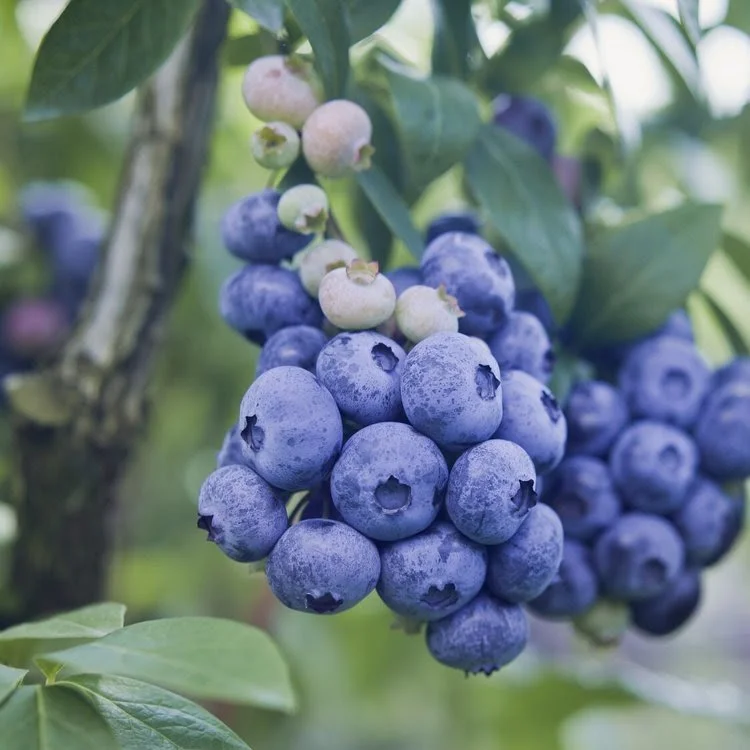
Growing blueberries in your own back yard can be very rewarding, and a collection of blueberry bushes makes for a great Father’s Day gift that will keep on giving for years to come.

Here are a few things to pay attention to when planning your new blueberry patch:

  • Cross-pollination: Like many other backyard fruits, you will need to plant at least two varieties to get good cross-pollination and fruit set. Following is a list of varieties that we carry or have carried in the past. Personally, my favorites are ‘Northland’ for their exceptional flavor reminiscent of wild blueberries and ‘Bluecrop’ for their large clusters that make for easy picking.

  • Your soil pH: Select a sunny site in your garden and then get your soil tested! Blueberries will only thrive in acidic soil and most garden soils will need to be amended with a soil acidifier. This is the same product you would use for hydrangeas.

  • Spacing: Give your blueberry bushes enough elbow room. Depending on the varieties chosen, this will be 4-6 feet of space between the plants. Check the tag on the plants you purchase to know their mature size and recommended spacing.

  • Take your time: Blueberry bushes can be planted any time of year but will require good watering (mulching helps!) and weeding especially in the first few seasons. As tempting as it is to let your berry bushes fruit as soon as possible, it is recommended to remove all flowers in the first year. This way your plants can put all their energy into growing a healthy root system. That will in turn give them more energy to bear more fruit the next season. Patience pays off.

For more growing and maintenance tips, please refer to this handy growing guide or come by in our greenhouses and ask one of our plant experts!

In the Garden this week

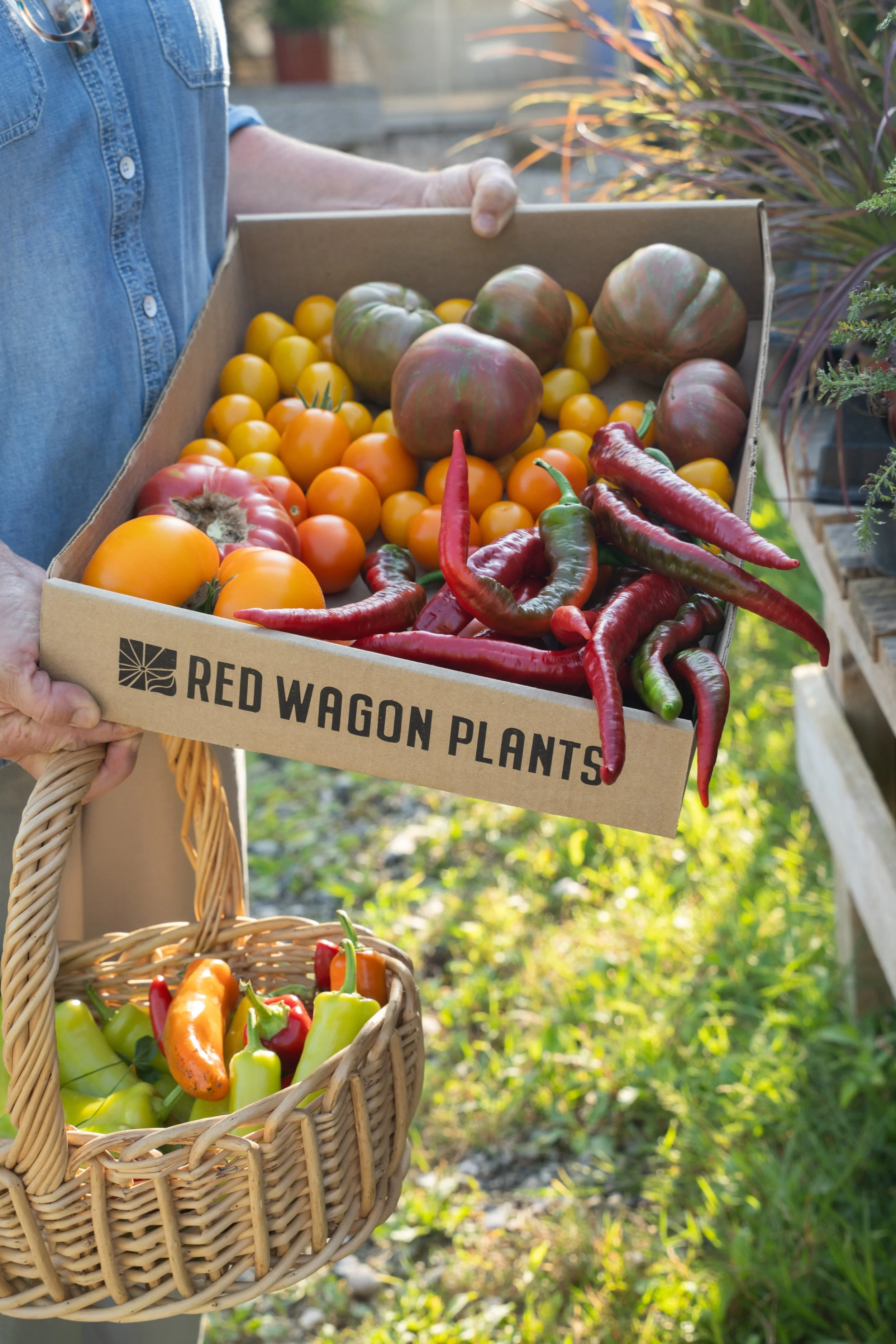
In the basket - Hungarian Hot Wax peppers. In the box - Jimmy Nardello peppers, Esterina cherry tomato (the little yellow ones), Clementine tomato (small orange ones), not sure what the big yellow tomato is, Prudens’ Purple tomato and Berkeley Pink Tie Dyed tomato (the ones on top that are pink with greenish stripes). Now you know some of our favorite varieties!

They’re here! Tomato, pepper and eggplant seedlings are now for sale in the Plant Shop. It has been a very cool spring, so we have waited until now to protect the tender fruiting plants. It is still too early to plant them into the ground, but now is a good time to take home your favorites and harden them off and get to know them a bit. The soil needs to be 50 F which takes about a week of night time temperatures being in the 50’s. Test your soil temperature at about 4” deep (a digital meat thermometer works). Maybe the end of next week will be a good time to plant. In the meantime, prep your beds by adding compost, and making sure the soil is loose and weed-free.

Please note: We don’t have every single variety available at the same time, but we will rotate through all of them as the different generations mature. If there’s a plant that is dear to your heart and you don’t see it on your first visit, we are happy to take your name and number and give you a call when it’s ready.

Just getting started, or want to try something new?

Tomatoes, fragrant and fresh-off-the-vine, are one of the best parts of summer. Don’t be afraid to baby these heat-loving crops - they will pay you back with greater growth and yields in later on.

We suggest trying out a few varieties of different kinds (determinate, indeterminate and cherry) in order to have a harvest that spans the season. Plant your tomatoes at least 3 feet apart to allow for adequate air flow. Here is a post on our blog where you can learn about different categories of tomatoes, and see our recommended tomato planting strategy. When they do grow (often taller than expected!), here are our favorite methods of tomato pruning and trellising that could do wonders for the health and productivity of your plants.

Peppers and eggplant also enjoy being transplanted once the soil warms up. One planting is usually plenty, but again, an assortment of varieties will keep the harvest varied, staggered and interesting. We carry many different sweet and hot peppers, and Asian, Italian, heirloom, full-sized and mini eggplants. This could be the year you discover a new favorite. For newer gardeners, we recommend Lunchbox pepper and Hansel eggplant. They both produce small fruit and are easy to grow and very abundant.

In the Garden this Week

IN THE GARDEN August 8, 2025

We are in another dry spell, so here is your friendly reminder to soak all of your containers every morning. Raised beds dry out fairly quickly too, so be sure to give them a deep soak 2 to 3 times a week. It is always better to water deeply once or twice a week rather than to water lightly every day.

We are fertilizing our containers once a week, and alternating with fish emulsion from Neptune’s Harvest and Compost Plus from VT Compost Company. The planters on our bridge are looking great, and this is why. Along with our team of careful waterers who give the plants lots of love every day.

It is a good time to replant lettuce, chicories, broccoli, cabbage, sprouting broccoli, kale, and more! We have new generations of all of these seedlings and also beets, our custom blend of zesty mustard greens, our staff favorite gem lettuces, and so much more.

Are you growing herbs for tea? We have a great selection and it is not too late to get them in the ground and have plenty to dry for winter use. Lemon Verbena and Tulsi (a.k.a holy basil) are staff favorites. And if you already have some herbs growing in the garden, start drying them now. Future you will appreciate curling up with a warm cup of tea this winter. Here is a blog post that will explain how to do it.

And here is another friendly reminder that late summer and early fall are ideal times to plant perennials. The days are cooling down, reducing transplant shock and there is still plenty of time for the plants to set roots and establish themselves before winter comes around. Next spring they’ll be ready to take off. Are you curious about how to take care of perennials at various times of the year? Read this helpful article for more info and resources.

A NOTE FROM JULIE

We get lots of questions about garden pests and diseases, and this year more than ever, we seem to have a slight uptick in concern over what I consider to be tolerable situations. Let me explain.

When you farm or garden ecologically, you are working with living things that have life cycles, threats to their health, symbiotic allies, and opportunistic predators. It is easy to focus just on the problems, and to enter a cycle of worry followed by a desire to fix it.

Here is what I recommend when you have a plant that looks less than optimal.

  1. Assess the problem. Is the damage on just one part of the plant, or is the whole plant affected and weak? Can you trim off the damaged leaf or stem and does that make you feel better? If so, go for it. The plant won’t mind.

  2. Is it a perennial more than a few years old? Does it need to be divided? Just like us, plants age. And while our wrinkles and liver spots are easily recognized as signs of aging, your plant’s flopping and stretching and lack of flowers is trying to tell you the same thing. Unlike us, perennial plants can be refreshed by being cut back, dug up, divided and replanted with more space. If this sounds like too much work, consider your plant selection, and look for plants that do not need to be divided given enough room to grow - Baptisia, Amsonia, Rudbeckia, and many grasses come to mind.

  3. On the flip side, is your plant very young? In the case of shrubs, trees and perennials, they sometimes need a year or two to acclimate, and it is best to recalibrate expectations with the situation and the life cycle of that plant. They are babies in your midst, and it is ok to watch their growing pains without needing to fix them. Be patient.

  4. A certain amount of insect damage is ok. There I said it. A garden can be perfectly healthy and still have a few insect pests. It is a question of balance. Here at RWP, and at home, we never spray to kill insects in the ornamental gardens or our kitchen gardens. We very occasionally use sprays approved for organic production on our herbs and a few of our potted greenhouse plants. In the gardens, we conduct visual checks and hand pick bugs and their eggs on a regular basis. I use row cover as a physical barrier against flea beetles, cucumber beetles, and squash bugs. Caterpillars and insects are part of someone’s food chain, and usually if we let the predators come in and do their job, things can stay in check.

  5. Prevention is key. Good soil, good airflow, water and mulch (in some cases) are your friends. By keeping the plants as healthy and vigorous as possible, they will be able to put up with a little insect damage. If a plant is really struggling, I usually just pull it out so that I don’t give insects and disease a vulnerable host to take advantage of the situation. Be ruthless in your culling and understand when something has gone past the tipping point of saving it. A few holes in a few leaves is not the tipping point, but a whole plant withered and browning at the edges has no chance. Learn to recognize what is worth saving and what needs to get pulled out.

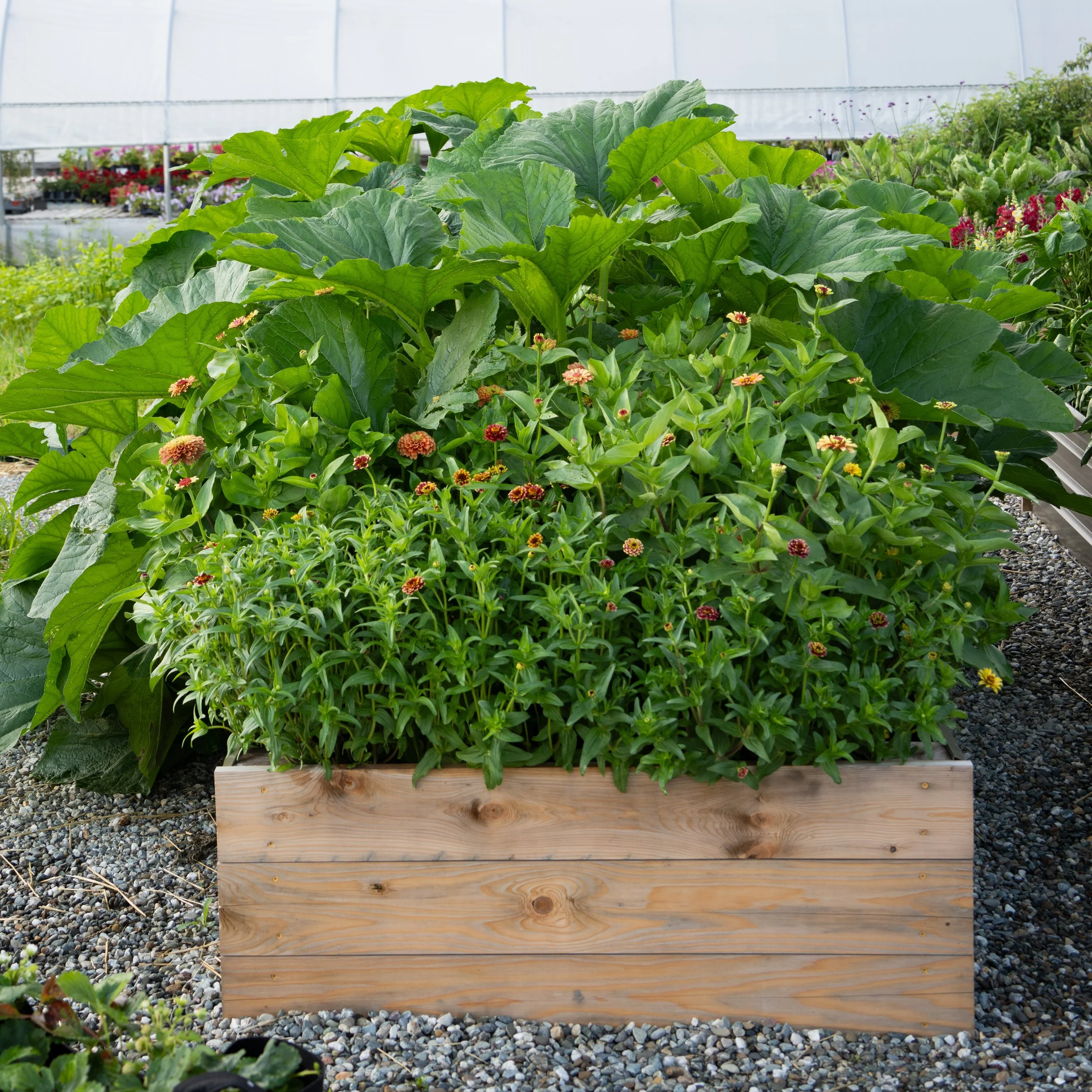
  6. Create diversity in your gardens. This will attract beneficial insects and birds that keep the bad guys in check. If you look at the raised beds behind the Bake Shop, you will see that I have interplanted annual flowers and herbs with all the vegetables and it makes a huge difference. The cucumber beetles and squash bugs have a harder time finding their favorite host if they have to crawl through a jungle of California poppies. The birds swoop in and grab the larva of Colorado Potato beetles and then rest on the sunflower perch conveniently provided close by. Observation of these spontaneous cycles will make you a better gardener. Create a haven for everyone and they will thank you in return by doing the work they are meant to do.

  7. Understand that some problems are “cultural”. This means that it is not a disease or a pest, but rather something in that particular plant’s experience….too much water, bad soil, not enough water, a dog peed on it one too many times, it got too cold or too hot. It takes lots of experience and observation to understand the difference between cultural damage, insect damage, or disease damage. Again, we are all learning, and sharing what we know, and the process is fun. Most of all, remember to speak kindly to yourself….it is not always your fault. And it is not always the plant’s fault. Things happen.

If you are reading this, you are likely someone who has chosen gardening as a hobby. You have chosen to get a new chance every year. You can work on building up your soil so that future gardens are improved. You can take notes on what has worked well and improve on that. You can put up bird houses, plant native plants in the hedgerows, and learn about beneficial insects over the winter. We have endless opportunities to learn and try again. Enjoy the process and all of the hard work you put into it.

Pest and disease resources

Squash bug eggs on the underside of a zucchini leaf.

All throughout the growing season we get a lot of questions from our customers about pest and disease issues. Here are some guidelines and resources that we hope you find helpful.

My plants have a pest or a disease, what do I do?

Don’t panic.

Take a closer look:

  • What triggered the “my plant is sick” alarm? Is it holes in the leaves, yellow leaves, visible pests, rotten parts of the plant? Try describing the damage in words, this will help you use the right words in a Google search or describing it to someone else.

  • How many plants are affected? Is it just one type of plant or all plants in one area?

  • Can you detect an insect, caterpillar, slug or other animal?

  • Are there eggs? Look at the underside of leaves.

  • Does anything in the immediate surrounding give you clues, like a soggy spot in the garden, a vole hole nearby? Has the weather been exceptionally rainy or dry, hot or cold?

  • Take photos. Make sure the lighting is good - shade is often better than harsh sunlight. Take pictures from various angles. Take whole plant photos as well as close-ups.

Now that you’ve familiarized yourself with your situation, you’re ready for the next step:

  • See what a Google image search with the name of the plant and a description of the symptoms brings up.

  • Visit THIS helpful University of Minnesota Extension page and click through the questions.

  • Contact the UVM extension gardener helpline here. You can either fill out a form with detailed information on your plant issue and submit photos or give them a call during their hotline hours.

  • Send us a description and photos to info@redwagonplants.com. Give us a few days to get back to you, especially during our busy season. We’ll do our best to help.

What to do next:

  • This will greatly depend on what your disease or pest turns out to be. Some situations will require no action, other times you may need to remove leaves, squish bugs or use an organic spray. We’re happy to give you our tips on best practices once you know your disease or pest.

Things we don’t recommend:

  • Give up gardening.

  • Please don’t bring diseased plants or weeds to our nursery (or any other place that grows plants) for ID, not even in Ziploc bags. You could unintentionally be spreading diseases to our plants. Send photos instead.

  • Spray with insecticides without knowing if an insect you found is really a pest. Many bugs on your plants are either harmless or beneficial.

This post was written by Kat Consler.