
Kitchen Stories and Recipes

Black Bean and Butternut Squash Chili

This is one of my favorite things to do with butternut squash, and every time I make it, I am reminded of my friend, Robin Holland.  She made it for a mom's group I was a part of when my daughter was a baby and a toddler.  A dozen or so of us would get together once a week, share an amazing meal and, together, relish in the joys and burdens of motherhood.  I still make this often, and every time, the flavors combine together to transport me back to those days.  There is something inherently grounding and warming about this dish.
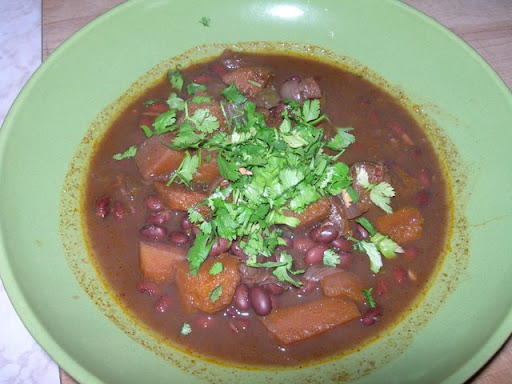
Black Bean and Butternut Squash Chili

(enough for a crowd and easily reduced)

2 cups of dried black beans, soaked overnight, rinsed and drained (turns into about 6 cups of soaked beans

1 large butternut squash, peeled, seeded, and roughly chopped into 1" chunks

2 TBS olive oil

2 large onions, chopped

1 or 2 green or red peppers, chopped

5 cloves of garlic, finely chopped

4 bay leaves

6 TBS chili powder

1 tsp dried chili flakes

2 cups of apple cider

8 cups of water

Salt to taste (at the end)

2 to 4 TBS maple syrup

Chopped cilantro, jalapeno and lime wedges for garnish (optional)
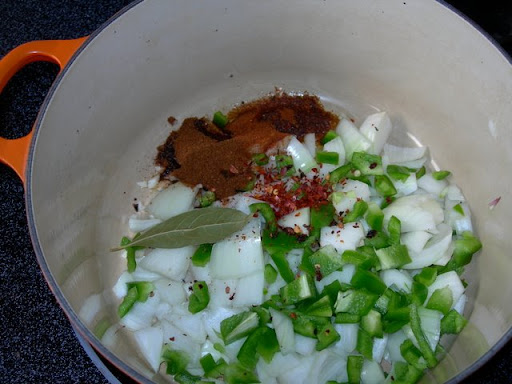
In a large, heavy pot, heat the olive oil.  Add the onion, bell pepper, garlic, chili powder, pepper flakes, bay leaves, and stir until soft and starting to brown.  Add 1 cup of the apple cider, and scrape up the brown bits and allow it to cook down by about half the volume.  This helps to concentrate the flavors of the aromatics (onions, bay leaf, etc).
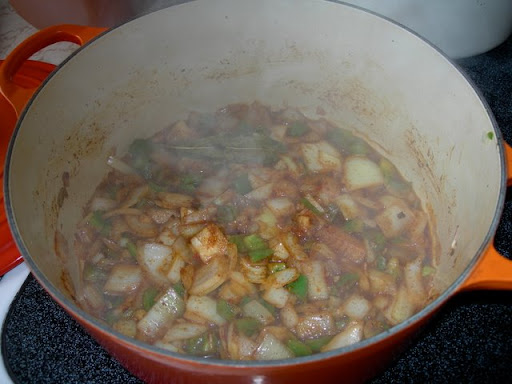
It should look something like this.

Next add the squash, and the soaked beans, the remainder of the liquid, and allow to cook over medium to low heat for about 1 1/2 hours, or until everything is soft. Finish the stew by adding the maple syrup, and about 1 TBS salt (I find the beans and the squash really need lots of salt).  Stir and wait a few minutes before tasting.  Adjust with more syrup or salt if needed.

This is great served with the garnishes, some corn tortillas or corn bread, and a piece of cheddar cheese.  The warmth and sweetness create a harmonious and satisfying balance.
Lost Potatoes and the Simple Garden Dinner

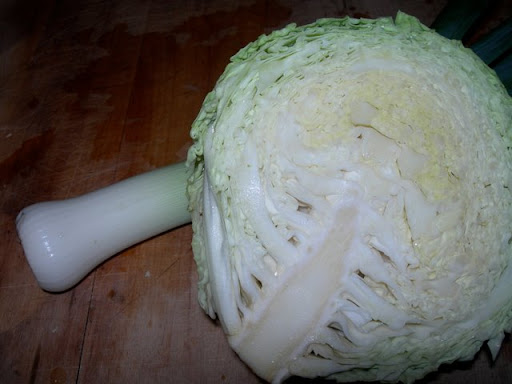
Tonight's dinner was another super easy one and I averted yet another trip to the grocery store. First, I found some feral potatoes. I was turning over a plot of soil in the garden where the potatoes once stood and there they were, gnarly and red, asking why they had been forgotten. After a good scrub down, they got tossed into a pot of cold water and gently boiled until tender. Did you know potatoes should always start their cooking in cold water? That way, their temperature rises gradually and evenly. They don't end up with the dreaded mushy exterior and crunchy interior.

While the potatoes were cooking, I did a quick cabbage braise which turned out to be luscious and silky. Here is the recipe.

Braised Green Cabbage with Leeks and Apples (for 2)

1 TBS Butter and 1 TBS olive oil

1 leek, white part only, washed and sliced into 1/4 inch rounds

1/2 macintosh apple, peeled and seeded and slice into thin crescent slices

1/2 a small green cabbage, cored and sliced thinly (about 3 cups)

1/4 cup of cider vinegar

Sea salt

another TBS butter (optional)

Heat up olive oil and butter together over medium high heat. Add leek and stir occasionally for a few minutes until leek starts to soften. Add the apple and cabbage, and stir. Cook a few minutes, add the vinegar and salt to taste. Put a lid on the pot, and cook about 15 minutes. If there is too much liquid, you can take the lid off and raise the heat to boil off the extra liquid. Finish by adding more butter if you like.

This is great spooned over simple boiled or mashed potatoes. The sweetness of the apple and leek is a nice balance to the acidity of the vinegar.

This is also delicious, for the meat eaters among us, with some salt pork, bacon, or cured sausage. Just add it in at the beginning with the leek, and then let it simmer away. Reduce some of the butter or olive oil if you do the pork ad-ins.

Bon Ap.

Dropsies Dinner and Caffeine

From frugal and fabulous to dizzying drech....that is the risk of the home cooked meal.  Sometimes food blogs just sound a little too easy and full of grace.  The photos are perfectly shot, as if a food stylist lives in house, and the recipes and anecdotes that accompany those perfect shots are always well mannered, well dressed, and say all of the appropriate food things. Precious. Well, last night's dinner wasn't like that in our house.  I set out to make use of some butternut squash leftovers and one of the 8 heads of cabbage currently in residence in my fridge drawer.  A simple cheddar/squash souffle and some vinegary coleslaw with boiled dressing sounded good.  But first let me confess....I drank coffee earlier in the day. 2 large, strong cups of the stuff.  After many weeks of being coffee free, I could easily say it was a BIG mistake.  I have to tell myself that I am allergic to the stuff, period.  Must stay away.

I approached every ingredient as if it were a wild animal needing a fast chase, a violent catch, and followed by a quick wrestle and throw down into waiting  bowl or pot.  Eggs were smashed accidentally, lumpy squash was beaten to smoothness, without success, using the help of 2 different electric tools - the immersion blender zapper and the under sized hand held mixer - to no avail and butter was scorched before the roux could even get out the door.  Many pots, pans, spatulas, whisks and spoons later, I found myself "gently" folding in the egg whites with the grace of an elephant on speed.  The batter took up two different souflfe dishes (but one of them was just a brownie pan), and I slid both into the oven.  Of course, my impatience made me check on it too often, but still they rose and looked beautiful.  At least the one I didn't drop on the open oven door looked beautiful.  The spill victim turned into a lovely mess of charred egg and squash smeared all over the window of my oven door, filling the house with a toasty burned egg aroma.

The slaw was a little better, but I did manage to get small shreds of cabbage in every nook and cranny of the kitchen and I also tatsed the boiled dressing a little too soon after the said boiling point and still can't feel my tongue.  When all was done, we sat, opened a bottle of red (the cork broke in half and I plunged it with great relish down into the bottle, and we had a funny, even tasty meal.  Many jokes were made about the crazy housewife who possessed me and the effing souffle she felt compelled to make.  All because of some squash leftovers.

Frugal and Fabulous

My pantry is small, but pretty well stocked with staples.  Between that and the garden, it's easy to spend a week without going to the grocery store.  I get milk from Family Cow Farmstand, eggs from a neighbor, and a few items at the Burlington Farmers' Market during the summer.  The main thing I go there for is the cheese from Does' Leap Farm: they make the  best chevre I have ever had.  The feta is fabulous too, and I used it in this dish.  Having a garden, visiting the farmers' market, and having a well stocked pantry (I buy stuff like pasta, beans, and olive oil in bulk, when it is on sale) means you can throw together simple meals for not much money.  We stretched Sunday's dinner to make 8 meals over two days.  That comes out to ahout .33 a meal.  Pretty good, huh? I made this escarole feast after I noticed a huge, beautiful head of the stuff in the garden (wish I had a picture).  It's one of my favorite vegetables, and has to be grown to be appreciated.  The flavor gets kind of bitter if it sits in the fridge too long, but if you cook it up right after harvesting, it is magnificent...silky, unctuous yumminess.  Frugality means not being afraid of leftovers.  Often, I will cook one large meal and then stretch it by morphing it into other things.  Shape shifting dinners.  Here's what I made on Sunday night,  and a few ideas for the leftovers. You can substitute any other greens if you must, but really, you should  give escarole a try next year in your garden...it's pest free, super cold tolerant, and gorgeous.  But for now, there might even be a head or two with your name on it at the farmer's market.

Escarole and White Beans on Pasta

1 TBS olive oil

1 medium onion, chopped or 2 leeks (for a sweeter flavor), white parts only, washed and chopped

1 jalapeno, chopped (use the seeds if you like it hot. Mine came from the garden, not to brag or anything)

3 cloves of garlic sliced, minced, or crushed (all three ways produce different results, figure out what you like).

1 large head escarole, washed, but not chopped.  (mine came from my garden...wish I had a photo, it was gorgeous) or any other green you like -- chard, kale, mustard greens, arugula

1 can white beans (butter beans are my favorite)

1 box pasta, whatever you like

Optional garnishes -- fresh squeezed lemon juice, capers, feta or parmesan, another drizzle of olive oil.

Salt and Pepper to taste

  • Get your (salted) pasta water going in a large pot.
  • While that is coming to a boil, heat the olive oil in a large skillet or dutch oven type of pot.
  • Saute the onion or leeks, garlic, and jalapeno over medium high heat, stirring.
  • After about 5 minutes, when everything is softening and realeasing its aroma, dump in all of the escarole (still wet from being washed so that it creates some steam).  Put a lid on the whole pan and ignore it for a few minutes.  Open the can of beans, rinse them if you need to, dump them on top of the escarole and put the lid back on for a few more minutes.
  • By now, you should also be cooking your pasta to the toothsome al dente point - i.e. not mushy.
  • Stir up all the escarole and beans so that they are evenly distributed, and season with the salt and pepper to taste.
  • Drain the pasta, reserving a little of the cooking liquid if you want to stir it into the finished dish later if it seems dry.
  • You can combine noodles with the vegetables in the big skillet or pot, or alternately, you can serve big shallow bowls of pasta with the veggies on top, passing the optional garnishes around at the table.

This is a great dish to serve reheated as is, or you can turn it into a stew by reheating it with some broth.  I also love it with an egg cracked on top, and steam poached: just put the lid on the pot you are using and make sure there is enough liquid or fat in the bottom of the pan so that nothing sticks.   Super simple, and super yummy.  The escarole becomes silky, with a little bit of pleasant bitternes and the garlic and jalapeno balance it all out.  Bon Ap!

Chicken Broth Medicine and Reconstructed Soup

Last night, I made 2 gallons of chicken broth using 2 chickens from Shuttleworth Farm, an armful of mixed herbs (sage, lovage, thyme, rosemary, winter savory, and parsley), the tops of many leeks, a handful of carrots, some onions, bay leaf, peppercorn, and salt.  I let everything cook very slowly on medium to low heat in a big stock pot for about 3 hours.  The key is to never let anything boil...that is what makes the chiken rubbery and the broth cloudy (I am sure there are some food science explanations, I am merely going from experience.) I strained the broth, let it cool and filled up empty yogurt containers for the freezer (leaving a few inches of head space since liquids expand when they freeze).   The broth is a rich golden, green color and will be pulled out whenever I want to make a quick soup using whatever ingredients are around during the winter.  I reserved one of the cooked chickens for last night's dinner, more on that below; and with the other bird, I took all of the meat off the bone and it will go into chicken salads and such for the rest of the week.  I think using two whole birds makes such a rich broth, but it does leave a lot of meat to use up.

For dinner, I saved about a half gallon of broth, placed it in a 7 qt pot and added whole peeled carrots, potatoes, and leeks (white part only, carefully trimmed and washed).  I let the broth and veggies come to a gentle boil, and waited about 40 minutes. I served this in shallow bowls with a parsley salad, and good sea salt. In France, there is usually dijon mustard as a condiment with this, but I am all out right now.  This is one of my favorite fall and winter meals, along with some of the poached chicken,  a sort of reconstructed chicken soup.  In French it is called Poule au Pot.  (Hen in Pot).  It is the poultry cousin to Pot au Feux, (Pot on Fire)  which is made with beef -- brisket, short ribs, chuck.  And uses the same method described above.  Using fresh vegetables cooked in strained broth is preferable eating the vegetables that have simmered in the stock pot for a few hours thus becoming a wee bit mushy.

Herb Salad is the perfect accompaniment to so many things.  Parsley is probably my favorite.

Parsley Salad

2 cups chopped parsley

3 scallion, washed and chopped finely

Juice from 1/2 a lemon

1 TBS good olive oil

Sea salt to taste

Mix everything together.  Let sit about 20 minutes before serving so that the flavors combine.

Extra! Extra! 85 pounds of food from one plant.

Help!  Today has brought in a rainy September morning and a houseful of the ubiquitous butternut squash.   I just can't believe that one plant could produce 17 (!!!) giant squashes (85 pounds).   Some will go to the food shelf and some will go to friends (watch out). The truth is, I thought that I had planted delicata squash, which is my favorite, not butternut.  Whoops.  Soups, gratins, and stuffed squash will be on our table this fall and, thankfully, the squashes keep well into winter, but I am sure my people will be tired of eating butternut long before it runs out. Here is a recipe I love, and it will use up about 1/17th of my harvest....

Butternut, Cheddar and Sage Gratin

This needs only a green salad.  It's a hearty dish.

  • one peeled and cubed (1/2" or so) butternut squash
  • 1 TBS butter
  • 1 medium onion, roughly chopped
  • 1 clove of garlic minced or pressed
  • 1/4 cup of finely sliced, fresh sage leaves
  • a drizzle of olive oil
  • salt and pepper to taste
  • 1/4 c heavy cream
  • 6 oz grated cheddar cheese (I like sharp)

Preheat oven to 350.

Melt butter in a cast iron or other heavy skillet.  Over medium heat, add onion to melted butter and stir until it begins to soften (about 4 minutes). Add sage leaves and garlic.  Drizzle in some olive oil (about 1 or 2 TBS) and stir until fragrant and onions start to caramelize. (About 12 minutes)

Add squash to a butter or oiled 9 x 13" baking dish.  Toss in the onion and sage mixture, the cream, and salt and pepper to taste. Use your hands or utensils to get a good blend of all the ingredients.  Cover with foil and bake in preheated oven for about 40 minutes.  Take out the dish, remove the foil, turn up the oven to 450, cover squash with the cheddar cheese and return to oven until brown and bubbly, about another 20 to 30 minutes.  You can even turn on the broiler for a minute or two at the end to really make the top brown.

This freezes well.  It's great for potlucks and any other time you want to feed a crowd.

Simple Food Preservation for the Home Gardener

The most important element of putting up food is safety. While problems like botulism are rare, they can be serious. Please make sure to follow recipes exactly, as the amount of acid, cooking time, and temperature can determine whether foods will be safe to eat.

The type of food preservation you'll do depends on your storage space, what you like to have on hand to eat in the winter, and how much work you want to do. Freezing food is the easiest method, but it depends on whether you've got extra space in your freezer.

For excellent over-all advice and recipes for canning, freezing, and otherwise preserving food, visit any college's Extension Service website, or:

  • Canning Across America
  • preservefood.com
  • simplycanning.com
  • A brief rundown of what I do most years:

  • Fruit Spreads and Jams: I use a low sugar pectin such as Pomona's, which you can buy locally at City Market. It allows you to make a really simple fruit spread with honey, fruit juice concentrate or just a fraction of the sugar that would be in a regular jam.

    Canning is a great technique for preserving high acid foods like tomatoes, fruit, and pickles. For a thorough explanation of canning, go to vegetablegardener.com. This will give you a very clear introduction to water bath canning (non-pressure canning of acidic foods). The ones that I do each year are tomatoes, peaches, and applesauce.

    Simple Tomato Sauce: wash and cut up tomatoes into halves or quarters. Then pulse in food processor until they are chopped up well and the skins are pulverized. I usually do a few batches at a time until I have about a gallon of soupy tomato sauce which I then cook down for several hours over low heat until the desired thickness is reached. Salt to taste. This can then be canned or frozen. I doctor it up with herbs, garlic, etc when I use it in the winter time that gives me more flexibility.

    Tomatoes can also be frozen whole and raw by placing them in a zip-lock bag as they ripen. When you later need to use them, you just have to run them under warm water to slip the skins off.

    Roasted Ratatouille: I chop up onions, zucchini, eggplant, and tomatoes and toss them with herbs, olive oil, and sea salt. I then spread it on cookie sheets in a single layer and roast in a 400 degree oven until soft and starting to caramelize (turning once or twice helps). It takes about 50 minutes per batch. I then freeze this in containers or freezer bags. It is fantastic on pizza, pasta, in lasagnas or other casseroles, or on its own.

    Sweet Peppers: just chop up raw peppers and place in a freezer baggie. Very simple and a great addition to just about anything you are sauteeing.

    Herbs: any herb can be turned into a puree with a little olive oil and salt in the food processor. This is a good candidate for freezing in ice cube trays and then placing the frozen blocks into labeled baggies. When making dishes in the winter, simply toss an herb cube into the pot for extra flavor ; soups, sauces, stir fries, salad dressings are all good options for this method. Pesto can be frozen this way too, allowing you to thaw out just what you need.

    Other vegetables that freeze well are green beans and spinach: just steam, dry well, and place in bags. You can also chop spinach or other greens after blanching briefly, and press into ice cube trays to freeze into cubes to have on hand for soups, pasta and the like in the winter.

    Pickling beets, carrots and cucumbers is another simple and satisfying way to store these veggies, either in the refrigerator (for consumption within 3 months), or by canning them for a longer shelf-life. See recipes at:

  • Recipezaar AllRecipes Garden Web/Harvest Forum