Garden Tips and Stories

Spring Time and Season Extension

We are busy happily working in the greenhouses! Early spring is an active time for seed planting. Some vegetables need to be planted in  a greenhouse and nurtured along as the Vermont summer is just not long enough for them to be planted directly in the garden. The germination of the earliest vegetables is a thrill to us and we know that they will thrill you in your gardens. With a few simple strategies for season extension, Spring can  be a rewarding time to see a few early flowers and even to grow some cold tolerant greens. Containers are a great way to do this. They can be kept indoors on the coldest days and nights, covered up with row covers, blankets or plastic sheeting on the mildly cold nights, and left out all day and night once the weather permits. Any crate, or large pot with holes in the bottom can be filled with good quality potting soil such as Vermont Compost Company?s “Fort V” and then planted with an array of salad greens and edible blossoms such as pansies that you can cut from once they reach a few inches high. You can cut and harvest these plants and allow them to re-grow for multiple harvests, allowing you a gorgeous salad while it is still too cold to be out in the garden.

As soon as the soil can be worked in your garden, it is possible to get a jump on our seemingly late warm weather by building a simple shelter out of Number 9 gauge wire and some row cover or even old blankets and plastic sheeting. If you cut the wire into 6 foot lengths, plant each end into the ground (making a hoop) and repeat every few feet, you now have a very quick and easy tunnel frame upon which to drape your fabric. This creates a lovely shelter for some very hardy greens. With this type of simple tunnel, a version of a cold frame, it is most important to cover it at night and uncover it in the morning. The plants can get very hot unless you use special row cover designed to stay on night and day.

The most cold tolerant food crops we can grow here are things like kale, spinach, collards, arugula, mustard greens, mache (corn salad), and many herbs such as cilantro, dill, sorrel, and chives. Certain lettuces are very cold hardy, but they cannot take the frost quite as well as the plants mentioned above--good cold hardy varieties include the French heirlooms, “Reines des Glaces” and “Merveiles des Quatres Saisons.” These most tender and delicate looking lettuces can take quite a beating when it comes to cold weather. Overall, early spring is a great time to satisfy the need for green, fresh foods that are grown locally after a long winer of leafy foods trucked in from far away. The difference in taste and the level of satisfaction you will experience is well worth the effort.
Spring's Slow Awakening

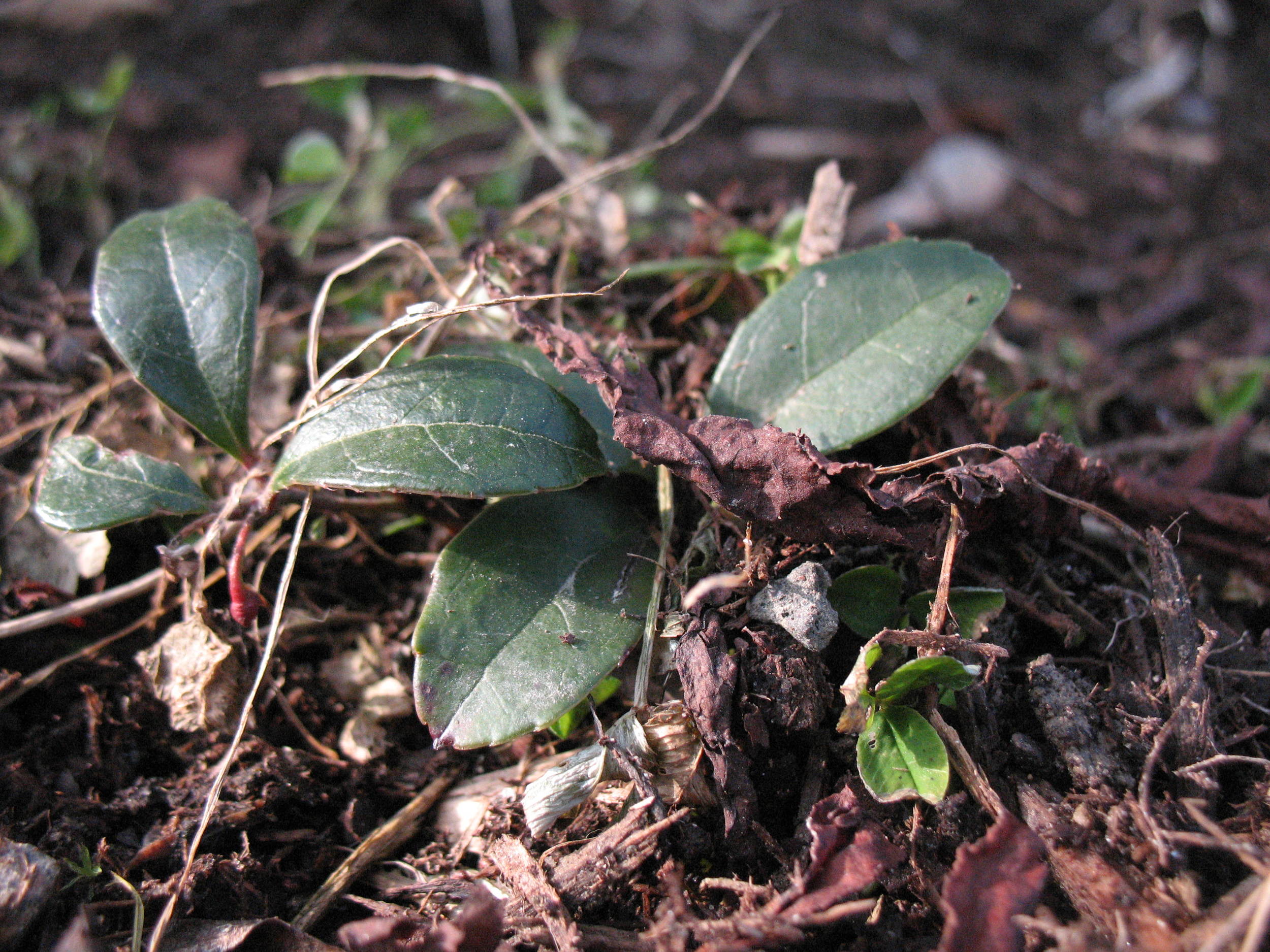
Inspired by Julie's visit and emboldened by the sunshine, I went out to clear away some of the mess from last year.  I was rewarded with a peek at what's coming up ... just in time for a cold snap this weekend.

3-20-10 Dakin Bfast 001

There was the wintergreen, staying as bright as it's supposed to.

3-20-10 Dakin Bfast 002

The first shoots of the soon-to-be inedible sorrel I mentioned last week.  I'm planning to harvest its first leaves for salad before I pull it out to replace with currant bushes.

3-20-10 Dakin Bfast 006

Oh, and look - some perky German thyme from RWP last year.  This is making a roast chicken more and more likely this weekend.

And as I was looking at the bare dirt, I had the sudden thought that I have no idea what is going on with it.  Julie, should I get it tested?  What should I do next to prep it?

Cuba

I recently took a trip to the city of Havana, Cuba with the hope of seeing some of the urban agriculture I had heard so much about. First a little background: the Cuban economy was sent into a complete crisis when the Soviet system collapsed and they lost access to a major trading partner. All exports and imports ground to a screeching halt and Cubans entered what they call the "Special Period." It was during this time that Cuban agriculture shifted from an industrial, chemical intensive model to a more diversified, small scale and organic model. The learning curve was steep out of sheer necessity and now Cuba can show examples of organic agriculture at its best, in spite of the ongoing US embargo. Under the Castro system, Cuban farmers may produce some of their own crops to sell at farmers' markets; this makes farmers one of the few groups that are able to have their own small enterprise since most businesses in Cuba are owned by the government. I was extremely lucky to be able to visit the famous Alamar Organiponico in Havana. This is one of the most innovative, organic vegetable farms I have ever seen and seems to have incredible high yields off of a relatively small parcel of land (roughly 20 acres). The Alamar Organiponico is a Basic Unit of Production, which in Cuban terms means that the land is owned by the government but the produce and its proceeds are owned by the workers who work cooperatively and share the profit. With the help of translator and friend, Majel Reyes, I met with the director of the Organiponico, Miguel Salcines Lopez. He explained to us that when agriculture in Cuba was industrial and monocrop systems only, with high levels of mechanization, many rural people left the countryside because their labor had been replaced by machines and subsistence agriculture was no longer possible. This great influx into the cities made for a new cultural outlook that disdained agrarian life. Part of the importance of the Alamar project is to create a type of agriculture that is human scaled and rewarding on all levels: financial, physical and spiritual. He believes strongly that if the people do not find meaning and beauty in their work, then the plants and crops will suffer.

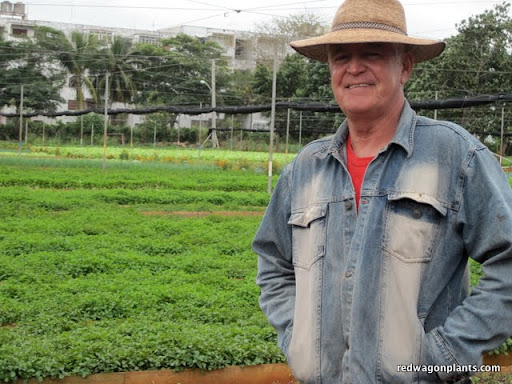
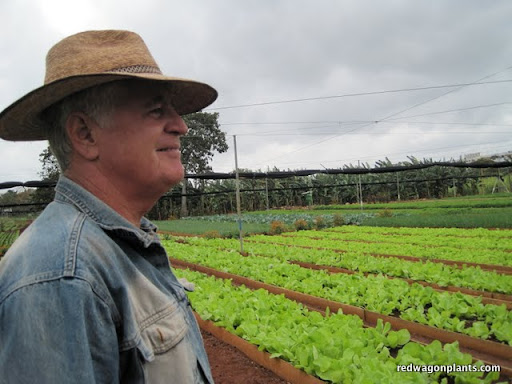
Miguel Salcines, director of the Alamar Organiponico

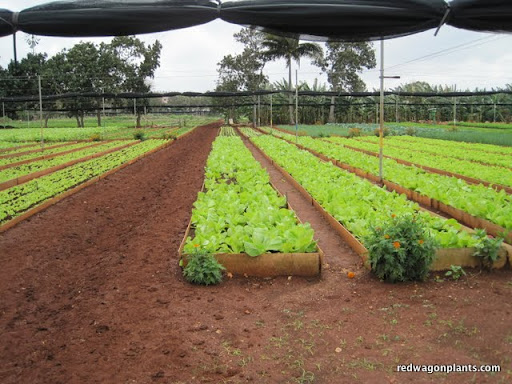
Mr. Salcines was trained as an agronomist and worked for the government in a bureaucratic job for most of his career but said his soul woke up once he was able to work on the organiponico. His joy and enthusiasm seemed contagious. The farm consists of greenhouses, screenhouses, tropical ornamental plant nurseries, small scale forage crops, composting facility, vermiculture facility, a cafe, a farmstand, and a value added facility. Every crop we saw was a healthy bursting splash of green. Most crops are grown in raised beds with four rotations per year. Since the land is farmed so intensively, soil rejuvenation is constantly in motion with the addition of worm castings, compost, and soil innoculated with  mychorrizal fungi (a beneficial fungus which is produced on site).

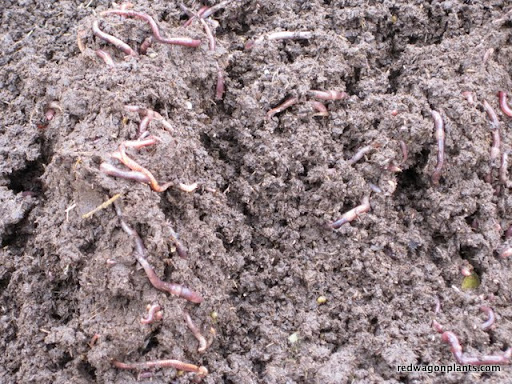
Vermiculture at Alamar
California Red Wrigglers
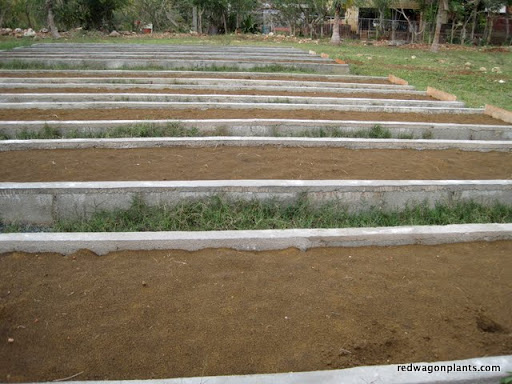
Mychorrizal Fungi production. Plants are grown in cement bunkers, soil is innoculated with benefical spores, root systmes of plants host the fungi, plants are cut down, and fungi multiplies on root systems in soil.

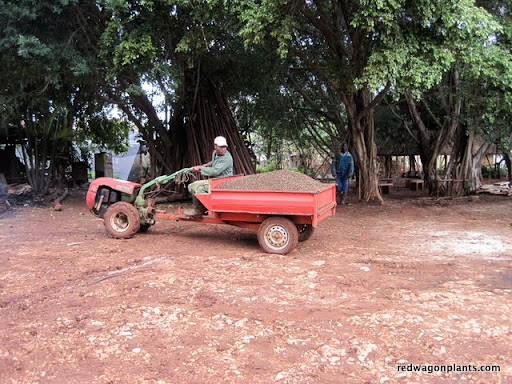
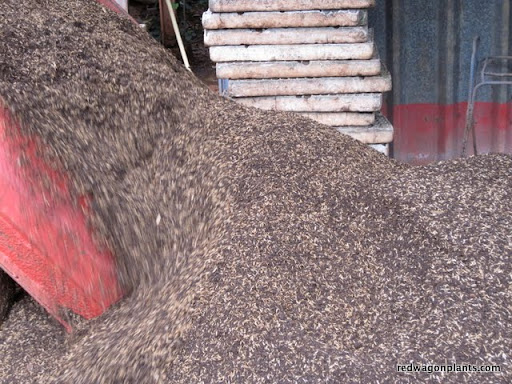
All of their field transplants are grown on site and their potting soil is mixed on site. It is made up of rice hulls, worm castings, and compost.

Potting soil in dump wagon
Dumped out
Potting soil for seed starting
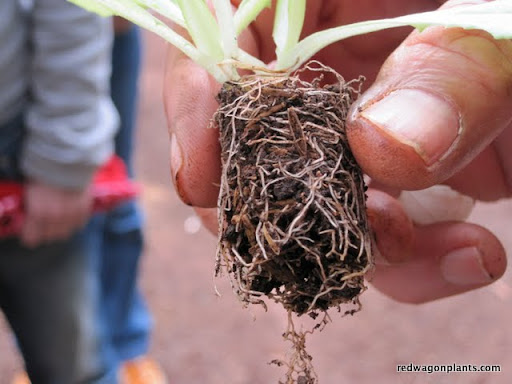
A really healthy root system
Seedlings growing out before being transplanted
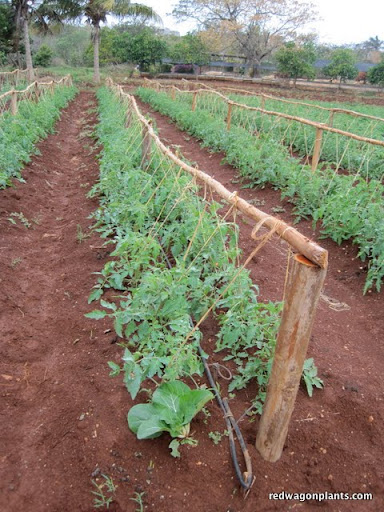
Tomatoes, young and trellised
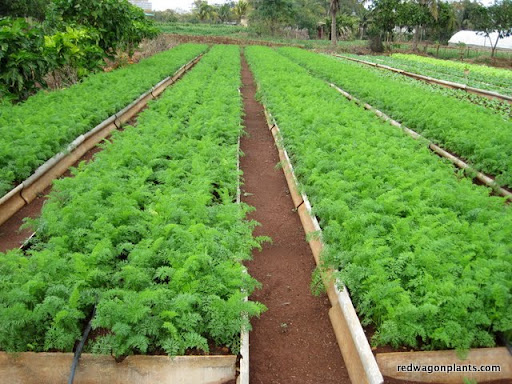
Carrots
Lettuce and herbs
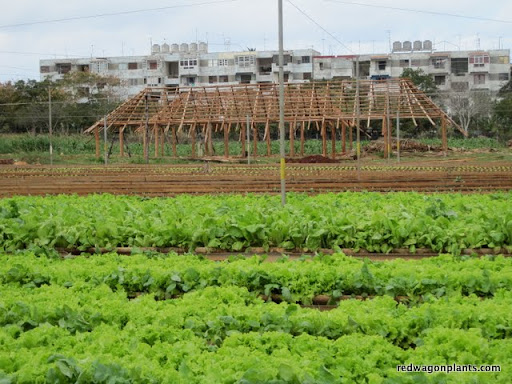
Lettuce, herbs, a pole barn under construction, and housing complex

As you can see, plant spacing is very tight, but because of careful crop rotation, use of beneficial insects, and attention to soil health, disease and insect pressure is at a minimum. I was surprised to see that crops showed no sign of disease or stress in spite of the tight spacing and lack of air circulation between plants.

There are more photos available here. I encourage everyone to consider the possibility of going to Cuba. Americans can go legally under a general license if they are conducting research pertaining to their profession. Seeing a country where the people are at once poor yet highly educated with access to all kinds of arts and culture is a truly illuminating experience. The warmth and intelligence of all the Cubans we met was a life changing experience and one that I hope to repeat.  Cuba libre!

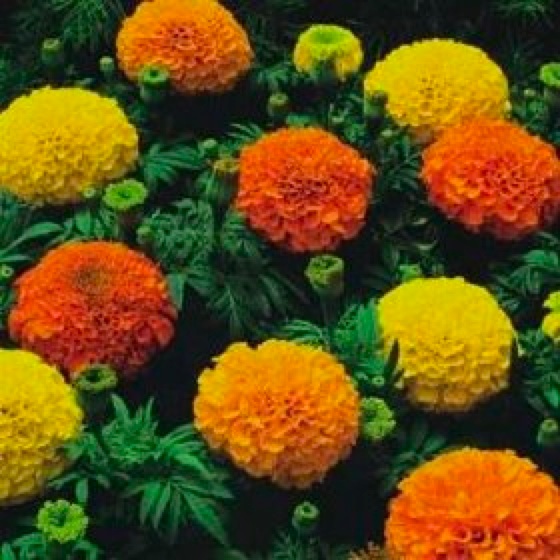
Marigolds

Tiger Eye French Marigold

Marigolds are one of my favorite plants and I find myself often defending them. They have a reputation for being stodgy and boring, and while they are certainly ubiquitous, there are plenty of interesting varieties out there that no one needs to get bored with them.  Discoveries of unusual marigolds continue to delight me as I peruse catalogs and put the finishing touches on our seeding plans.

he first European discovery of them was by the Portuguese in Central America. I am not sure if they were cultivated by Native Americans, or just growing wild, but they were no doubt appreciated. The Portuguese brought them to Europe and India. Now they are used widely throughout the world for ornamental, medicinal, ritual, and culinary purposes. All marigolds are edible, but the small flowere tagetes type, like the gem series are best used for this purpose.

I am working out the timing of all our marigold varieties. Doing the timing means figuring out when to plant them, how often to plant them and what kind of pot they should end up in. When you buy marigolds, they usually come in 4 packs or 6 packs, and have often by treated with a hormone that induces them to bloom on short stems so that you know what they will look like once planted.

We don't use any kind of hormone sprays or growth regulators. So sometimes, we sell marigolds and other annuals while they are still green, without blooms. It involves a little more work because we have to have pictures of the marigolds around the greenhouse and we have to explain why we do it, but really it much better than using  a bunch of chemicals.

Here are some of the new varieties we are doing this year.

I really love marigolds. I know that they are not unusual or rare, but they fire up some sort of ofalctory memory center for me. Maybe my grandmother had them, or my parents planted them. I have no visual memory of them that is as strong as the scent memory. Their pungent, almost citrus-like aroma is a deterent to some and appealing to others. How do you feel about marigolds?

Anyhow, here are a few that I am excited about.

crackerjack Mix Marigold
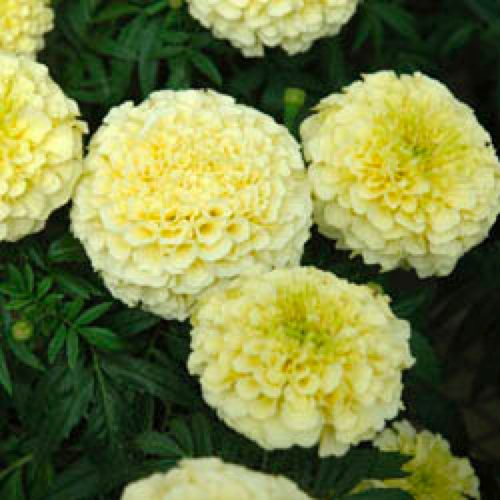
Creamy Vanilla African Marigold
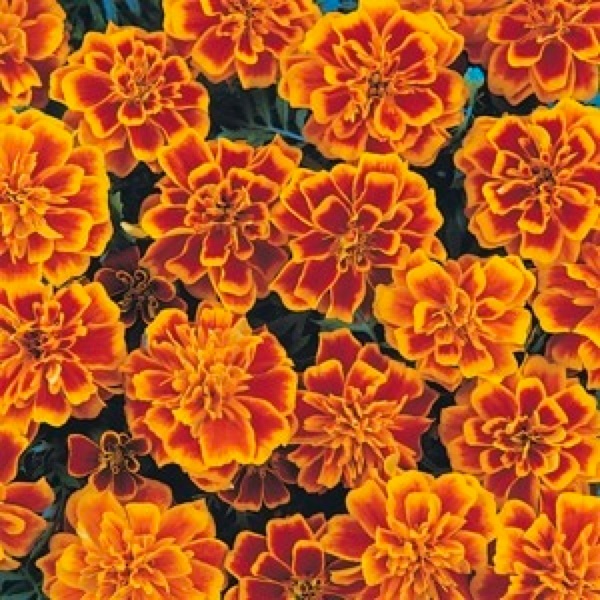
French Bonanza Flame Marigold
Jolly Jester Marigold

This last one is, Jolly Jester, is one of my favorites. It is about 4 feet tall, and not at all a typical marigold. The striped blooms are a contrasting play of lively yellow and deep orange, and they sway gently in the breeze. They do not at all have the stiff appearance of many marigolds and kids just love them. This is an old-fashioned variety - we find the seeds at Seed Savers Exchange which specializes in heirloom seeds of harder to find plants. 97 of our 679 varieties come from them.

Plants for Honey Bees

Calendula

Cleome

Cosmos

Heliotrope

Hyacinth Bean Vine

Salvia

Mints

Scarlet Runner Bean

Sorghum

Basils

Borage

Catnip

Chamomile

Chives

Cilantro

Dill

Germander

Lavender

marjoram

Oregano

Rosemary

Sage

Thyme

Savory

Clematis

Dicentra (Bleeding Heart)

Eupatorium (Joe Pye Weed)

Verbena bonariensis

Lemon Balm

Asclepias

Liatris

Ajuga

Allysum

Echinacea

Perovskia (Russian Sage)

Nepeta

Salix (Willows)

Sambucus (Elderberry)

Physocarpus (Nine Bark)

Lyng's Giant Grey Stripe Sunflower

Fennel, Bronze Leaf

In general, bees like plants whose colors have alot of contrast and they go out to feed off one type of plant at a time, so it is a good idea to plant multiple plants of one type in an area. Creating a pollinator friendly garden will not only help the bees, but will also help your yields in the vegetable and fruit garden. The more pollinators come visiting the better your results...you will see it in the fruit set of squashes, cucumbers, melons, etc. Pollinator gardens help the bees, help our food supply and add beauty to our worlds.

Please visit the resources section of our garden journal for a growing list of resources pertaining to bees and pollination.

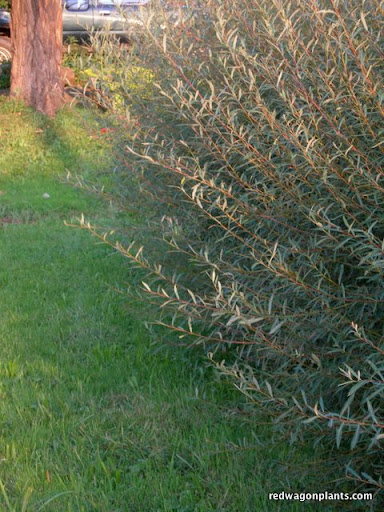
Salix nana or the Willow Wonder

Salix nana or Arctic Blue Willow

Certain plants look just right in the snow, and since I am home so much more in the winter than in the summer, I like to make sure there is some winter appeal to our gardens. We have a hedgerow of Salix nana, or Arctic Blue Willow. They are a fast growing plant, perfect for privacy screens, bird habitat and bee forage.

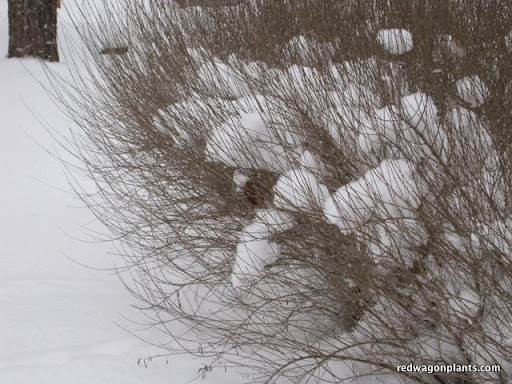
Here is the same shrub in winter. I love how the snow just hangs in the branches. Birds perch here and get out of the wind. And the twiggy nature of these willows keeps them well employed as a privacy screen all year long.

Salix nana in winter

A Time of Acceptance

I love garlic planting time.  You can really learn a lot about your soil when it is fall and the garden has spent a summer being tended (or not).  This is the second burst of good intentions, the first one being the entire month of May when ideas run ecstatically through the garden plan .  Garden cleanup is a confessional time in the gardening calendar. It is a time to look at mistakes, assess and swear to never make them again, renew your commitment to gardening, and prepare to let the passage of a long winter slowly rekindle your optimism for that spring burst.   Or you can  just learn to live with your shortcomings and realize that the garden is a very forgiving place, where perfection, motivation, and execution don't have to be the priorities.  In other words, it's time to take the pressure off.  There is so much of it in our lives, why not let the garden be a place where we accept and embrace imperfection. Garlic planting is a perfect way to mark the impending doom of winter and the shortening days.  Tucking those fat cloves deep into the earth, I feel unbounded optimism, a deep sense of satisfaction that I am punctuating the calendar with an earthy tradition, full of meaning and metaphor.  The garden is a great place to create your own traditions that are in step with changing seasons; it's a place of rituals that are private and intimate,  between you and your dirt. When I plant garlic, I imagine winter as a time to prepare for spring, as a passage in the circular cycle.  The thought of those cloves, tucked into their bed and nestled in straw, remind me that it is alright to take time to just rest and renew come those cold and bleak days.

I always start by selecting a site for the garlic that will benefit both the garden, the garlic and future crops.  Garlic brings a full  9 months of cultivation to the garden, much more than other vegetable plantings.  With it also comes a deep soil work up, a thick layer of composted manure, and another thick layer of straw.  These are all great ways to treat your soil and whatever is planted in that spot, in your garden's future, will feel the love.  As part of my garden rotation, I spend the winter imagining what will be planted where the garlic once stood, which crop will benefit from the extra organic matter and nutrients and care that the garlic received.  Many people think that garlic is a healing food with all sorts of immune boosting properties....I think it does the same type of work in the garden.  Once again, I am reminded of the way gardening is a microcosm of life and of the body, following the cycle not just of the seasons, but also, of growth and acceptance.

The Rototiller and the Gym

straw in the garden

Every year, around October, I join a local gym and start to do arduous things indoors.  I don't love to exercise indoors, but it's a way to keep myself from going a little batty and  it means I can't use our foul weather as an excuse.  This year though, I am waiting a little longer to submit myself to the four walls and the machines and instead I am tilling my garden by hand.  With a fork.  You may be asking, what, pray tell has come over her? Well, two things....rototilling is bad for your soil and, yes,  I like the workout.  Those rototiller tines break up the titlth and structure of your soil, churning everything up too finely and forcing all of the organic matter to decompose too quickly, thereby not leaving the nutrients in the ground for next year's plants.  It also only works the top layer of the soil and leaves an untouched hard pan just a few inches below the surface--not ideal for root crops or any plant with a tap root. You can read about no-till agriculture here and here.  It is the newish trend in organic farming systems that copy how things were done a long time ago, before big farm machinery,  and has been proven to reduce carbon emissions by using fewer fossil fuels, and by storing carbon in plants rather than by losing it to the atmosphere when plant matter breaks down too quickly.  All this sounds like a great reason to park the rototiller permanently, but the truth is, I do it for other reasons as well.  I don't own a rottotiller; I don't like having to ask someone to do it, and I like the messy workout.  Here's how I did it this year. Back in the spring, I invested in about 20 bales of straw.  My garden is broken up into an odd assortment of rectangles connected with meandering paths.  It is a place that encourages inefficient wandering and discourages straight ahead speed. I love my garden for these qualities that make it an antithesis to the hassle and bustle of most days. And it's another reason a machine just doesn't work for me: I don't want one big rectangle with a bunch of straight rows.  Rather, I like my garden to have a series of mini gardens with their own mini rows and blocks. It makes for a beautiful patchwork quilt of vegetables.  So when I started to plant everything back in April and May, I covered up the paths and all the bare soil around the plants with lots of straw.  This did a great job of keeping down weeds and limiting the amount of water the plants needed.  I added more straw and pulled a weed here and there, but for the most part, found that the initial investment more than paid for itself in time spent swimming.

Now that the plants are done, I am going through and cutting down dead stalks, composting them in a corner along with some of Rosie and Pokey's donkey manure.  For crops that can be planted in fairly coarse soil, I will just leave the straw in place and come next spring, I will push the straw away, add a big scoop of compost, incorporate compost and soil, dig a little hoel,  and plant right into that.  I will add more straw too since so much of it will break down over the winter.

For prepping areas where I am going to be seeding first thing in the spring, I'll need a finer bed preparation which will be done in two phases.  Fall phase, now, is to push away the straw, churn up the soil with a four pronged pitchfork, smash it up a little, rake it smooth, and place the straw back on top.  This keeps the soil in place and does not allow erosion to do its thing.  Come April, I will push the straw back yet again, hoe and rake the bed to make the top layer of soil fine and not too chunky, and plant some seeds in little furrows.  The straw just waits in piles along the edge of the rectangle and gets spread out again once the seeded plants are about 6" to 8" high.  This requires a little weeding around the plants in between straw replacement times, but it's not too much.

This sounds like a lot of work, but it saves time come spring to prep as much of the garden as possible now.  I really like the benefit of seeing the soil texture improve year to year and each little rectangle of my garden seems to have its own characteristics.  It all feels very wholistic, a little messy, and not at all perfect.  I don't feel bad when some weeds get through the system because I will just pull them out or chop them down and layer them into the accumulated straw.  It's about your mulch being part of your fertility plan and it is about gadening without guilt.  The gym can wait another month while I play in the dirt a little longer.

Planting the Perfect Pumpkin

We all want that giant, magical pumpkin come harvest time.  Here are a few tips to get you there.  Pumpkins are related to cucumbers, melons, summer squash, zucchini, and winter squashes and all of the vegetables in this family will benefit from this treatment. Warm soil. In Vermont wait until early June to put out the plants--a good rule of thumb is to wait until we have had a few nights above 50 F degrees. Transplants do better than seeds since you will have a head start on the season and don't risk having seeds rot in cold soil or be eaten by the local rodent.  It's best to keep two plants together when transplanting since the larger volume of foliage will help shade out weeds later in the season.

A raised bed or mound. This will help warm the soil and improve drainage.  It also gives the plants' shallow roots a place full or looser soil to spread without strain.

Lots of fertility. Compost is a  must for successful pumpkins, squashes, cucumbers and melons.  At home, we use rotted donkey manure (thanks to Pokey and Rosy) mixed with well composted yard debris (leaves, grass clippings) and food scraps.  More can be learned about compost at the Vermont Compost Company website.  A little granular fertilizer can be used as well if you do not have access to good compost and/or very poor soils.  A soil test is always a good idea, and can be done easily at your local extension office.

Adequate water. One inch a week.  That means that if it does not rain, you should gently pour about 3 gallons of water at the base of your plants.  A slow drip irrigation system or soaker hose is a great option as well.

Full sun. There is no compromise on this one.  The plants must have at least 8 to 10 hours of full sunlight.

Lots of room.  Plants (actually, groups of 2 plants) should be at least 3 feet apart. They need that much space for proper ventilation and so that the flowers and foliage are exposed to pollinators and sunlight.

Pollination. Plant a few bee friendly plants such as calendula, borage, mint and salvias around your garden to attract bees and other beneficial insects.  Cucurbit plants have male and female flowers on each plant and have to be pollinated by insects.  Welcoming bees to your garden will help yields since more female flowers will become pollinated--the only way for them to produce fruit.

Harvest at the right time. Winter squashes and pumpkins should be harvested when the skins are hard and cannot be pierced by your thumbnail.  Summer squashes and cucumbers and zucchini should be harvested at whatever stage you like to eat them, from baby to baseball bats.  Watermelons are harvested when the tendrils on either side of the attaching stem are dead and the yellow spot on the bottom of the fruit (where it rests on the ground) is a deep yellow, and when thunking the fruit with your knuckle produces a hollow sound.  Cantaloupes are ready when they slip off the vine with a gentle tug (called the "half slip stage").  Melons take a little trial and error to learn to harvest at the right time, but a good rule of thumb is "if in doubt, wait."

The Autumn Garden: Time to Gather and Restore

With these colder days also come a chance to produce a few more late season greens in the vegetable garden. These include lettuce, kale, parsley cilantro, arugula, mustard greens and spinach. Here is a simple system that can be followed by anyone wishing to extend the fall and winter harvest.

Julie's Introduction

If you ask me, September is the best month in the garden.

The warm season crops are still doing well (in theory) and the colder season crops are starting to come back, thankful for the cooler nights.

The harvest basket seems to just fill itself up the minute I step into the straw mulched paths, pausing for a moment to ask if I should eat the raspberries before or after I do a little grunt work.

But while all of this pastoral musing seems idyllic enough, there are some other thoughts in the nether layers that I need to reckon with.

First of all, why is my garden so big?

Why is it that every April, the month of good intentions, I decide that this is the year I will finally find time to keep everything weeded and tended?

As we slide from April to September, my good intentions are slowly eclipsed by my desire to spend summertime in places other than the garden. I love to bike, hike, swim, row, travel, read in the hammock, and yes, I love to cook, hence the garden. But gardening feels like work when it is 95 F and the weeds are scratching my neck.

I used to feel guilty about all of this, but now I have learned to cope with the ebb and flow of my gardening enthusiasm-- what I am working on now is gardening without guilt.

While it is true that I am very passionate about gardening, I realize that there is a seasonal drive to every aspect of this hobby. Every gardener must come to terms with his or her own type of engagement in the garden. There is no right or wrong way to garden. There is beauty and purpose in every type of garden and what matters most is that a garden meets the needs of the gardener, not the other way around. Gardens without guilt are places of liberation and revelation....a place to accept both our shortcomings and our successes.

The food coming out of my garden this year is bountiful as always, and I have managed to learn a few things which have made the garden easier to manage in spite of its size. Over the next few months as we go through another autumn and winter cycle, I will reflect on what gardening means to me, what I do with the food from my garden, and how I go about deciding what to grow at Red Wagon Plants.

As I share these thoughts with you, I encourage you to share your notions about The Garden. What works well for you? What are the disasters? How does your garden fit into your life? This garden journal is a collective effort between the people of Red Wagon Plants and the family of customers created by all of those young plants going out into the world of our gardens. We hope you will share the thoughts you glean this season and keep the conversation going until we see you again in the spring.

Cheryl's Introductory Post

And the tomatoes, with their smell of high summer, and the wavy lines of heat off our driveway and loud trill of cicadas in the background. I don't remember what we did with them, but I know that's where my love of growing things began. It was tomato plants that first called up a particular sense of wonder in our natural world. How could this tiny seed transform into these green sharp leaves, these yellow star flowers, this juicy bursting fruit?

Don't Fear Frost! Extending Your Growing Season

Here in Vermont, we can count on just a few frost-free months. But with a little bit of planning, strategic planting, and getting the right tools, you can harvest through a bit of frost and snow. But by planning out crop planting so that crops are mature before the short days and cold weather hits, you can then protect them and harvest them well into winter.

Row covers such as reemay are usually used with hoops made of #9 gauge wire so that the fabric does not rest right on the plants. These covers breath and come in various weights. They allow light and water in, but raise the temperature of the soil and air inside the cover.

Cold frames are simple boxes that are filled with good quality soil and are covered with windows (called "lights") or clear plexiglass or sometimes plastic. They are used for season extension, plant protection, as mini-greenhouses, and as a place to overwinter tender perennials. The covers are closed at night and opened on sunny days. Lettuce, spinach, hardy greens, and herbs can be grown most of the winter in a hot bed with a south facing light. "Hot beds" are deep cold frames that hold a thick layer of manure below the soil. As the manure decomposes, it lets out a tremendous amount of heat which keeps the frame very warm at night even in the winter. Cold frames can be made out of wood, straw, stone, concrete with old storm windows on hinges. The windows must be small enough that they can be opened and closed easily by raising them up and propping them with a stick.

Straw mulch is a great way to extend the season for vegetables such as kale, spinach, carrots, beets and other root crops. Once the crops are matured, a very thick layer of straw around the base of the plants will keep the ground from freezing so that the roots may still be harvested. The straw also keeps the top of the crops from freezing in extreme temperatures. Spinach can be overwintered under straw so that an early spring crop can be eaten. Kale lasts well into winter and is also helped by a deep straw layer so that the cold wind does not completely dessicate the leaves.

Every home garden has microclimates. It is a good idea to take advantage of these when planning the fall garden. A south-facing foundation wall is a great place to prep a small area for greens and herbs that will be well sheltered from cold, northern winds. It's a good place to situate a cold frame as well and to plant it with radishes, greens, and other crops that will benefit from the micro climate.

Containers are another great way to extend the season. Herbs, greens and lettuces can be planted in pots, apple crates, milk crates, or window boxes and moved inside when the weather gets too cold. While they might not last all winter long, they will certainly give you some fresh eating for a few months longer...all you need is a sunny spot or some simple grow lights. Thyme, parsley, rosemary, and sage all do well in containers in the home and will last all winter. Kale and lettuce will last up to 5 or 6 weeks longer than they would outdoors.

Photograph by One Green Generation . Creative Commons license.

The Garden Awakens Our Senses

There are times that the scents tantalize you, as in the thyme wafting up from a spring raking, or perhaps you go to where your cat is taking in the first of the catnip leaves and you too join in! Other days it may be the sounds of all the birds that capture your ears. A single buzz of a bee laden with pollen is one of my favorite moments in the quietude of the garden. Then the touch, the feel, of soil on your hands.

Spring Time Gardening: Getting an Early Start

The most cold tolerant food crops we can grow here are things like kale, spinach, collards, arugula, mustard greens, mache (corn salad), and many herbs such as cilantro, dill, sorrel, and chives. Certain lettuces are very cold hardy, but they cannot take the frost quite as well as the plants mentioned above--good cold hardy varieties include the French heirlooms, “Reines des Glaces” and “Merveiles des Quatres Saisons.” These most tender and delicate looking lettuces can take quite a beating when it comes to cold weather.