Herb Salad

SaltsWorkshopPromo-4.jpg

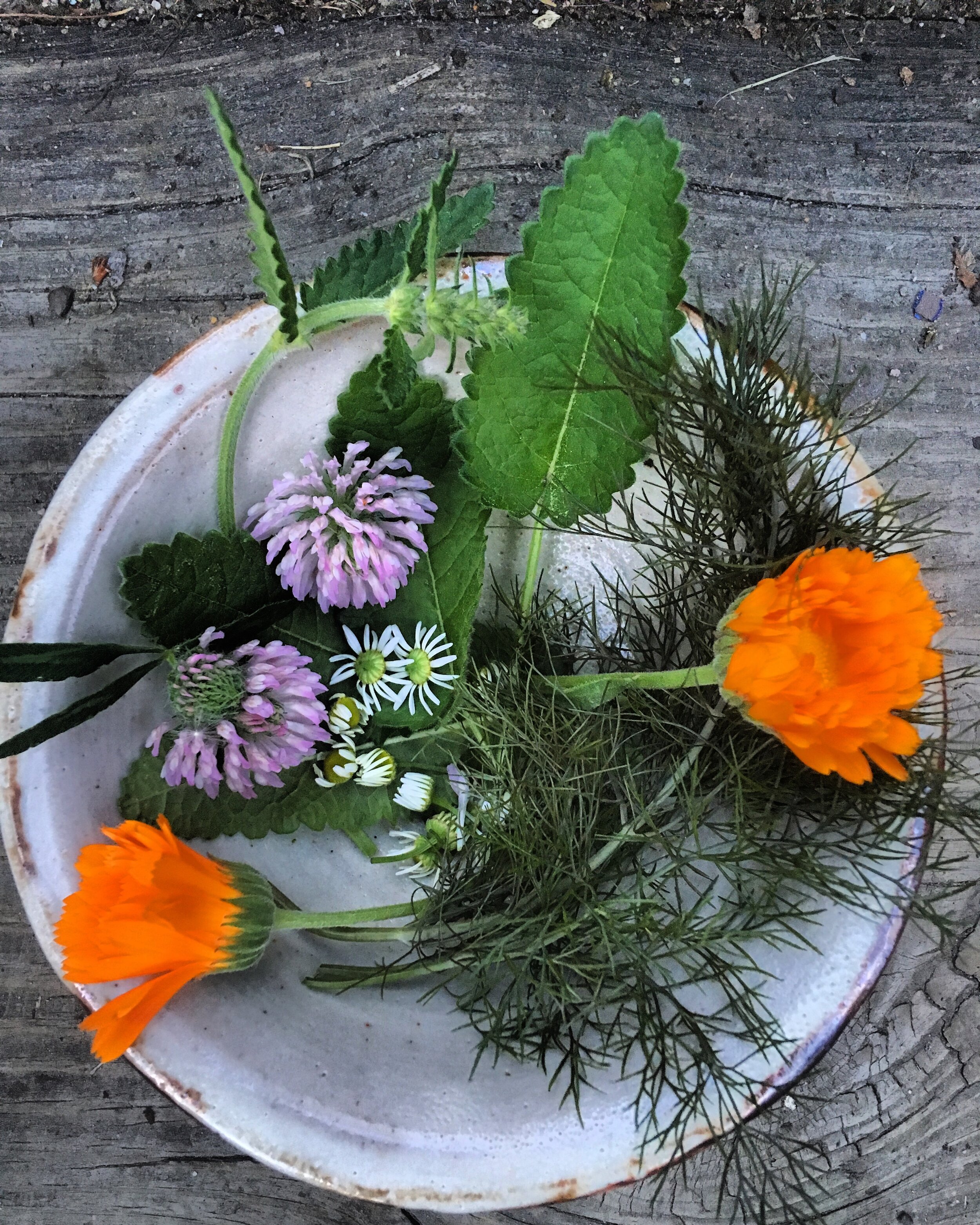
This is a simple way to use herbs from the garden and create a delicious condiment to add to soups; grilled meats, fish or vegetables; or eat on its own. Feel free to get creative with the herbs you have, experiment, and blend types of herbs together based on what you prefer. What follows is a master recipe to use as a guide.

HERB SALAD MASTER RECIPE

2 cups roughly chopped parsley, or flat parsley leaves (individually picked off the stems)

½ cup scallions or chives, finely chopped or ¼ cup shallots very finely chopped

¼ cup additional herb of your choice (optional): lemon basil, thai basil, marjoram, oregano, etc (this is where the fun pairing with foods happens)

juice of ½ a lemon

¼ tsp finely crushed raw garlic (optional)

2 TBS olive oil

Salt to taste (I like a flaky salt such as Maldon)

Freshly cracked black pepper to taste

Combine all the ingredients in a medium bowl, and taste for salt. If it tastes too tart, a tiny sprinkle of sugar can help balance the flavors.

Other possibilities:

For tacos or beans: use cilantro instead of parsley, lime juice instead of lemon and add some finely chopped hot pepper.

With fish or chicken: : add ¼ cup of tarragon or chervil or dill to the parsley

On tomato based dishes like pizza, grilled tomatoes, or red sauced pasta: add ¼ cup marjoram or oregano. Cut back the lemon juice to just a squeeze of lemon. If you have lemon basil, this is a great place to use it. And note that the flowers of the herbs are declicious too.

On pork right off the grill: add some bronze leaf fennel flowers, finely chopped.

With pasta or potato salads: substitute red wine vinegar for the lemon juice, and add lots of basil cut into fine ribbons “chiffonade”. Stir the herb salad into the pasta or potatoes. If you increase the oil and vinegar, the herb salad becomes a dressing of sorts.

Add some finely chopped celery and carrot, and turn into a stand alone salad or spoon onto green salads.

Use as a condiment in sandwiches

Spoon on grilled or toasted bread, and shave a good parmesan or other hard cheese on the top for a simple lunch.

Use as a topping for scrambled eggs or a filling for an omelet with feta cheese

Succession Gardening for Success

savoy cabbage.jpg

Garden Planning for the Seasonal Kitchen

Growing vegetables in your backyard, community garden or in containers by the kitchen door is a great way to feed yourself - whether it be just a few ripe tomatoes in August or a full-fledged homesteader's garden, you are on the path to feeding yourself and your family. Gardening is a great way to improve how you eat while spending some contemplative time outside. With all of these benefits in mind, it is easy to jump into gardening enthusiastically, and you will reap even more rewards with a little bit of planning. In Vermont, our gardening season seems short but can be stretched almost year round with a few simple tips. I always recommend that people take a look at how their vegetable gardens have been in the past and find just one or two things they would like to improve so that they can grow more of it for a longer season. For example a common question I hear is "how can I keep cilantro from bolting?" Well, in short, you can't. But with a few changes in your gardening practices, you can grow it all spring, summer, and fall without ever seeing it go to seed.    The trick is to understand the life cycle of each vegetable or herb and how to best plant it to maximize its harvest. With certain crops, like zucchini, it is best to understand how prolific they are and to plant them conservatively so that the entire garden (and thereby your diet and your neighbors' diet) is not taken over with just one thing. It is also helpful to plant things seasonally so that the harvest is not so overwhelming in August with little to eat before or after. Or sometimes we just want fresh salads all summer, but don't replant and are left salad-less after July 1st.

Succession Planting for Successful Gardening

Certain crops should be planted multiple times throughout the season to ensure a continuous harvest. This is called succession planting. How often you plant is a matter of taste and space and time. The following list describes the maximum you could do with each crop, but adjust according to your needs and priorities - this is just a guide. If you want to make sure you have a certain vegetable all summer long, then you can follow the guidelines. If you want it a little less, then create your own modified planting schedule.

  • Lettuce can be grown from seed or from transplants. Seed grown lettuce is often grown in a row that can be cut and will re-grow a few times - think of mesclun. Transplanted lettuce can be grown to produce full heads like what you find in the store. Both methods require regular planting every week or two for a continuous harvest. It can be planted from seed in mid-April to mid-August for cut greens and transplanted for full heads from late April / early May through early August. Some people will transplant a few plants and plant some seeds at the same time in a different area; this method provides two generations of lettuce and two types of salad greens. Once the cut lettuce becomes bitter in the heat of summer, it is best to pull it up, recondition the soil with compost, and plant something else. If the goal is to always have fresh lettuce, it is very simple to do if you remember to replant it. You can even purchase a number of plants and hold some in their pots in a shady spot and only plant out a few each week. You can seed it yourself in trays or pots and follow this same method. Having several varieties, cold-tolerant ones for spring and fall plantings, and heat-tolerant ones for mid-summer, will produce the best flavor.

  • Cilantro is very similar to lettuce in its growing habits. It will grow up to a point and then goes to seed, called bolting. It will bolt more quickly in summer heat and, conversely, will stand ready to harvest for many weeks in the cool weather of fall - even early winter. It is good to time plantings so that cilantro is ready to harvest before June 21 (the solstice), and then plant more afterward. It can be transplanted or grown from seed. Like lettuce, it is simple to do both at the same time, thereby giving the gardener two generations. Cilantro seed is coriander, so it does have a use if you enjoy that flavor. There is nothing you can do to prevent cilantro from bolting entirely, but you can slow the process down by placing your mid-summer plantings in a partly-shady spot.

  • Dill can be treated just like cilantro, and, like coriander seed, dill seed heads have a use in the kitchen, so it is fine to let some of the dill patch go to seed. The seed heads can be used in pickles. you can also let them self-sow or save the fully dried seeds in a paper bag for replanting.

  • Basil can be planted multiple times for best results. Plants can be pinched to slow down the flowering, but best flavor will come from newly replanted basil plants. This is a heat loving plant. Should only be planted once soil temps are in the upper 50's - usually last week in May or first week in June. Basil's flavor is at its peak right before it starts to make flowers.

  • Cucumbers, cantaloupes, and zucchini and summer squash are best in quality when well tended. Just a single plant or two of any of those is usually enough for the home gardener, but by planting it two to three different times, spaced out, the quality will always be good. The dates are: June 1st (or last week in May if you are in a warm spot), July 1st and July 15th. This method will ensure a continuous harvest of prime looking vegetables. Just remember to pull out and discard the pest- and disease-prone older plants. If your compost gets very hot and is well managed, it is okay to compost these plants. Pest problems will diminish when the older, less healthy plants are removed. And you can use that opened up space for a quick growing crop like, lettuce, herbs, scallions, greens or fennel.

  • Arugula, mustards and other cutting greens for salads are best if sown or transplanted on a weekly or biweekly basis. Again, a small amount can be seeded next to the transplanted crops in order to give you 2 generations at once. This way you can have smaller quantities coming in at various times.

  • Broccoli gives the gardener a couple of options. It is best if transplanted and can be planted over 3 dates in the spring and 3 dates in late summer for a continuous harvest. I would choose late April, early May and mid May for the spring plantings and then Early August, mid August and early September for the fall plantings. Full heads can be harvested and the plants can stay in the ground to produce side shoots.

  • Green Beans are best when fresh and young. The seed is relatively cheap, so it is better to rip out old plants and have new ones coming along regularly. Having smaller, multiple plantings also means that no on is stuck picking beans for hours on end. Sow new seeds when the previous or first generation is about 6 inches high.

  • Boc Choi, Cabbage, and Cauliflower can also be planted multiple times. Cabbage holds well in the heat and can be planted every couple of weeks late April through early August. Boc Choi and Cauliflower are not as heat tolerant and should be planted around the same dates as broccoli (see above). It is best to use row cover like Reemay on these young transplants so that flea beetles do not destroy the plants.

  • Spinach is another one that does not do well in the heat, but can be planted multiple times in spring and late summer. It can also overwinter with a little straw mulch for very early spring eating. Frequency of planting can happen every week mid April to early June and then early August to mid September. The last plantings in September are the ones which will be over-wintered and eaten the following spring. Apply straw mulch on overwintering spinach in December once the ground is frozen.

  • Beets, Carrots, Turnips can be planted from seed every two or three weeks from mid-April until about the third week in July. Summer carrots are not the same as fall carrots and certain varieties do better in summer than in fall. The flavor of fall carrots is much sweeter, so I usually plant a larger patch in the fall. Fall carrots can also be stored all winter without going bad due to their lower moisture content. I don't love summer carrots, so I often skip those. Remember, it is all about what you like to eat.

  • Celery and Celeriac are slower growing and can be transplanted 1 to 3 times during the season, from mid May until early July. These need lots of water and benefit from straw mulch to hold the moisture evenly around the roots.

  • Bulb Fennel and radishes are similar to lettuce - they can be planted each week if really loved, but they bolt in the heat and do best in the cooler temperatures of spring and fall. They are best if planted late April to early June and then again late August to mid September. They are cold tolerant and hold well in late fall. Radishes are grown from seeds and fennel is best transplanted. Fennel also benefits from a straw mulch - even moisture around the roots is what helps it make larger roots.

  • Corn - it is possible to do multiple plantings over different weeks, but an easier method is to plant all at once, but with various varieties that have different days to maturity. There can be a 40 day span between early and late varieties.

  • Peas can be planted every week, but this requires a lot of harvesting, irrigating, trellising, and variety research. It is possible though. More practically, the home gardener can sow 2 or 3 varieties in late April with various days to maturity. Fall plantings are sometimes successful but are weather-dependent. These should be done in mid August.

The following are generally planted just once a year, but the harvest can be staggered with a few tricks:

  • Tomatoes, Peppers, Eggplant - try a few varieties of each in order to not have everything at once. Determinate tomatoes will provide you with a big harvest all at once which is a good thing for people who make big batches of sauce for canning or freezing. Determinate tomatoes are the ones that grow until a certain height and then mature all at once. Indeterminate tomatoes are the ones that grow indefinitely until the frost and the fruit ripens gradually August until frost or disease kills the plant.

  • Peppers and eggplant are best if transplanted in early June once the soil warms up. One planting is usually plenty, but again an assortment of varieties will keep the harvest varied, staggered and interesting.

  • Onions and Potatoes are generally planted all at once, and again a few different varieties will provide you with a longer period of fresh eating. Both onions and potatoes can be stored for long periods of time in cool and dark conditions. Both can also be eaten fresh as young, green onions or new potatoes. Both can be harvested, cured, and stored for eating year round, though some onion varieties store much longer than others.

  • Winter Squash is another crop that is planted just once and can be stored. It is best cured for a week or two in a warm spot before eating.

  • Watermelons are usually planted just once in the home garden (early June is best). Cantaloupes can be planted as late as early July.

Open Spots

When you harvest a crop and create an open spot in the garden, take advantage of that spot with any of the quick growing crops that you like to eat. Some easy ones to try from transplants:

  • arugula

  • baby boc choi

  • fennel

  • lettuce

  • mustard greens

  • scallions

  • kale

  • chard

  • beets

  • herbs - pretty much any herb can be planted up until early August. Cilantro, dill, parsley, chervil are all cold tolerant and can be planted as late as mid-September from plants (mid August to late from seeds)

You can also tuck in flowers that grow vertically and don’t take up too much room:

  • cosmos

  • verbena bonariensis

  • lisianthus

  • calendula

  • poppies

From seed, you can try:

  • carrots

  • beets

  • radish

  • asian greens

  • mustard greens

  • lettuce

  • bush beans

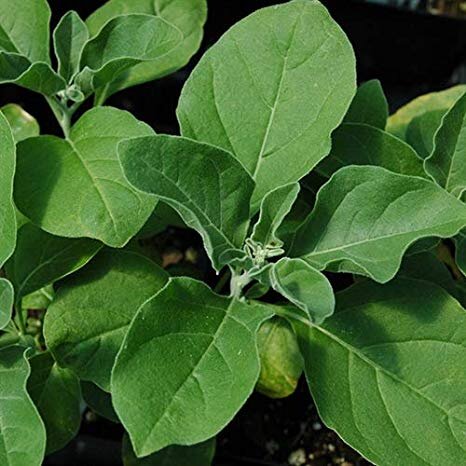
Ashwagandha, aka Winter Cherry or Indian Ginseng, Withania somnifera, Solanaceae

ashwaganda.jpg

If you’ve been tracking the various “wellness” industries in the past few years, or even just perused the supplement section at your local grocery store, you’ve likely noticed the name of Withania somnifera, commonly called ashwagandha or winter cherry. A powerful herb popularly used in Indian Ayurvedic medicine (among other medicinal traditions of southeast Asia and Africa), ashwagandha root has become something of a darling in the West, used in expensive skincare regimes and “biohacking” diets that pledge eternal life to the devoted. As a member of the class of herbs known as “adaptogens”, ashwagandha has been traditionally used to help with sleep, build adrenal reserves, and improve overall vitality. However, like any exotic remedy, there are very real concerns around the sustainability and ethical production of plants grown far away once an unprecedented demand for them has been created. 

Lucky for us, ashwagandha is a fun and relatively simple herb to grow in the home garden, and its very real health benefits provide an opportunity to easily upgrade your medicine chest. A member of the Solanaceae family, ashwagandha shares some characteristics with other family members like eggplants and peppers. It produces husk-enclosed fruits that look like tiny tomatillos, and appreciates plenty of heat and sunshine. However, ashwagandha is adapted to grow in sandy, dry conditions, and doesn’t need much in the way of water or fertility, just sweet, well-draining soil. Ashwagandha is prized for its long, tough roots, so well-worked soil is imperative to good root growth. The plants should be started indoors or purchased from a nursery (like Red Wagon) to give you a jump start on the season, and only transplanted outside or into a greenhouse once the soil has fully warmed up. I like to space my plants about a foot apart, which provides room for root growth but allows the plants to support each other once they reach their mature height of two to three feet tall.

Ashwagandha grows well alongside Tulsi or other sturdy mint family members like lemon balm, especially those that don’t mind a little shade cast by the ashwagandha leaves. I’ve planted calendula around my plants as well, but the calendula can become a bit leggy if they’re spaced too closely together. The same beetles that like to snack on tomatillo plants (called tomatillo beetles or three-lined potato beetles) will attempt to feast on your ashwagandha leaves. Check the leaves regularly for the tell-tale orange eggs, and if necessary put on some gloves and squash the mating adults and larvae when you see them. Even with a fair amount of leaf damage, the ashwagandha plants will soldier on, but I think it makes for better medicine when the plants are lovingly defended. While the flowers are fairly drab, the husked fruits make for a beautiful backdrop as they turn red in early fall.

Ashwagandha and Tulsi have similar cultural needs: they are warm-climate perennial plants that really thrive as annuals in our short northern summers. Plant ashwagandha in early June, and watch it take off through the whole summer, right up until frost. Harvest by loosening the soil and pulling the whole plant up, making sure not to break the roots in the process. Roots should be sprayed clean and chopped up immediately (a sharp pair of pruners will do the job). The first year I grew ashwagandha, I pulled up a plant and neglected to chop it up for a couple days. That was four years ago, and I still have that same root hanging as an ornament in my house- it grew so rock-hard that processing quickly became an impossible task. Once the roots have been chopped, you have a few options. You can use them whole (added to chai blends or tinctured in vodka), or you can further powder the root and add it to everything from drinks to baked goods. 

Honestly, the first time I smelled fresh ashwagandha root, I thought it smelled like a swimming pool. Since falling in love with its gentle, nourishing qualities, I now associate the smell with the plant’s own charisma. Once dried, the smell is reduced, and you’re left with a potent medicinal herb that carries the extra benefits of being locally grown and lovingly harvested.

Many of the constituents in ashwagandha are best extracted in a bit of fat, so I usually simmer it in a bit of milk or coconut oil when preparing it. Below is a simple recipe for hot chocolate. Try drinking before bedtime to ease into a restful sleep, or as a midday boost without added caffeine! And of course, always talk with your health care practitioner about any herbs or supplements you’re regularly utilizing.

Ashwagandha Hot Cocoa:

  • Ashwagandha root, chopped and dried

  • Cocoa powder

  • Dark chocolate chunks

  • Milk (cow or non-dairy, but make sure it has some fat in it)

  • Cinnamon

  • Sweetener of your choice (I like maple syrup)

    • Toss a handful of chocolate chunks into a saucepan, cover with water, and stir while simmering, until chocolate has thoroughly melted into the water. 

    • Add ashwagandha root (about a tablespoon per serving) and simmer for 5-10 minutes.

    • Add cocoa powder, milk, and cinnamon, and continue to cook on low heat for another 5-10 minutes.

    • Add sweetener to taste, strain out ashwagandha, and serve! The cooked roots can be reused a couple of times before composting. 

Resources:

Ashwagandha monograph: https://www.herbrally.com/monographs/ashwagandha 

Cech, Richo. Making Plant Medicine. Herbal Reads, 2000

Sweet Potato Time Has Come

sweet potatoes.jpeg

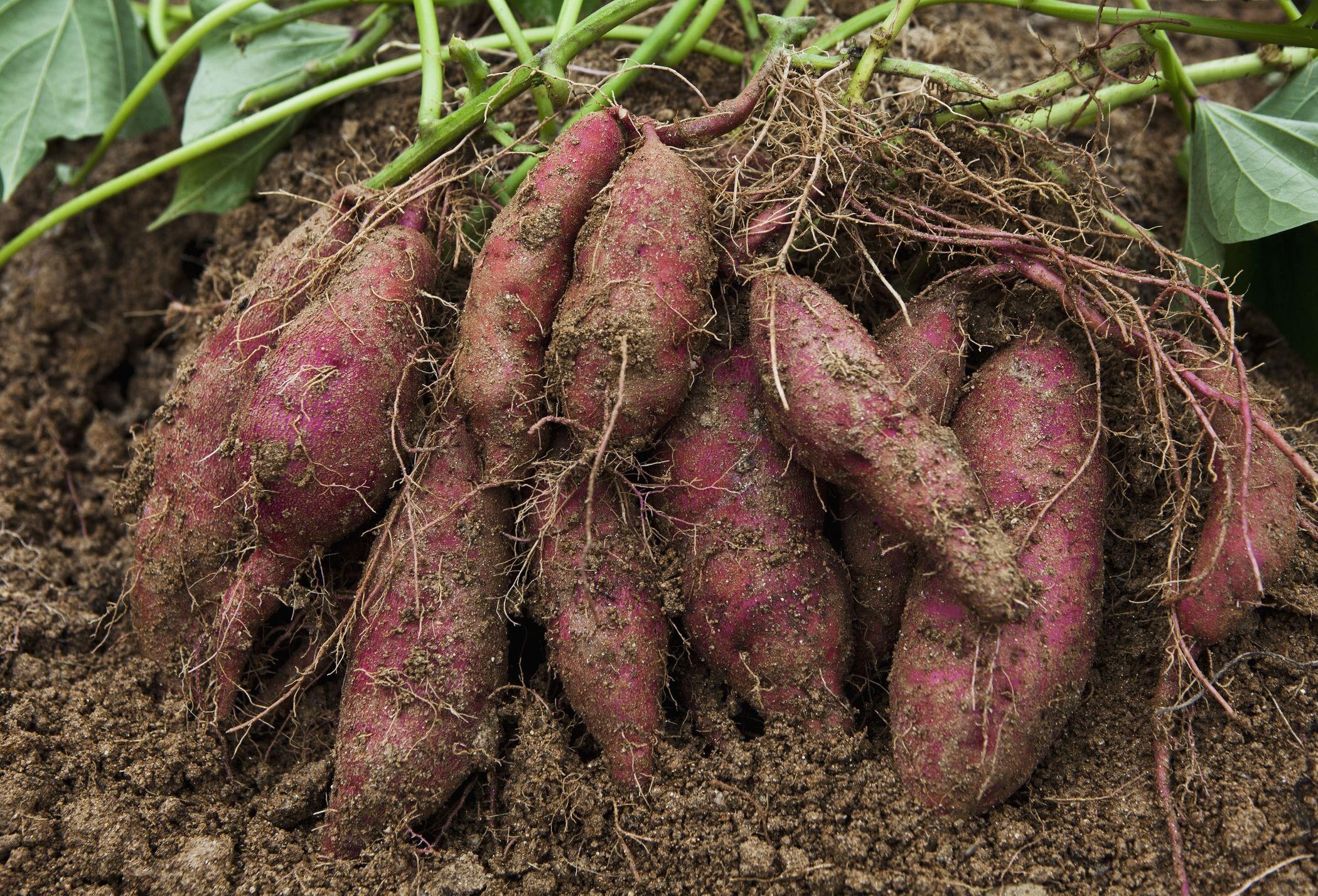
It’s June and we have sweet potato slips for for sale! They are sold 3 slips to a pot, and each slip turns into a plant that produces 5 to 10 pounds of sweet potatoes. Harvesting them in the fall is so fun, and you will feel like a gardening champion. Please note that the slips must be kept well watered at planting time for the first couple of weeks. Daily soakings will ensure the growth of healthy plants.

Sweet potatoes are fun to grow and are a nutrient dense food that stores well through the winter. They are not grown like “Irish” potatoes (which actually come from Peru), and they are not even related. Sweet potatoes originate from South America and they are in the morning glory family. They grow as a long vine along the ground and produce large, orange sweet potatoes just below the surface of the soil. They can also be trained to climb up a trellis, and they can even be grown in containers. In 2009, Starksboro customers shared their very interesting container method via a photo album, which you can view here.

These are organic slips and are approved for use in certified organic production.

Planting Instructions

Sweet potatoes are grown from slips, which are cuttings from a parent vine. The slips grow best in a loose, sandy or silty soil that drains well. If they are grown in a rich dark soil they may discolor but are still good to eat.

Transplant the slips into garden beds during June, once nighttime temperatures are consistently above 50 degrees. Transplant in the late afternoon or on an overcast day. Lay the slips on their sides with 2/3 of the slip buried a half inch under the soil. Water enough to keep the soil moist, for the first couple of weeks.

Plant the slips 10 to 18 inches apart in rows that are two to three feet apart. The rows or raised bed should be elevated 4 to 8 inches above the ground level to allow the sweet potatoes room to form.

Keep the cuttings watered while they are getting established. The leaves that were originally on the planted slips will dry up and fall off leaving just the vine stem. New leaves will emerge from the cuttings as the slips become established.  Hoe around the vines to cultivate weeds and mulch with straw if desired. The sweet potato vines will cover the ground reaching 5 to 10 feet in length.

Pest Control – Deer love sweet potato leaves, so be sure your planting area is fenced if deer are a problem. A flying gold colored beetle may chew round holes in the leaves. The vines are tough and will keep growing despite insect damage.

Harvesting – Sweet potatoes are dug and harvested in late September through mid October, a day or two before the first predicted frost. Most of the sweet potatoes will be just below the parent plant. Each plant can produce up to six sweet potatoes.

Curing and Storing – After harvesting, dry the sweet potatoes on the ground for two or three hours. Allow them another 10 to 14 days to cure at room temperature or above, before storing the sweet potatoes at a temperature between 50 and 60 degrees F.

Unlike potatoes, sweet potatoes should not be kept cold in a garage, refrigerator or outbuilding. If properly cured and stored, they will keep until April. Enjoy!


Grow it Forward Fund Update

soil in hands.JPG

Every year, we donate plants to many projects that support garden education and food security in our community. This year, because of the generous donations made by our customers via our Grow it Forward Fund, we have been able to donate exponentially more plants, and have even been custom growing plants specifically to donate them to various projects.

Many of these projects are regular partners in our plant donations program, but this year, because of the many generous contributions into our "Grow it Forward" fund and because of the City of Burlington's Plant for the People Initiative, we have been able to reach many new gardeners with free plants for local food production. So thank you. Every bit helps, and just the fact that people can get outside and grow their own food feels very meaningful right now.

Plant Updates, Tomato Workshop Take 2, and Thank You!

I woke up this morning with the garden on my mind. I have been watching our back yard open up this season and feel its energy, ready to burst a little more with the dawn of each new day. As we enter the third year of our meadow-style home garden, I have noticed a huge increase in the birds that come to our feeders and generally treat the back yard as their banquet. A flock of Carolina wrens came through last week and hopped through the garden foraging for whatever goodies it is they like, and every morning our resident lady Cardinal swoops in and sits on the branch of the mulberry tree right outside the window, showing off, all shy and coy. It is such a show.

As the weather warms up, many of you are thinking about tomatoes. The tomato webinar I hosted last week was sold out with a huge request for more, so I am going to do it a second time this Thursday at 5:30. Here is the correct link to sign up if you are interested. And today at noon, I will do a Facebook Live video walking through our tomato, eggplant and pepper greenhouse. You can join me for a look behind the scenes and hear about all the different varieties we are growing. And you can find them here too.

French marigolds have crested, double flowers in rich oranges, reds, yellows, and bronze. A summer staple in the garden.

French marigolds have crested, double flowers in rich oranges, reds, yellows, and bronze. A summer staple in the garden.

Here are some other plants newly up on the website:

Marigolds, Sweet Corn 6-packs, Tasty Jade cucumbers, and Cherokee Purple tomatoes are some of our summer favorites.

Flower Power Bundles - annual flower plants to make a cutting garden or mix into flower beds. We have included 9 of our favorite varieties in this bundle, and there are 2 plants or more in each pot.

Basil Bundles - a collection of Sweet Genovese Basil, along with our specialty basils like pistou, purple, thai and lemon for the herb lover and pesto maker.

Our potting soil is back in stock for filling your planters and window boxes, along with watering wands and many other helpful tools that we were sold out of earlier in the week. It is been a challenge to keep things in stock with all of the eager gardeners out there these days!

Thanks so much for all of your support this season. It has been just incredible, and our Red Wagon team has done the best job to adjust and shift. I feel very proud of all of us working together to make gardening work for our community. You generous contributions to our Grow it Forward program (you have raised over $600 so far) are being used to fill gardens at housing sites in Chittenden County and Addison County in partnership with VT Community Garden Network and Housing Vermont. We are also working with Champlain Housing Trust and Food Not Bombs to bring big, potted cherry tomatoes to people who don’t have access to gardens. All of this makes us smile, and feels incredibly rewarding. Thank you.

Enjoy the garden,

Julie and the crew


Tomato Time

We have been getting so many eager requests for tomatoes, and they are finally released, as of this morning. It is still too early to plant them, but we know that many of you like to select them early, so here they are.

Many varieties are available, but many more are still growing and will be available next week.. We have all of your favorite varieties growing in our greenhouses. Here is the link to what we have available now.

Keep them indoors at night or anytime temperatures dip below 50F. They really don’t like the stress of cold nights and cold soil. Soil temperatures should be at 50F for tomatoes to really thrive and take off. We are nowhere near that with all of the cold nights we have had lately.

Some of our staff favorites:

  • Sungold for snacking in the garden

  • Celebrity for big batches of sauce or freezing

  • Pink Berkeley Tie Dye and Brandymaster Yellow for slicing onto sandwiches

  • Prudens Purple for old fashioned heirloom flavor.

  • Juliet for salsa, roasting and quick salads

  • Paul Robeson for earlyness and for flavor

My mouth is watering as I type this! I absolutely cannot wait for tomato and eggplant and pepper season!

Tomato plants are looking good and getting ready to meet their new homes.

Tomato plants are looking good and getting ready to meet their new homes.

I will help you decide on which tomatoes to choose for your garden, how to plant them and care for them including a quick look at pruning and trellising, and some of my favorite ways to preserve them for winter. My goal is to help you grow and enjoy tomatoes in the summer and, if so inclined, know how to preserve them to get through winter without ever buying a tomato. You have until noon to sign up.

I am really loving the clematis this week. It is just beaming and healthy. Clematis does really well with eastern exposure. It likes to have its roots cool, so I often plant nasturtium or calendula at the base of the vine to keep the sun from hittin…

I am really loving the clematis this week. It is just beaming and healthy. Clematis does really well with eastern exposure. It likes to have its roots cool, so I often plant nasturtium or calendula at the base of the vine to keep the sun from hitting the root zone.

We are grateful for all of your support and hope you are doing well during this unusual time. We will continue with our pre-orders, home delivery and next day curbside pick up for the rest of May and are not sure when / if we will open to the public this year. Our online ordering system is going very well and we find that it is the best way to keep our staff and community safe and to move as many plants out of our greenhouses as possible. Thanks for your understanding and for all of your orders. We miss seeing you!

Take care, and happy gardening,

Julie and the crew.

It is a Team Effort!

Hope’s Lady’s Choice plant collection was inspired by the colors of the flags used by Suffragettes to win the vote for women.

Hope’s Lady’s Choice plant collection was inspired by the colors of the flags used by Suffragettes to win the vote for women.

Hi friends,

As we continue to march through this new way of selling plants online, I have enlisted the help of our crew to come up with some beautiful combinations of plants for these warming up spring days. Chad has been busy making gorgeous planters in antique metal sap buckets and wooden buckets. Hope is putting together bundles of plants that will make stunning arrangements for you to make your own porch planters or window boxes. We would, of course, rather be getting our plants to you in person than through a website, but we are getting creative with the situation and finding inspiration from the plants to share with you.

Home Garden Update As the weather warms up a bit, I have been dividing and moving perennials in my home garden. Once the daffodils stop blooming, I will divide the thicker clumps and replant them in bare spots next to white primula and yellow blooming euphorbias. Fall planted bulbs force us to think a year ahead, and somehow that is soothing right now. One helpful trick for planning the future spring garden is to take a photo of the flower beds right now, and then mark it up to identify where you would like to plant bulbs in the fall. It is very easy to forget what the early spring garden looked like by the time fall comes around and you are ready to plant bulbs.

In the veggie garden, our onions are planted, garlic is growing, peas are germinating, and the first round of lettuces and greens are planted in a cold frame and in the ground outside. To help you with early season gardening, we have added row cover, metal hoops, and earth staples to the website. They are used to make protective tunnels to keep out insects and to keep plants warm. While all the veggies we are currently selling are frost tolerant, the extra protection is great for keeping out flea beetles and for encouraging good growth.

Tomatoes we be available May 14th. It is still too cold to plant tomatoes, but don’t worry we have lots coming along. The soil temperature needs to be 50F to satisfy heat loving tomatoes. It takes at least 5 nights in a row at 50F or higher for the soil to warm up that much. If you stress tomatoes by putting them in too early, they will just be more prone to diseases later in the season. We will be releasing our tomatoes online on Thursday, May 14th. We grow 70 plus varieties, so please don’t expect to see them all at once, they will roll out over a couple of weeks as they size up. By the way, I never plant tomatoes before the first week of June. That is a month away. In the meantime, I will be teaching a tomato webinar on May 14th to give you an orientation to the varieties we grow and some tips on how to select them and how to grow them. Sign up here.

If shopping online is not for you, our plants can be found at our regular wholesale spots :

  • City Market (both locations)

  • Healthy Living in South Burlington

  • Bibens Hardware North Ave in Burlingotn

  • Gardeners Supply (Burlington and Williston locations)

  • Jail Branch in Barre

  • Guy’s Farm and Yard in Montpelier

  • Full Circle Gardens in Essex

  • Martin’s Hardware in Bristol

  • Village Hardware (formerly Essex Agway) in Essex

  • Shelburne Market

  • Vee’s Flower in Waitsfield

  • Lantmans in Hinesburg (starting Monday)

We will not be opening to the public in May. Our curbside pick up and home delivery service is working well to meet our two goals for this unusual year: to keep our staff safe and to help as many people as possible have vegetable gardens. The social distancing required would just not work in our crowded greenhouses. We are a production focused, agricultural business, and need to stay aligned with the goals at hand. Thank you so much for your understanding, and for all of the incredible support we have received this past month. We are very sorry to not see you enjoying the plants in our greenhouses, but it makes us so happy to know you are safe at home, gardening.

Our Grow it Forward program has already collected $370 dollars towards plants, soil, and seeds that we will be growing and donating through the Vermont Community Garden Network, Housing Vermont, and area schools and non-profits. This afternoon, Louissa planted 50 tomato plants in big pots to share a little joy with people who might not be able to garden easily. Thanks for helping us spread the bounty.

Happy gardening to you all,

Julie

We are growing it forward with these potted tomatoes that Louissa planted today.

We are growing it forward with these potted tomatoes that Louissa planted today.


Chad has been making these very sweet planters filled with annuals, a small perennial and a foliage plant. Once they outgrow this pot, all the plants can be replanted and repurposed for other uses. It is like a mini-nursery of your very own. A perfe…

Chad has been making these very sweet planters filled with annuals, a small perennial and a foliage plant. Once they outgrow this pot, all the plants can be replanted and repurposed for other uses. It is like a mini-nursery of your very own. A perfect gift, and the perfect way to welcome spring.

I am finding so much relief in the garden these days. I hope you are taking time to notice all the small emerging plants, the subtle changes day to day, and finding solace in how the plants are behaving 100% normally. As we re-arrange our lives around a virus’ logic, the plant world marches on beautifully. Lily was mentioning how nice the flowering bulbs are this year, with steady cool temperatures and no serious downpours, the blooms are holding up so well and lasting a very long time. Daffodils are not face down in the mud, and the spring color show will linger for a while.

Here are some ideas and jobs for the weekend:

Prepare the garden beds We are all eager to plant and to get out in the garden, and while there are many frost tolerant veggies and herbs that can go out now, I would encourage you all to think ahead to warmer days and make sure that your garden dreams and reality line up. If you are looking to start a new garden or expand an existing one, now is a great time to do it. Clifford’s Lumber in Hinesburg sells rough sawn hemlock boards for raised beds, and you can get deliveries of topsoil and compost from a number of local businesses (we do not do that ourselves). Shoot us an email if you have any questions about preparing the garden. We want you to be ready when it is time to plant tomatoes! Because we are only doing curbside pick up and home deliveries, we REALLY miss talking to you all about your garden plans. Chad, Hope, Lily and I are all available to return calls and emails and talk shop with you. So don’t hesitate to get in touch. 802.482.4060 or info@redwagonplants.com (or just hit reply to this).

Watch this beautiful movie about Piet Oudolf and his work. The English museum Hauser + Wirth is allowing free streaming of the film, Five Seasons: the Gardens of Piet Oudolf, until midnight on Sunday. Here is the link. This will be such a treat, and I am going to watch it for the second time. Inspiration is at hand.

Order fruit trees. Our good friends at Champlain Orchards have started a fruit tree nursery. You can place an order now for pick up on May 2. Because of our curbside and home delivery system, we are not able to sell trees at this point, so we encourage you to support Andrea, Bill, Rupert and Rosa in their budding family nursery operation. It is a great selection with varieties that are often difficult to find. Here is the link.

Think ahead to gift giving for Mother’s Day May 10th. We ask that you place orders by Wednesday, May 7th to ensure pick up or delivery before May 10th. Some suggestions:

And finally, we would like to let you know about our Grow it Forward program. Every year we donate thousands of plants to area non-profits and schools for garden education and food security projects. This year, the need is greater than ever, and we are growing extra plants specifically to donate. If you would like to contribute to this effort, please consider a small contribution. And if you or someone you know would like to grow food this year, but cannot afford the seeds or plants, please reach out. We are here to help, no questions asked, and will do what we can to ensure that anyone who wants to grow a vegetable garden can do so.

Wishing you all health and happiness in the garden,

Julie


New Normal

We are having fun teaching gardening workshops as webinars, and creating beautiful workspaces in each greenhouse. But we miss you!

We are having fun teaching gardening workshops as webinars, and creating beautiful workspaces in each greenhouse. But we miss you!

Hi gardening friends,

Under normal circumstances, yesterday would have been our opening day. And instead of throwing a big annual opening day party with Caledonia Spirits cocktails and Farmers and Foragers’ food truck and Vadeboncoeur pastries, the red wagon crew cracked open a couple of bottles of wine at lunch, sat 10 to 20 feet apart. We cheered each other on. It was the closest we have come to a group lunch, usually the highlight of our days, in over a month. Our crew is just incredible and we have been working safely and extra hard to get plants to you this year. The online store is a big success and the curbside pick ups and home deliveries have been smooth for the most part. Please give Jayson a giant thumbs up as he helps get plants to your car when you come to pick up. He is new this year and has jumped in 100% to make sure our curbside pick up and delivery systems are clear to customers. If you call with a question, it is likely Jayson you are speaking with and he is answering questions like a true veteran even though it is only his second week.

As I have promised many of you, we will use the newsletter to give you updates about what is available. I update the online store every few days, so if you don’t see what you are looking for, just check back.

New this week in the online store:

We are so grateful for all of your support and for your increased enthusiasm in gardening.

In parting, I would like to recognize the hard work that Lily Belisle, our retail manager, has done this past month to shift our focus from a physical retail greenhouse to an online store. She has learned all kinds of new skills, taught them to all of us, and done it with a smile on her face the whole time. Here she is yesterday, picking orders in the imminent snow storm, happy as a clam. Thanks, Lily.

Thank you, Lily! And all of Team Red Wagon.

Thank you, Lily! And all of Team Red Wagon.


I will do another Facebook Live Stream today at 10 am.

Hope to see you then! We miss you all very much, and it is nice to connect over social media. Let us know how you are doing with your garden, tag us in garden photos, and most importantly, enjoy watching your garden unfold and grow.

Sending good thoughts,

Julie


Onions

Baby onions, about two to three weeks away from transplant time.

Baby onions, about two to three weeks away from transplant time.

A while back, I delivered a crate of onions and garlic to my dad. We had some coffee, talked over the Thanksgiving meal plans, and I took a little walk. That day is a distant memory, my father has since passed away, but the image of those onions and garlic has stayed in my head. The way they filled the wooden crate brings me to a memory of the smile on my dad’s face when he saw them, the food we talked about making together, the warm coffee in our hands.

Onions are a back ground vegetable, easily taken for granted, but aren’t they the basis of flavor in most dishes?

Some people are like onions too. Sharp and edgy at first, sweet and mellow with time and heat.

I am thankful for their plumpness, their abundant harvest, the flavor they will bring to our meals, and the way they generously keep so well under the right conditions.

I rarely buy onions or garlic, usually having enough from the garden to last the year, in some form or another. The storage onions that are great to eat fresh in July, when cured properly, last until March or April. By then chives are ready, then scallions, then green garlic and fresh onions again, one following the other, with a predictable rhythm.

My dad is gone now, but the memories are not, storing and keeping, sweetening with time.

The best time to plant onions is as soon as the ground can be worked, usually middle to end of April in Vermont. They don’t mind cold ground. They prefer it actually, and the earlier they go in, the rounder and larger they will be. Their trajectory is programmed by the sun; as the days get longer, the onion plants remember to follow the cue and they grow round and big. If you neglect this key part of onion growing and plant them late, the onions stay small, and more oval in shape, in a sort of protest.

Our onion plants come in 4 packs. There are about 80 plants in each pack. You just need to separate each individual plant (it is a quick job, especially if the plants are well watered). Then make a trench, 4 inches deep, as long as you want. And then lay each onion delicately in the trench, white roots down, green part up. Fill the soil in around each plant, pat firmly and water well. If 80 onions is too many, you can certainly plant some of the plants in little groups of 4 to 6, and harvest them young, to eat like scallions or baby onions. These are easily the best value in the gardening world, not be forgotten.

Report from the Greenhouses - 5 days into E-commerce Edition.

Pansies can live through an ice storm!

Pansies can live through an ice storm!

  • We are open for online sales with home delivery and curbside pick up options. You can order here.

  • Garden tip: Harden off your plants before you transplant them. See how below.

    Have fun in the garden. It is the best place to be right now.

Thank you all so much for the incredible support you have shown us. We have been working hard to learn new tricks and I am happy to report that the on line store, pick up and delivery service we have put in place is working pretty well. There are lots of kinks to work out, and we thank you so much for all of your patience as we make it smoother. But overall, we have been moved to tears over and over again, by your kind words, your encouragement, and you plant orders. Gardening is what we all need right now.

Here are a few updates - -

  • You can now order individual types of plants, such as pansies by variety and color or onions and broccoli by the 4-pack. We will still have our collections for people who are happy to receive what we choose for them based on weather and timing.

  • We are doing away with our delivery fee in hopes that more of you stay home. We ask for a $50 minimum order, however. If for some reason that does not work for you, just let us know. We will try to be as flexible as possible.

And some gardening tips about cold season gardening…..

Newly transplanted lettuce, kale and radicchio in our mini-greenhouse cold frame.

Newly transplanted lettuce, kale and radicchio in our mini-greenhouse cold frame.

It is still quite early in the season, and your plants will benefit from hardening off a little more before you transplant them. They will get used to the elements and fare much better through the transition into your garden. We normally do this before you buy plants from us, but this year, the early spring and every one’s eagerness to get in the garden has meant that plants have left our greenhouses without this important step in certain cases.

It is a good practice, as a gardener, to make sure that plants are tough and stocky and well rooted before you plant them. This is a fun way to get to know your plants a little more. You can easily keep them well watered while they are still in their pots, and you can closely watch how they respond to night time temperatures and then recover as the day warms up. Homeschooling plant physiology lessons abound for any of you parents trying to turn daily life into a learning opportunity!

Direct sunlight, wind, and cold are all stressors on plants just coming out of a heated greenhouse environment. Most of the plants we are currently selling on the website have been either in a cold frame or in an unheated greenhouse at this point, so they have begun the hardening off process by leaving the heated greenhouses. However, they have had covered protection at night. For best results, we recommend you keep your plants outside for 4-5 nights before transplanting them. If you start to see a little change in color, that is normal. As a response to cold temperatures, plants slow down their uptake of phosphorous and that creates the foliage to turn a little purple. They will outgrow this as spring warms up.

Once the plants are in the ground, keep an eye on the weather. All the plants we are selling now are frost hardy, but to varying degrees. The onions and pansy can live through an ice storm and multiple frosts while on the other end of the spectrum, lettuce and chard can only tolerate light frosts (30F or so) without a little protection. If you don’t have floating row cover on hand (or Reemay as it is commonly known), you can always just throw an old sheet over your plants during nights that dip down into the 20’s. They will bounce right back when the sun comes out the next day. Just like us after tough times.

Wishing you all happy gardenin,

Julie


Stay Home - We are Coming to You!

While you won’t be able to stroll through the greenhouses this spring, we will do our best to bring the show to the comfort of your home and yard.

While you won’t be able to stroll through the greenhouses this spring, we will do our best to bring the show to the comfort of your home and yard.

Here is the good news:

  • We're transitioning to online and phone ordering + pickup and home delivery - stay tuned for updates soon.

  • We'll miss you in our greenhouses this spring (they are closed to the public) but we'll see you online (follow us on Instagram and Facebook).

  • Join us for our first greenhouse tour - this Saturday at 10  AM on Facebook. We will post it to our Instagram stories too.

Please stay home. Shelter. Refuge. Nest. It is the right thing to do for our hospitals, medical professionals, essential workers, and the health of our community. While we are sad every single day for the state of the world, and for the fact that we won’t be able to see all of you enjoying the spring ritual of visiting our greenhouses, we feel confident that we can spread lots of joy with our new home delivery and curbside pick up service. Keep your eyes peeled for the online (and over the phone) ordering system we are creating .

Lily, April, Hope, Susan, Nora, Jayson, Chad, Kate and I will still be helping you with your plant selections and sharing garden advice and plant stories. We will be just a phone call or email away, and the online store (soon to come) will be full of photos and plant descriptions to help you with your plant lists. Our glove wearing and hand washing staff will pick your order, and have it ready on an assigned day and time, OR we will bring it right to your house. We will do all of this without any physical contact, but with the same warmth and abundance you have always enjoyed when visiting Red Wagon.

In the meantime, you can purchase seeds, houseplants and potting soil on our current website.

And mark your calendars for a virtual greenhouse tour this Saturday at 10 am. This will be in lieu of our annual Open House. I will personally take you on a tour of the greenhouses, and you can sit in your pajamas and cheer me on. I have never done this before. We are all doing things we have never done before, right?

Sending you good thoughts, garden dreams and love from our home to yours,

Julie

We are Here for You

We are working at separate work stations these days, so hard to get a picture with all the smiling faces in it, but the gang is here, planting away. Together but apart.

We are working at separate work stations these days, so hard to get a picture with all the smiling faces in it, but the gang is here, planting away. Together but apart.

Hi friends. We are here for you. Many, many of you have reached out over the past few days to ask about plants for your gardens. Please know that we are doing all we can to get plants to you by the time gardening season starts in a couple of weeks. Our warm and sunny March and being in refuge at home have fueled our gardening fires. The demand is high, the stakes are high, and we are calmly figuring out the best way to safely provide you with the plants you crave.

Here is what we have been up to:

- We are following strict sanitation and social distancing protocols at work and in our lives outside of work.


- We are filling up the greenhouses with healthy, beautiful plants and have increased our production of food plants. We have reduced the amount of ornamental plants we are growing so that we can focus on food crops for all of your back yards and community victory gardens.

- We are staying calm and positive so that we can be of service to our community. Our crew is made up of super smart and talented people. We are rotating through work shifts so not all of us are at work at once. People who can, are working from home. And those who are temporarily furloughed to allow for fewer people at each work station, are home on paid leave. We are taking social distancing very seriously and paying people to stay home to guarantee a minimal contact work space.

- We are setting up online ordering for seeds, soil, and plants. You can visit our online store but please keep in mind that it is a work in progress. We are not a seed company, we are not online merchants, and we don't have a 'Creative' department. It is just a couple of us, teaching ourselves how to do it as we go. You can help us by checking out the on-line store on our website and placing an order, so that we can practice these new systems before things get very busy. Your feedback is welcome, but please know that we are working on a new system that we hope to roll out next week. The current system is just a shell that will allow us to practice some curb side and home delivery sales.

- We are setting up contact-free methods to get plants into your hands. Curb side pick up at the greenhouses and home delivery are the two options. We will not be open for regular retail hours; instead we ask that you follow the steps outlined on our website for pick up or delivery.

-We are working with our incredible wholesale partners to deliver plants to their stores. As of now, we will still be delivering plants to our regular customers, and you can find a complete list on our website page called 'where to find out plants.'

-We are setting aside a portion of our production to supply plants to people in need. Please consider a contribution to this effort by purchasing plants for people who would like to garden, but cannot afford to at this time. We will have a way to do that on our website, details coming soon.

Thanks for your understanding and patience as we work out these systems. We are excited to be a part of the solution, and to give more people the opportunity to learn about growing their own food. This has been the core of my business for 23 years, and our entire team is rooting for your gardening success.

Sending you all love and good thoughts,


PS - THANK YOU! You have always been the best customers (who become friends) and we cannot do any of this without you. We are so grateful for our community.

Plant Profile: Lemon Balm, Melissa officinalis

By guest blogger, Sophie Cassel, herbalist and Red Wagon Plants team member

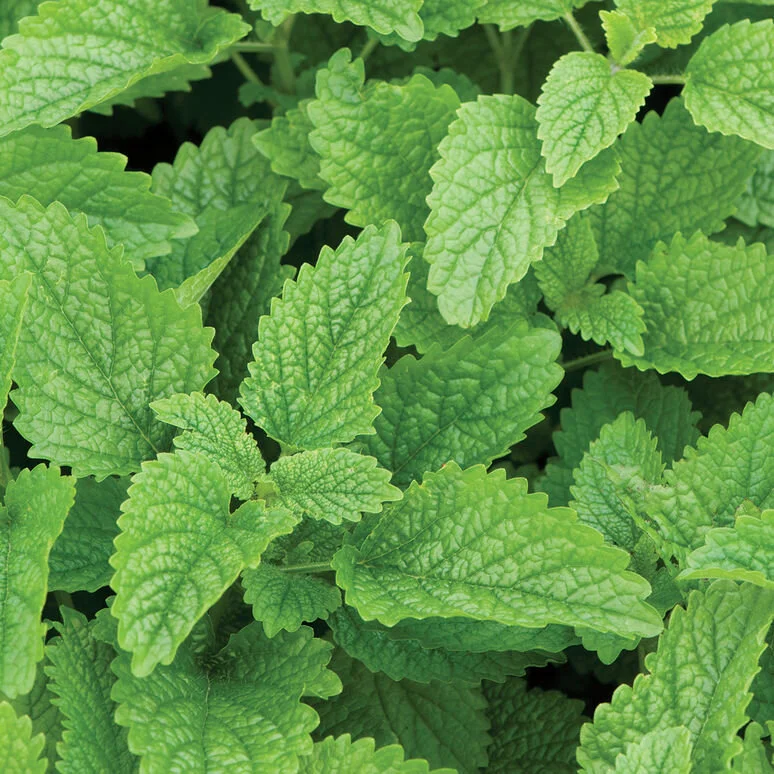
Organic Lemon Balm

Lemon Balm, Melissa officinalis

Lemon balm, cousin to some of our more famous mint family plants, has a historical reputation that far exceeds its diminutive nature and ease of growth in the garden. Herbalists and philosophers since ancient times have revered Melissa officinalis for its bright scent and flavor and ability to brighten and revive the spirit. The latin name Melissa refers to the plant’s association with honey bees, and the species officinalis tips us off that this plant has been used medicinally for so long that it was part of the official pharmacopeia in monasteries. We can take our cues from the bees and the ancients, and make Melissa a part of our medicinal herb gardens. 

Native to the Mediterranean and parts of Asia, lemon balm was brought to the Americas during colonial times and has naturalized somewhat, particularly on the west coast. Like most mints, it’s easiest to start lemon balm from cuttings or divisions, but it can also be started by seeds, which are light dependent. It isn’t fussy to grow and can tolerate a bit of shade, but it does prefer moist, well drained and fairly fertile soil without much competition, spaced about a foot apart. Unlike the more aggressive perennial mints, lemon balm tends to form clumps and spreads fairly slowly, making it a more friendly addition to any perennial mix or tea garden. There’s speculation that the high volatile oil content of lemon balm makes it a good companion plant, working to deter pests with its strong scent. 

It’s best harvested just before flowering- cut the top third of the plant on a hot afternoon for the highest concentration of aromatic volatile oils. It will continue to branch and grow over the course of the summer, but be sure to let it set flowers at some point to attract its namesake bees to dine on its exquisite nectar. 

Once harvested, the sky is the limit when it comes to lemon balm recipes. As a freshly infused tea, it can’t be beat. Simply pour boiling water over the fresh leaves and steep for 5-10 minutes, or place in a jar with cool water and let steep in the sunshine for a few hours, and you’ll be rewarded with a bright and delicate solar infusion that really captures the essence of the plant.  Lemon balm dries easily- spread out in a basket in a warm dry spot for a couple days. You can then use it for a delicious, relaxing tea throughout the winter. Or take a cue from the seventeenth-century Carmelite nuns and infuse lemon balm and other herbs in alcohol to make a delicious cordial; drunk before meals it aids digestion and brings levity to any dinner party. 

Medicinally, Melissa’s applications are broad. An easy way to think of the signature of lemon balm’s medicine is for ailments “like bees”. Busy, buzzing, unable to settle or slow down enough to rest or digest, that’s where lemon balm comes in. Equally beneficial for a disquieted mind as a rumbly tummy, try lemon balm tea to prepare for bedtime, or to quiet the nerves before a big presentation. It makes a great after-dinner drink, and is safe for both children and elders alike. Rosemary Gladstar uses lemon balm in a wonderful “Colic Remedy” tea that she notes is actually helpful for “anyone with digestive disturbances due to nervous stress, but is especially helpful for infants and those elders who have stomach problems”: 

Colic Remedy: 

  • 3 parts lemon balm leaf

  • 2 parts chamomile flower

  • 1 part dill seed and leaf [or substitute for fennel seed and frond for a sweeter option]

Steep herbs in freshly boiled water for 10-30 minutes, depending on desired strength. The tea will become slightly more bitter as it steeps, which increases its efficacy for digestive troubles but may be less tasty to sensitive palates. 

Plant some lemon balm in your garden this spring, and you will be rewarded with the accolades of bees and delicious medicine all year long. 

Resources:

Gladstar, Rosemary (2012). Medicinal Herbs: a beginner’s guide. North Adams, MA: Storey Publishing, 

Grieve, Maude (1931). A Modern Herbal. NY: Dover Publications.

Vegetable Garden Planning - Seeds vs Transplants

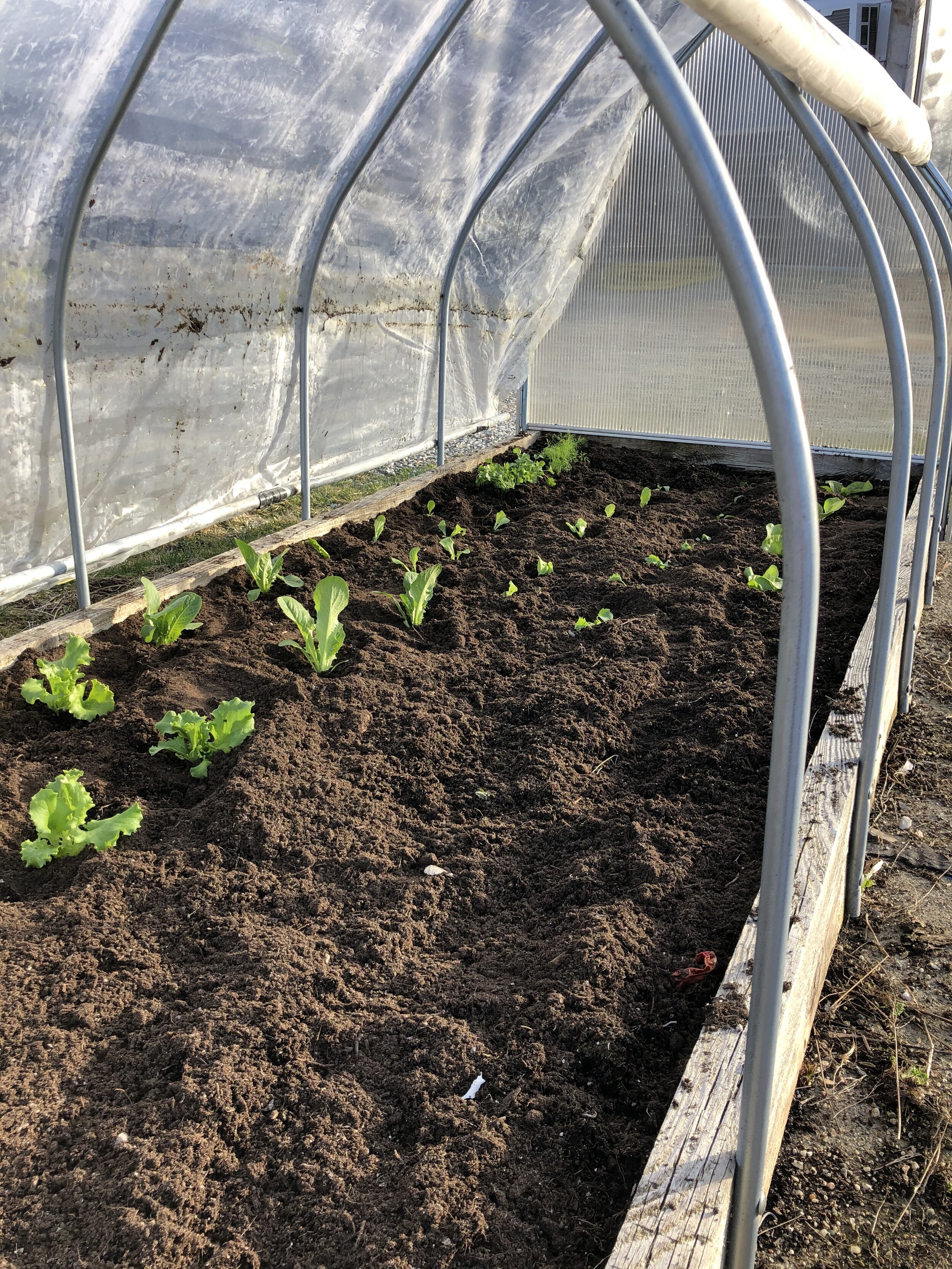
romaine.JPG

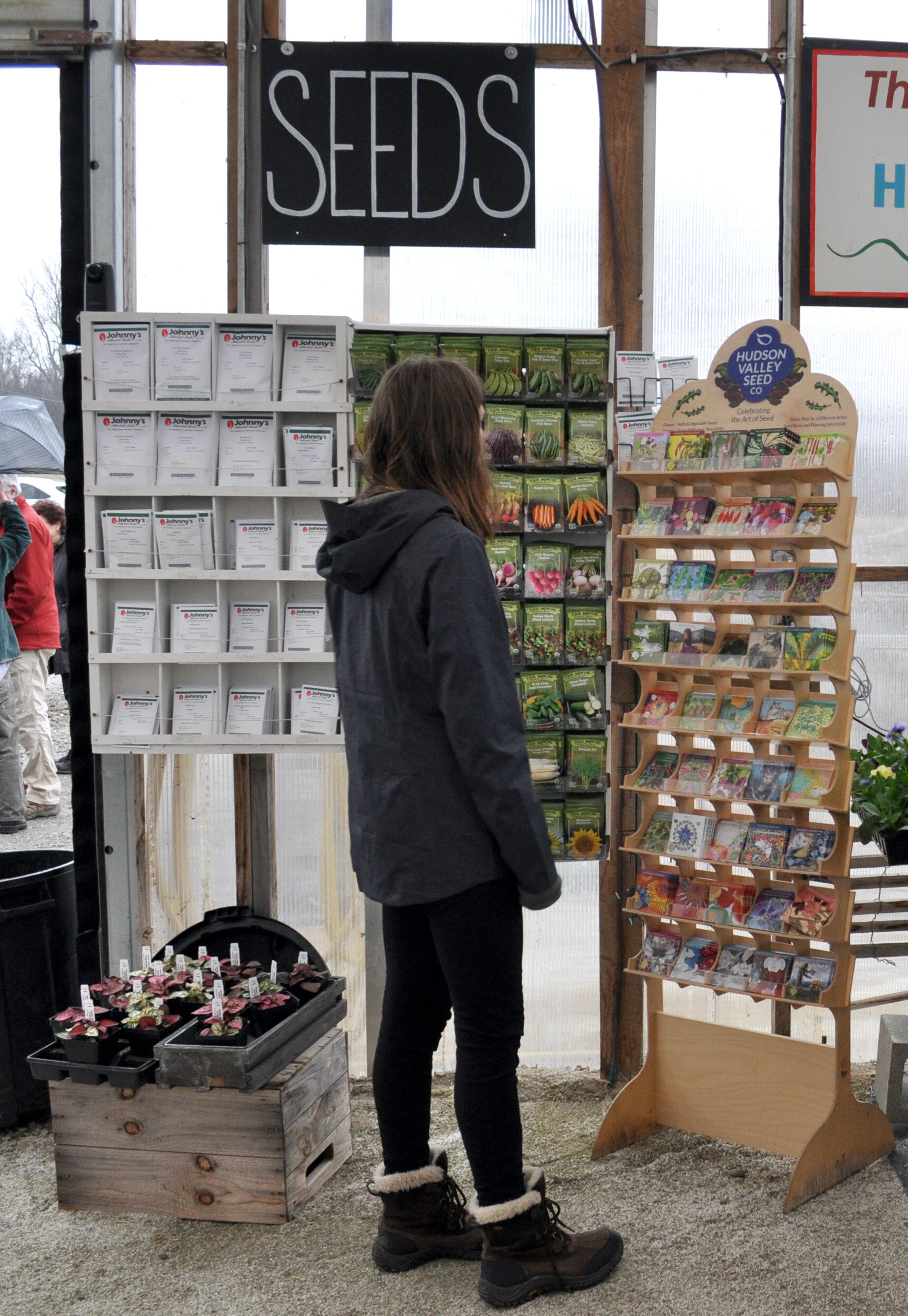
It can be confusing to know which vegetables and herbs you start from seed directly in the ground and which ones you start as seedlings that have been started indoors or in a greenhouse. Here is a handy guide to help you with those decisions when planning this year’s garden.

seed rack.jpg


Houseplants for Your Home

Aloe large.jpeg

Lily has had a dream of having a houseplant store for a while, so this spring, we decided to focus more on houseplants. Plans change, viruses happen, and communities rally to adjust. So now, we have an online houseplant store that is open and ready! These plants are just gorgeous and all in pots that are appropriately sized for the next year of growth. We have taken the plants’ individual needs into account when selecting the pot type and size. You won’t need to do a thing but water when dry and place them somewhere where they will bring you joy. We all need that right now.

As a pilot project, we are able to deliver directly to your home if it is within 10 miles of our greenhouses OR set it up for you to pick up at Red Wagon Plants 2408 Shelburne Falls Rd by appointment only. No drive up service without pre-arranged pick up.

Here is how you can order:

  1. Online - go to the online store and look through the offerings. When adding plants to your cart you’ll be prompted to select a pick up time at our Hinesburg greenhouses or home delivery within 10 miles of our greenhouses. We will get back to you within a few hours to confirm the details.

  2. By phone - look at the plants we have in the online store, and call us with your order. We can take payment over the phone and arrange pick up time or delivery within 10 miles of our greenhouses. Our phone number is 802.482.4060. If no one answers, please leave a message and someone will get back to you as soon as possible.

Please note that for now, we do not have regular store-front hours, so all arrangements must be made ahead of time. Thanks for your understanding. We do not ship plants. This is for pick up or home delivery only.

Plants are still growing.

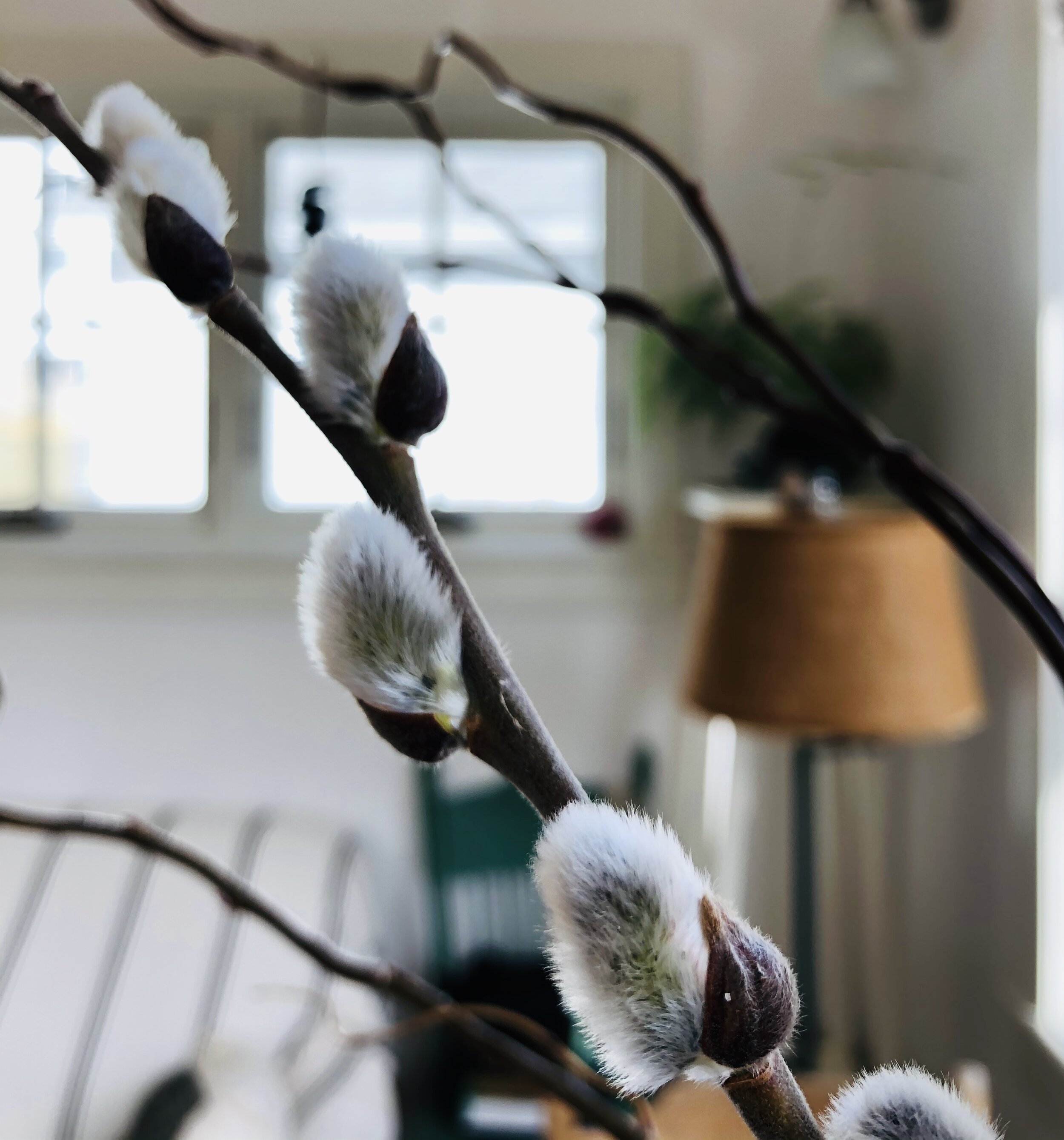
willow in living room.jpg

The willows stopped me in my tracks as I was leaving the greenhouses on Friday. I was on my way home, and looked up just in time to see them just bursting with life, reminding me to pause and catch my breath. I had forgotten about spring. I snipped a few stems to bring home. There is a lot more there, and I welcome you to stop by and clip a stem or two for your own house. It feels good to share. Always having clippers in the car is a handy thing.

There are so many unknowns right now about what a small business like ours is supposed to do. I am a list maker, I love a well organized drawer, I own stacks of graph paper notebooks and I love logic. These are my coping mechanisms so our house has never been so clean, nor our weeks so organized as lately, but of course that does nothing for the looming unknowns.

Here are a few things we are doing at Red Wagon right now:

  • We are growing plants as if all the same gardens will grow that grew in years past. The plant world is not adjusting or stopping. I have heard from a few of you that you would like to know if you can plan your garden as usual, and yes, you can. That is one thing I feel secure about.

  • We are adjusting our calendar of events on a week by week, day by day basis. If you are signed up for a class or seminar, you will receive an email with updates. Video conferencing, very small in person groups with lots of distance, one on one consults on the phone, cancellations and full refunds are the options we are considering.

  • We plan to open on April 17th with normal retail hours. But of course, this might change as we get closer. That evening’s cocktail party will likely be postponed. Again, we will keep you updated.

  • We will offer home delivery of plants once the weather warms up. More details coming soon.

  • We will also offer pre-picked plant orders that can be paid for online or over the phone and picked up in the parking lot. .

  • We will continue to deliver plants to our wholesale partners as long as they are open.

  • As of now, we still hope to hold our April 4th Open House. Since this is a small group, dispersed amongst 4 greenhouses and the outdoors, it seems possible to provide some much needed activity in an airy and clean space full of growing plants. Again, we will adjust as needed as we get closer.

Our amazing crew is taking all of the precautions possible to work safely - more distance, more gloves, tons of hand washing. Because we are in large open spaces, this feels doable, and frankly there is no other place any of us would rather be outside of home. We are offering paid leave should anyone need it, and because of this, I am sending out this little plea: please continue to support small businesses in any way you can. We must rely on each other.

In the meantime, please send us your gardening questions and stories, share photos of your garden, engage with us on social media, and help your neighbors as best you can. In my more fantastical, utopian moments, I dream of us as a current day, virtual land army, with plants, flowers and home grown food helping us get through anything together.

With love,

Julie

P.S. At the top of the driveway, please check out all of Family Cow Farmstand’s offerings. Their store is well stocked with gorgeous local foods in addition to their stellar raw milk. The store is self-serve and open every day. And they will be raising chickens again - shares available for sale now. These are the most delicious chickens I have ever eaten, raised in the nicest way possible by two very smart and wonderful people.

Fennel, Foeniculum vulgare, Apiaceae family

by Sophie Cassel, guest blogger, herbalist, and Red Wagon team member

fennel.jpg

With these plant profiles, my hope is to inspire gardeners to consider growing and using some of the lesser known herbs that Red Wagon propagates, both for their beauty in the garden and their myriad uses in the kitchen and medicine cabinet. Fennel definitely fits the bill here. At Red Wagon, we grow two varieties of Foeniculum vulgare- bulb fennel, which is grown as a vegetable and also known as Florence fennel, and bronze leaf fennel, which is grown as an ornamental and culinary herb with potent medicinal uses. 

If people are unfamiliar with bulb fennel in the garden or on the table, they are usually even less aware of bronze leaf fennel, but both of these varieties deserve a spot in the garden. In terms of medicinal usage, we’ll focus on bronze leaf fennel, which is actually quite a bit easier to grow than its bulbous relative, offering interest and uses throughout the growing season.

But first, we should acknowledge the long and celebrated history of fennel across cultures and healing modalities. The emperor Charlemagne reportedly required the cultivation of fennel on all imperial farms, and ever since Holy Roman conquerors introduced their favorite herbs to Anglo-Saxon Europe, western herbalists have extolled the virtues of this plant. My first introduction to fennel seeds, as a digestif following a rich Indian meal, points to its trusted use in Indian Ayurvedic medicine as well. In Longfellow’s 1842 poem “The Goblet of Life”, he too references the plant’s historic values:

Above the lowly plants it towers,

The fennel, with its yellow flowers,

And in an earlier age than ours

Was gifted with the wondrous powers,

   Lost vision to restore. 

It gave new strength, and fearless mood;

And gladiators, fierce and rude,

Mingled it in their daily food;

And he who battled and subdued,

   A wreath of fennel wore. 


Even if you’re not planning on going into battle or restoring sight to the blind this summer, fennel still deserves a place of honor in your herb garden. These days, it is chiefly used in all manner of digestive complaints like cramping, bloating, and that weighty feeling that comes after eating something that may not sit well. Like many of its cousins in the Apiaceae or Umbelliferae family (i.e. dill, coriander) fennel is considered carminative, meaning it helps to relieve gas and bloating. I have also seen this work in a similar way to alleviate the cramping that comes with premenstrual symptoms. Traditionally, the seeds of the plant have been the most trusted part for medicinal use, the feathery fronds and flowers also make an excellent tea or addition to salads and fresh summer dishes. 

From a gardener’s perspective, bronze leaf fennel is much easier to grow than its finicky vegetal sibling, bulb fennel. While bulb fennel requires consistent adequate moisture, fertility, and mulch,  bronze leaf fennel can thrive in a wider variety of soils and tolerates dry conditions. Sow or transplant once the ground has warmed, and offer plenty of sunshine, although some afternoon shade doesn’t seem to slow this plant down much. It can grow up to 2 feet high before flowering, and looks wonderful as a backdrop supporting other sturdy flowers, such as calendula or marigolds. 

Once the fronds have begun shooting skyward, you can harvest the leaves continuously for culinary use and bouquets, but make sure to let some go to flower. Insects (including swallowtails) adore the flowers, and as the they mature you can delight in the flavor of the slowly ripening seeds. Be sure to harvest dried seed before frost, unless you’d prefer a garden full of bronze leaf fennel in subsequent years because they self-seed generously. But with its copious culinary and medicinal uses, that wouldn’t really be such a bad thing. 

Using fennel for medicine is as easy as popping a pinch of the seeds in your mouth following a rich meal. I like to toast them a little before using to bring out their aroma and offer a pleasant crunch, and you can also fry the seeds in a small amount of honey to candy them and increase palatability. They also brew into a lovely tisane, steeped for 10 minutes in hot water (bonus points for your belly if you add some chamomile flowers to the brew). Fennel is very safe, and has been used for colicky babies as well as to promote lactation following birth. Fresh (or freshly dried) fennel is often considered decently palatable even to folks who have an aversion to the sticky-sweet taste of anise, another Apiaceae cousin of the plant.

Let this be the year you let fennel into your garden, your kitchen, and your heart!


References:

Ken Adams and Dan Drost, Fennel in the Garden, March 2012. https://digitalcommons.usu.edu/cgi/viewcontent.cgi?referer=https://www.google.com/&httpsredir=1&article=1267&context=extension_curall

Longfellow, H.W. Ballads and Other Poems, 1842. Found at https://www.hwlongfellow.org/poems_poem.php?pid=75 

Rohde, Eleanour Sinclair. The Old English Herbals. Originally published 1922: Longmans, Green and Co.


Grieve, M. A Modern Herbal. Originally published 1931: Harcourt, Brace & Co.

Tulsi (aka Holy Basil)

This is the first installment in our medicinal herb series by Sophie Cassel, Red Wagon Plants employee and Burlington herbalist. Please check our events calendar for her medicinal herb workshops this year.

sophie+with+tulsi.jpg

Tulsi (aka Holy Basil), Ocimum tenuiflorum Ocimum sanctum, Lamiaceae

While you won’t find Tulsi- also known as Holy Basil and Tulasi- in any classic English herb gardens or older western herb books, it has risen to prominence over the years both for its medicinal benefits and relative ease of growth, even while our northern climate is far removed from its native habitat on the Indian subcontinent. There, pots of perennially-blooming Tulsi bless the doorways of houses, where the plant is considered sacred by many. What a gift, then, that those of us far away in the western hemisphere can experience the joy of growing and using this plant!

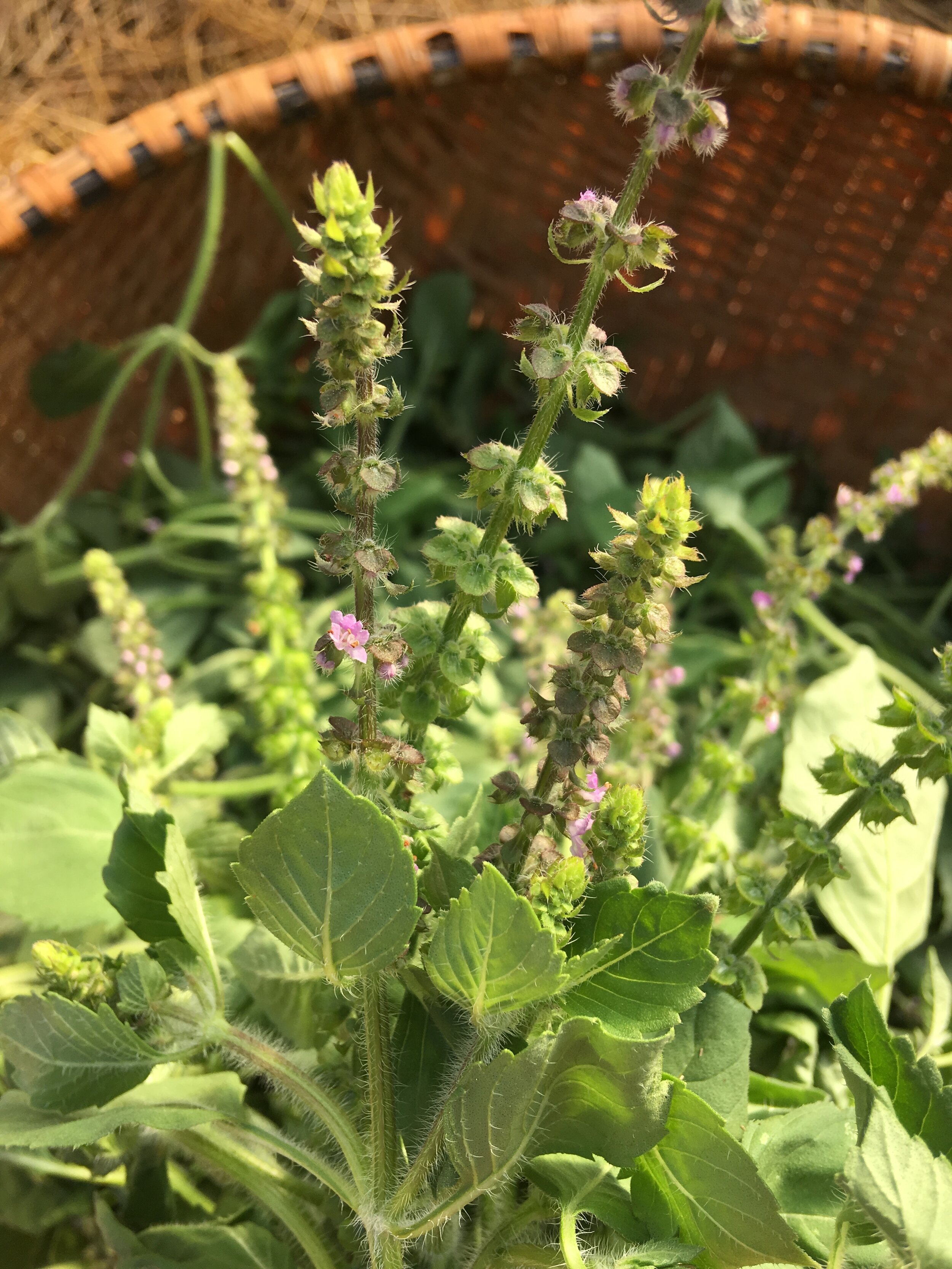
Tulsi basil is in the same genus as our culinary basils, and within the umbrella of Ocimum tenuiflorum there are multiple subtypes and varieties, including Rama, Vana, and Kapoor Tulsi. While all three can theoretically be grown in Vermont, I have found that Kapoor Tulsi is consistently the easiest and most rewarding to grow, and that is the variety we grow and sell at Red Wagon Plants. Since I began growing Kapoor Tulsi in my gardens in 2015, I have become completely, utterly hooked on this plant. From watching its little paw-print shaped leaves evolve as seedlings, to inhaling its heady perfume as the flowers open, to sipping the tea of its dried leaves in the winter, I keep Tulsi close at hand all year long.

From a medicinal perspective, Tulsi is compelling as one of the easier “adaptogenic” plants to grow- adaptogen referring to plants that have been used to regulate and support our nervous systems and have a wide range of positive actions on our body, mind and spirit. While the uses and impacts of adaptogens are too complex to dive into here (although I like Jim McDonald’s credit card analogy), it’s worth noting that Tulsi can be helpful to both calm an overactive system, as well as provide some energy to a burnt-out one. It’s packed with antioxidants and is strongly anti-inflammatory. Plus, it tastes amazing- I often hear folks liken the flavor to an herbaceous bubblegum, and its sweetness makes it palatable to basically everyone, picky kiddos included. The Indian medical system known as Ayurveda considers Holy Basil a “rasayana”, translated as “to lengthen the lifespan” in Sanskrit. Most of what we in the West know about its uses stems from what Ayurveda has taught us from a 3000 year history of use and reverence. 

Growing Holy Basil is quite similar to growing other types of culinary basils- it prefers fertile garden soil with decent moisture and full sun, although it’s not as moisture-dependent as the Italian basils. It’s important to wait for the ground to fully warm up before planting Tulsi, so start seeds indoors or purchase plants to give yourself a leg up. Once established, you can get up to three or four big harvests over the season- once the plant has started to set flowers, cut down to about a foot and watch it spring back, bushier than before. However, its important to leave plenty of flowers for the bees, who go absolutely bananas for this plant. I have spent delightful stretches of time lying belly-down on the warm summer ground, watching the insect cacophony surround my row of Tulsi plants. If you’re really lucky and observant, a blissed-out bee will leave you a little red pollen sac on one of the leaves- a tiny treat! Left to drop seed, Tulsi may actually volunteer back into your garden, but don’t expect to see seedlings until early July when it’s finally warm enough to resemble the plant’s natural growing conditions.

The real question with Tulsi is what to do with your bounty once it’s been harvested. The high water content makes it a little finicky to dry. I’ve had the best luck in a dehydrator on low heat, but it can also be hung in small bunches in a warm, well ventilated area until the leaves can be stripped from the stems, which take much longer to dry. 

The easiest way to enjoy Tulsi is to use the fresh leaves and flowers. Fresh Tulsi sun tea is a transcendent experience on a hot summer afternoon. Simply place a handful of bruised leaves in a mason jar, cover with cool water, and leave in a sunny spot for a few hours (with the lid on to keep in all those aromatic oils!) It also makes a stellar vinegar infusion:

Tulsi Vinegar

  • 4-5 big handfuls of Tulsi leaves and flowers, chopped

  • Apple cider vinegar

  • Honey (optional)

Pack leaves and flowers into a jar, then cover with apple cider vinegar and steep for 2-3 weeks. Strain, add honey to taste, and bottle. Use this sweet, floral vinegar in salads, or mix with seltzer water for a summer-infused sparkling beverage. This will keep for at least 3-4 months, indefinitely in the refrigerator. 


Let Tulsi into your garden, and you’ll reap its blessings and benefits all year long!

tulsi.JPG


Resources:


De la Foret, Rosalee. Health Benefits of Tulsi. https://www.herbalremediesadvice.org/health-benefits-of-tulsi.html