
Little plants waiting to be potted up



Little plants waiting to be potted up
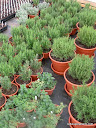
We start selling herbs in pots long before the ground is ready to work. Many of you still have snow on the ground; some of you may be lucky enough to live someplace where the snow is melted, but we all are worried more is on the way. Anyhow, when the snow first melts, the ground looks barren and dirty save for a few bulbs trying to poke through. Poor things. This has been such a cold spring, and while I don't want to complain too much, it would be nice if we had a little warm weather right about now. If you are wanting just a little reminder of what is coming down the road, you could grow a little window sill herb garden for now. All you need are a few herbs, a sunny window, and not much else. If you want to get fancy, you could pot up those herbs into pretty pots or mix them together in an indoor window box, but there is no need to really. Just some 4" pots are fine for now, and soon enough the plants can go outside, either in the ground or in bigger pots. We just started to deliver plants to a few stores, so consider picking some up for a little cheer. The scent alone is enough to lift anyone's spirit.
A group of Bhutanese farmers came to visit our greenhouses this week - it's the second group that has come by. When I saw the look on their faces when they were smelling the herbs - mint, rosemary, cilantro, lavender - I was reminded of why I do this work. It takes the edge off of those long end of winter weeks and brings hope and love into my being. It's an honor to share it all.
- Julie

We are so excited about our new selection of plants! Many of you have requested a wider array of edible and ornamental landscape plants, and we are happy to oblige. Below you will find a few of the new plants we love. Descriptions, growing information, and suggestions for companion plants can be found under "Our Plants".
'Zion Copper Amethyst' Osteospermum: Upright, daisy-like annual flowers in awe-inspiring amethyst/pink/orange. Plant in part to full sun 12-18" apart. Slightly trailing habit. Low maintenance, no deadheading required! Does well in containers. Allow top of soil to dry out between waterings.

'Holy Red and Green' Sacred Tulsi Basil: Striking purple and green leaves have a musky scent and mint-clove flavor. Tulsi basil has been sacred to Hindus for at least 3,000 years. It has excellent medicinal properties as a stress reliever and anti-inflammatory and makes a refreshing tea. Allison, our seed master, says it makes a wonderfully-scented oil for salves and skin creams.
'Reliance' Grape: A very hardy, vigorous variety that produces clusters of beautiful pink seedless grapes excellent for fresh eating as well as jellies and juices. Plant in full sun and moist, well-drained soil where the plant will have at least 10’ of climbing space. Prune in winter, train in summer. Makes a great privacy screen or seasonal shade.


'Banana Cream' Leucanthemum: An unusual perennial daisy that opens lemon yellow and slowly turns white as it matures. Full flowers bloom in abundance all summer. Ideal for cut flowers due to long, straight stems and extended shelf life. Looks lovely with just about anything, but especially lavender, liatris, and gaillardia. Very vigorous plants multiply easily, making a great filler. Plant in full sun 18-24” apart. Attracts butterflies.
'Niger' Black Mondo Grass: A compact, clumping grass-like plant. Foliage turns jet black when grown in full sun. Small light purple to white flowers on short stalks appear in early summer and give way to black berries in the fall. Plant in full sun to part shade 12” apart. Pair with succulents, lobelia ‘Fan Scarlet’, or Lamb’s Ear for dramatic color and texture combinations.


A note on the 'Julia Child' Heirloom Tomatoby the renowned tomato breeder, Gary Ibsen:
"Early in 2001, while having lunch with Julia Child at Bernardus Lodge in Carmel Valley, California, I told her about my having in my tomato seed trials several un-named varieties. I followed by asking her, "If I'm able to grow an heirloom tomato that's good enough to name after you, what kind would you like it to be?" I suspected she would say, "Red", or "Beefsteak", or "Yellow." However, after just a moment's hesitation, Julia looked at me and replied, "Tasty, my dear"
"'Julia Child' is an open-pollinated, heirloom tomato. The tall, indeterminate, potato-leaf plant produces lots of 4-inch, deep-pink, lightly-fluted, beefsteak fruits that have the kind of robust tomatoey flavors and firm, juicy flesh that invites tomato feasting and seed-saving. It's not a simple, sugary sweet variety, but has a bold, straight-forward character in its taste, with more than enough acidity and earthy nuances to balance its sweet, fruity flavors."

'Paul Robeson': A well loved tomato on many people’s “favorites” list. A “black beefsteak” with dark red fruit tinged with black, brown and purple flesh and skin. Rich flavor with hints of spice and red wine. Vary widely in size, but average 10 to 12 oz. each. Does well in colder temperatures. 74 days. Indeterminate, provide support. Won “Best of Show” at Carmel TomatoFest!

Next Saturday, April 2, we are hosting a Sneak Peak and Garden Chat. Please feel free to come by and visit the plants and the people who grow them. We will have some coffee and sticky buns for you, too. The greenhouses are just a very pleasant place to hang out this time of year and we love to get a chance to talk to our gardening friends before the season gets completely hectic. You can also combine this with a visit to the Palmers' Sugarhouse for sugar-on-snow. This will be completely informal, so feel free to wander in at any time between 10:00 and 12:00. You can participate in any way that feels good to you - chat us up or wander around in quiet solitude looking at the growing plants - it is up to you!. You can read the paper in a sunny spot, bring your knitting and relax, or bring your garden questions and some pen and paper. We hope to see you - it's been a long winter!
Allison Lea, our incredible seeder, eagle-eyed pest finder, and all around special person wrote this beautiful piece on seeds. We love her writing, and hope you enjoy these thoughtful words.

I've had seeds on my mind lately. Not surprising, given the time of year, and the fact that I've been planting seeds for a living for the better part of a decade. It's easy to forget about seeds, during the long months of a Vermont winter. But then that first warm day comes, and with it the scent of damp earth, and suddenly I am visualizing thousands of seeds lying dormant in the ground, waiting and working. I consider myself lucky, because I get to experience an early spring in the greenhouses. While the outdoor seeds are still mired in mud, ice, snow and more unpleasant bits of thawing matter, I am opening crisp white packets and distributing their contents into the warm fluffy soil from Vermont Compost: onions, lettuce, kale, various greens, annual flowers, tomatoes, peppers. I love my job for its ability to provide me with an invaluable set of simple lessons for life. First: start small. Some of the seeds I plant are truly no bigger than a pinprick. Yet even the smallest one contains all the knowledge it needs to become a complete plant. Inevitably, I have moments when I feel as though I'm flailing around in my life, looking for answers outside myself, or feeling overwhelmed by the sheer volume of information literally right at my fingertips. And then I find myself standing at my seeding bench inside the greenhouse, holding a handful of seeds in my hand and realizing I have all the answers I need. I've always had them. Second: calm down a little and be still. While there are many seeds which travel for miles and miles on the wind or hitched to the back of some animal (mainly my dogs, it seems), all the seeds I've handled germinate best when they are left in peace. They're not going to be thrilled if I keep jostling the tray around, or picking them up, examining them for signs of life, and putting them back down. Likewise, when I allow myself to slow down and breathe a little, I start to get more of a grasp on the person I am becoming. Stillness is the key to sprouting, so when I feel myself flitting here and there, reluctant to make a commitment or put down roots, I go back to my seeds, peer at them thoughtfully, and then step back and let them be. Third: not all seeds are going to germinate. Some seed packets will say 60% germination rate. These seeds I sow a little thicker, in order to compensate. If all of them sprouted, I would have a very crowded plug tray, and unhappy plants. I have lots of great ideas, but they're not all going to come to fruition, so letting go of my attachments seems like a good plan. And finally (although the lessons continue indefinitely) cracking open is a good thing. I've seen thousands of little seedlings, and that first green shoot pushing up through the hull never ceases to delight and amaze me, whether it happens in the greenhouse, or out in the garden. So as I strive to make sense of a world which appears to be literally cracking apart under our collective feet, I will keep coming back to the modest little seed, looking for signs of something new and amazing coming through.

As we discovered last Sunday, during the hat making class, a greenhouse is a lovely place to craft, knit, relax, or crochet. This week, you can learn the art of amigirumi, the Japanese art of creating cute crocheted creatures. A basic knowledge of simple chain stitching is helpful (many tutorials are available online!!) Meghan will supply the hooks, cotton yarn, eyes and stuffing! Children who already know how to crochet are welcome. Bonus: if you took the hat making class feel free to bring your project along for some finishing tips after we bring our cute creatures to life. Again, you will have a chance to relax in the Red Wagon Plants greenhouses.
Please call 482-4060 to register. $15 suggested donation per participant. We will provide coffee, tea, and snacks. Space is limited, please pre-register. All proceeds will be donated to friends in Japan who are recovering from total upheaval.


Planning Your Ornamental Landscape
Landscaping your property yourself may seem like a daunting task, but it's easier than you think. In an ornamental landscape, it's important to consider how plants go together - color, texture, size, and shape are important aspects of creating a beautiful and interesting landscape. Using contrast helps bring out complementary features of the different plants. An example of color contrast could mean using plants with flowers from opposite sides of the color wheel, such as blue and orange or yellow, or light and dark colors next to each other. You can also create contrast with texture by using plants with different types of foliage - a plant with lacy foliage could go next to one with glossy leaves - for example, amsonia with heartleaf bergenia.
The Right Plant in the Right Place
One of the most important things to consider when planning your landscape is what plants are suitable for your microclimates. Take a walk around your yard and house and you will undoubtedly find areas that are shady, others that receive salt from driveways or paths, some that are perpetually wet, and yet others that may be very windy, sunny, or cold. It is easy to look at these as "problem" areas where you cannot grow the plants you would most like to. Another way of looking at these areas is as opportunities to create a more diverse landscape and get to know unfamiliar plants. Below you will find examples of some of the plants we grow that fit well in these microclimates.
Salt-Tolerant Plants (good for near the road where the salt truck spray in the winter) : Common Thrift, Sea Holly, Daylilies, Artemisia, Heuchera
Juglone Tolerant Plants (many plants won't grow near trees in the walnut family): Hollyhocks, Daylilies
Cold-Tolerant (superhardy) Plants: Campanula, viola, sedums, Lady's Mantle
Shade-Tolerant Plants: brunnera, hosta, heuchera, dicentra, Goat’s Beard, white baneberry, astilbe, cimicifuga, heartleaf bergenia
Water-Loving Plants: Joe Pye Weed, Highbush Cranberry, ligularia, Chinese Globeflower,
Low-Maintenance Plants
If you are a very busy person (as I know I am), it is wise to choose plants that require little or no maintenance in order to look beautiful and survive. These plants require little pruning or deadheading, and can fill your landscape with color, texture, and wildlife.
Woody Ornamental Plants
This year we are offering an expanded selection of ornamental shrubs for your landscaping projects. Many of these are also dual-purpose, providing a number of other benefits such as privacy screening, coppice material, shade, windbreak, food and shelter for wildlife, nectar for birds and insects, erosion control, and more. Some examples include:
‘Winter Red’ and ‘Southern Gentleman’ Winterberry Hollies – Plant these two together for a stunning year-round show! Female plants are deciduous, with leaves that turn yellow in the fall and are replaced by masses of large scarlet berries that provide winter food for birds.
‘Summer Wine’ Physocarpus – A beautiful, fast-growing perennial with arching stems covered with dark purple-bronze foliage. White, button-like flowers appear in June and provide pollen for insects. Makes a great privacy screen.
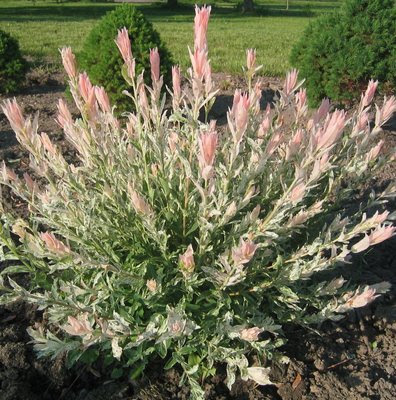
‘Hakuro Nishiki’ Dappled Willow – A gorgeous ornamental plant with pink shoots that open to green and white variegated leaves. Yellow flowers appear in April and stems turn red in winter. Flowers provide pollen for insects. A fast-growing plant that makes a great privacy screen.
These are all some of the easiest plants to grow. Once you are armed with a list of simple plants, just keep in mind these other factors:
Once you understand what kind of plants like what type of conditions, you will feel confident to play with plants like a painter plays with colors. It is all about the right place for the right plant; so learn to identify the micro climates within your yard, come up with lists of plants that fit each micro climate, and create your own box of paints!
If this is hard for you, remember, we are here to help you!
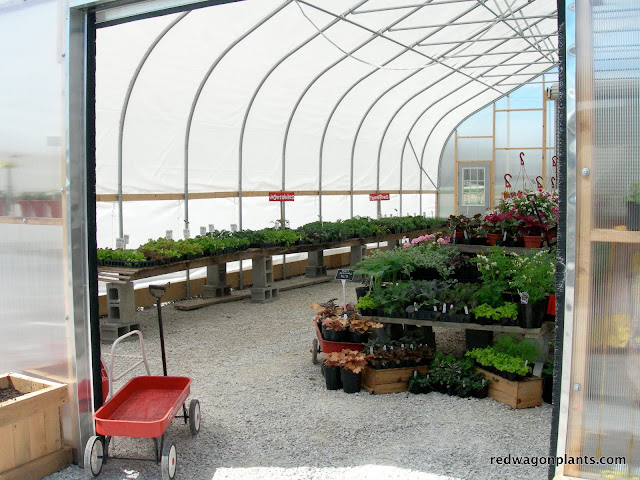 WE HAVE FILLED THIS POSITION! (3/17/11)
When people walk into our greenhouse, they are greeted by knowledgeable gardeners, like-minded fanatics, or people who have experience as commercial vegetable growers or as landscape professionals. Whether a customer is a veteran gardener with Latin names rolling off their tongue or a first time tomato plant purchaser, our staff and our customers share a love of plants, food and flowers. We welcome all of our customers into an environment that is helpful and practical. If this description peaks your interest, we may have a good opportunity for you to work in our retail greenhouse.
Here is a little more about the job.....It would entail all aspects of working in the retail greenhouse such as
If this sounds appealing to you, please send us a version of a resume that explains your gardening experience. Let me know what your favorite heirloom tomatoes are, or which annuals do best out by the mailbox at your house. Or maybe you can tell me a story about the first time you new you were addicted to gardening. Basically, we are looking for someone who is very at ease talking about gardening and who has a lot of gardening knowledge easily accessible in their brain because they live and breathe plants. We love our customers and want to continue giving them the service they deserve.
The work dates are roughly April 15th to July 3rd, and the position is for about 20 to 30 hours a week. We realize this is a short time commitment, but if you are a gardening enthusiast with years of experience, and you want a chance to be around beautiful plants and wonderful people, this might be a good opportunity for you.
Contact us with your garden stories and garden resume by email: julieATredwagonplants.com.
Thanks!
Our friends at Lincoln Peak Vineyard have been holding knitting nights at their winery all winter long and have told us what a fun event it has been for them. I have been thinking about this all winter and imagining a group of people sitting around the cozy wood stove, sipping wine, and eating the famous flour-less chocolate cake. We often have customers, friends, and neighbors who want to come by the greenhouse and just hang out in the warmth and the greenery while winter still blows outside, so when I heard about Lincoln Peak's knitting nights, I thought wouldn't it be nice to offer people a chance to do something they love in a setting that is so special during these end-of winter days. I told my friend Meghan O'rourke about this and she very kindly offered to teach two classes in the greenhouses. Meghan is a very talented artist and craft person who will teach you to make something completely unique and full of your own personal touches. And you'll get to do it in the beauty of a greenhouse full of green, green life. Here is a description of the two classes:

Knowledge of basic knit and purl stiches needed and a willingness to finish up the hat on your own. Learn how to size and pattern this classic, stylish and fitting cap for the cool spring days. You need to bring 5 size 7 double pointed needles and at least two colors of the yarn of your choice, preferably a worsted weight.
Please call 482-4060 to register. $15 fee per participant. We will provide coffee, tea, and snacks. Space is limited, so please be sure to register

Learn the art of amigirumi, the Japanese art of creating cute crocheted creatures. A basic knowledge of simple chain stitching is helpful (many tutorials are available online!!) Bring your own crochet hook and a favorite color of cotton yarn. I will supply the eyes and stuffing! Bonus: if you took the hat making class feel free to bring your project along for some finishing tips after we bring our cute creatures to life. Again, you will have a chance to relax in the Red Wagon Plants greenhouses.
Please call 482-4060 to register. $15 fee per participant. We will provide coffee, tea, and snacks. Space is limited, please preregister.

It is finally that glorious time of year when work in the greenhouses begins. Our first cuttings have arrived and we have started potting them up, giving each plant new room to grow in wonderful Vermont Compost Company potting mix. (See note below) We can imagine that they feel the same way we do upon first entering the greenhouse, as they shed their cardboard boxes and we our many winter layers. At first the sunshine pouring down dazzles us, and we squint in the brightness. But soon we are all reveling in the lovely feeling of the rich soil, the moist, 85 degree air on our skin, and the intoxicating scent of rosemary. Within a few days this greenhouse will be filled to bursting with vigorously growing young plants.


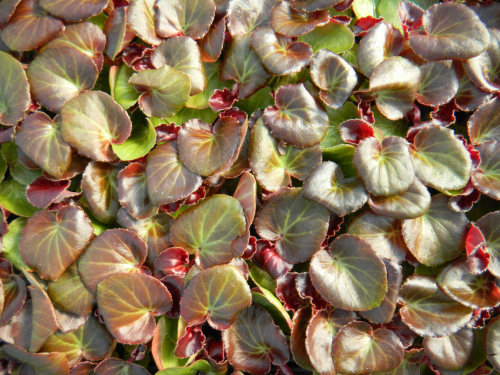
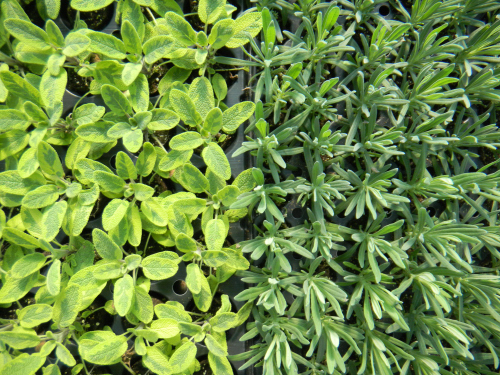
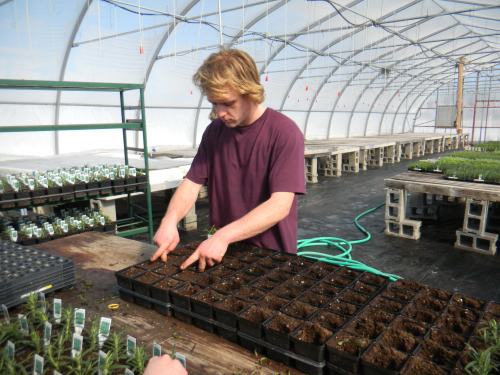

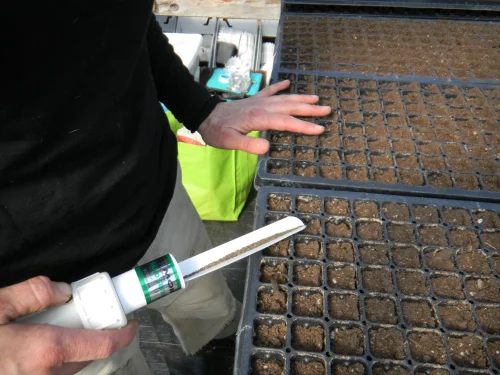

By Sophia
Note: "Cuttings" are plants that can only be started from rooted stems. Instead of the plant producing seed and being propagated from a seed, plants that are 'vegetatively propagated' (as it is called) are only true to type from the stem cuttings. In some cases, this means that they are cloned hybrids - a cross between two plants and they would revert back to looking like one of their parents if you planted the seed. Another reason plants are propagated this way is because they are too slow to germinate and in our climate, they would be hard to establish. We buy in our rooted cuttings because making them ourselves would require heating a greenhouse all winter long and for now it is more efficient to buy in these beautiful cuttings from growers in Quebec and Massachusetts who specialize in this kind of greenhouse production. And just to be clear, this is old-fashioned plant breeding and propagating - these are not test tube babies or genetically modified organisms.
A New Focus on Landscaping This year Red Wagon is pleased to offer a variety of new landscape plants that have been requested by our customers. We are working with Cobble Creek Nursery in Monkton to provide a wide variety of Vermont grown edible and ornamental trees and shrubs. Our staff can help you choose the right plants for your project and give you the information you need to grow them successfully. We can also do on-site garden consultations at your home.
Ecological Landscaping: How to Make the Landscape Work for You
When it comes to landscaping, we believe in a natural, practical approach. There are a number of ways you can make your landscape more functional for you and for the ecosystem simply by choosing the right plants. One way is to plant trees and shrubs that produce edible fruit. The fruit can feed you and your family for years to come, and provide food and habitat for wildlife. Many of these plants have still other benefits, such as ornamental interest, providing shade in summer, as windbreaks, or as privacy screens. Here are some examples of edible landscape plants we are growing this year. For descriptions and growing tips for all the plants we are growing this season, click on “Our Plants”. For some great information on edible landscaping, check out Rosalind Creasy's website or see our "Resources" section.
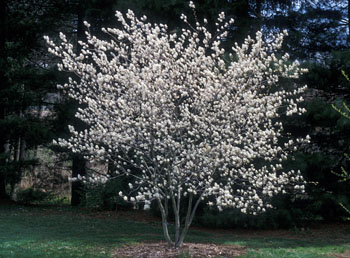
NEW ‘Autumn Brilliance’ Apple Serviceberry – A native plant that produces white flowers in spring that provide pollen for a wide variety of insects. Flowers are followed by edible red berries that are adored by birds. Leaves turn orange and red in the fall for ornamental interest. Also a coppice species.
NEW ‘Darrow’ Blackberry – A very reliable, cold-hardy blackberry that bears huge sweet berries in July. 4-5' tall. Provides great habitat and food for wildlife. Produces suckers, creating a fast-growing hedgerow that works well as a privacy screen or windbreak.
‘Patriot’ Blueberry – A super-hardy half high blueberry that tolerates wet soils and produces delicious berries for birds and people. White blossoms in spring and orange leaves in fall offer year-round ornamental interest. These are underused as landscape plants, and we want to promote their use. A hedge of blueberries in the fall is absolutely stunning!
NEW ‘Red Lake’ Currants – A very hardy shrub that produces tart red berries in July. Delicious for jams, jellies, and pies. A great food and shelter plant for wildlife. Flowers that bloom from April to May have ornamental interest and provide nectar for a wide variety of insects.
‘Pixwell’ Gooseberry – Very easy to grow and low-maintenance, with round green berries that are picked like blueberries. Provides food and shelter for wildlife, and flowers provide nectar for pollinators.
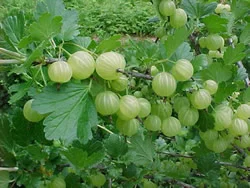
NEW ‘Reliance’ Grape – Beautiful pink seedless grapes are excellent for fresh eating! These vigorous climbers can provide needed shade or a privacy screen in summer, as well as food and pollen for wildlife.
NEW ‘Parker’ Pear – A very hardy pear with medium sized reddish-brown fruit, lovely white flowers in spring, and dark purple foliage in fall for year-round ornamental interest. Requires a second variety nearby for pollination. Flowers provide nectar for pollinators, and the tree can be coppiced to produce wood for craft projects or scions.
NEW ‘Shiro’ Plum – Tree produces abundant gold fruit from July to August. Flowers provide nectar to a wide variety of insects.
NEW ‘Fall Gold’ Raspberry – An ever-bearing variety with yellow fruit that produces two crops, in June and August-October. A very hardy and tough plant with a wide variety of uses – plants provide food and shelter to wildlife and pollen to insects, brambles form a hedgerow for privacy or a windbreak, leaves can be used to make tea, and the berries are considered a super-food.
NEW ‘Black Beauty’ Elderberry – A wonderful ornamental and edible plant with year-round interest. Dark purple foliage is complemented by huge pink flowers in midsummer that provide nectar for native pollinators. Dark purple fruit appears in fall, and is great for making jam. Plant provides both food and shelter for wildlife. We will also be carrying a strain of elderberry that was bred by Lewis Hill - a Vermonter who was the authority on fruit production in the northeast. Lewis unfortunately passed a way a few years ago, but the plants he bred and propagated are his living legacy.
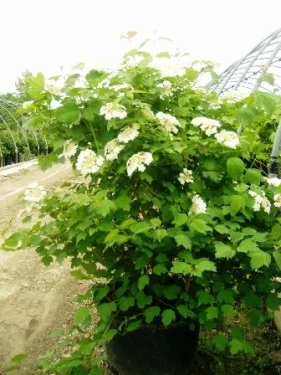
NEW ‘Alfredo’ Highbush Cranberry – This colorful edible ornamental gives a year-round show. Foliage opens red, then turns green, yellow, and then red again in fall. Red berries appear in fall and persist all winter, providing forage for wildlife. Large white to yellow flowers appear in spring and provide nectar for native pollinators. A very hardy plant that is deer and rabbit resistant. This makes a beautiful privacy hedge, growing thick and tall and just covered in cheery red berries in the fall.
Let us know your plans for your garden this year; perhaps a few well placed edible plants can add beauty to your yard and bounty for your table.
by Sophia and Julie
It might be 5 below, but we've got plants to grow! We put new plastic on our third greenhouse last Wednesday, a cold, but beautifully sunny morning.





When the first delivery of potting soil comes to our greenhouses, I usually take a moment to stop what I am doing and just dig my hands in the dirt. This year, I have been a bit busier than normal, so I had to wait a few days to do it, but the feeling is the same. It means winter is winding down; that the seeds that are waiting patiently in the storage bins will have a springboard for their magical emergence; and that flowers, greenery, and fresh food will soon be in our lives again.
Winter used to be a difficult time for me, but I have learned to accept its slowness and constricting nature. I spend time outside as much as possible and try to rest; something about hitting 40 makes me understand the value of Doing Nothing more than I used to I suppose. But during those earlier years, when winter was more difficult for me, I always marked the first soil delivery on my calendar and that became the date towards which I would count all winter long. When that day finally came, Dennis, who delivers for VT Copmost Company would drive his truck into the barn and the big pile would spill out of the dump truck and I would wait politely for him to leave before taking off my boots and socks, pulling up pant legs and sleeves, and just dig into that fluffy warm pile. A thawing takes place, a deep, deep thawing, and gratitude just settles in.
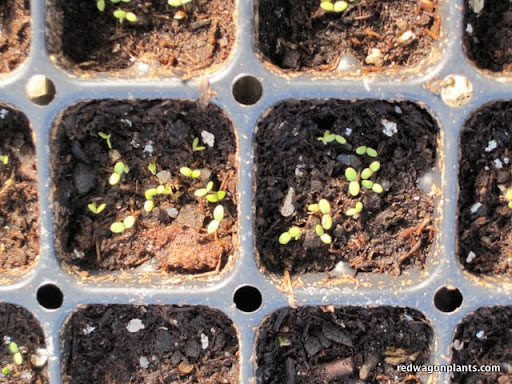
There are lots of times when people ask me why they should buy plants instead of just starting their own seeds. I always answer that plants need good light conditions, ventilation, great soil, proper watering, pest monitoring, and disease control. If they want to do all of that, then the plants will be just fine. It's really fun to see seeds germinate and pop up out of the soil, especially if you have kids in the house. The only problem with starting your own seeds is that if those steps are not all followed pretty well, you can end up with less than ideal plants, put them in the garden anyhow, and since they started life a little under duress, they won't thrive in the great outdoors where direct sun light, wind, disease pressure, temperature fluctuations and insect infestations await them. It's like raising children, the way they start out in life is really important to their overall health. If you can't have the correct set up for seed starting, I would still encourage you to try something with your kids so that they can see the magic of emerging seeds. Even though I have seen this most of my life, thanks to an avid gardener for a father, my heart still flutters when I notice the first signs of life poking through the soil. Something in our mammalian brain is wired to be excited about new life, so please don't let the description of the "proper technique" turn you off from starting a few seeds at home. I am writing out the steps to proper home seed starting so that people who really want to improve their chances of a great garden can do so if they choose. And if it doesn't work out well, you can always find a few plants to purchase!
Get set up for proper seed starting.
Lights, soil, trays, water, air circulation.


Let us know if you try this or what your experience has been like with seed starting at home. We love to hear about your projects!


Flowers for bouquets are often grown in their own gardens, in tidy straight rows, and exist not to beautify your yard, but to kick out lots of stems that are promptly cut just as the blossoms begin to unfurl. These "cutting gardens" are not necessarily the nicest to look at, but they sacrifice their beauty for the vase, where they can provide up to a few weeks of enjoyment in a portable format. If you lack the space for a proper cutting garden, you can always dip into the front yard flower beds for a stem or two and no one will know the difference but you. In fact, many perennials will produce for a longer season and in a more robust fashion if they have their stems cut now and then. Here are some favorite perennials and woody ornamental shrubs that are forgiving of the cutting shears and a boon in the bouquet.
Hydrangea paniculata 'Limelight'. Most hydrangeas do really well in vases, they act as a delicate, feminine filler and are long lasting. Can be dried for everlasting arrangements as well.


All of these shrubs and perennials can be found at our retail greenhouse in Hinesburg, but if you are not in the area, they are fairly common varieties, readily available in any well-stocked garden center. The varieties above are easy to grow and add beauty to your home with staggered bloom times, varying heights and light requirements. Let us know what some of your favorite perennials are for bouquets!And remember, if you are planning to grow your own flowers for an event (wedding?!), be flexible and have fun. Let the season and your climate guide you.
Last summer, I must have helped at least half a dozen customers who were looking for some help in planting a garden specifically for home-grown wedding flowers. I often warn people that growing for a specific date is fairly technical and requires weekly plantings, regular harvesting all summer long to keep the plants blooming until the event, and most of all, a very flexible attitude. People who have a specific color scheme or variety in mind are not always good candidates for home grown wedding flowers since those types of flowers may be very hard to grow and getting the right color on the right day means planting about 10 times more than you think you will need in hopes that one of the plantings will be just perfect on the correct day. For those who are planning an event and are willing to look at the flowers as a fun and flexible component, then growing your own is a great option. I have listed below some varieties that are particularly well suite to a DIY flower program. Full disclosure: I have talked about as many people out of growing their own wedding flowers as I have talked into doing it. It really is not a good fit for everyone, but for those who are willing and able, here is a little help to get you started....


Verbena bonariensis - reliable and a lovely purple bloom with long wiry stems that hold up well to handling and mixing into all kinds of arrangements. Zinnias - come in all shapes and colors, are best suited for August or later. Require deadheading all summer long, but will branch out and be very productive once well established. Sunflowers - there are lots of sunflower varieties that are designed specifically for cut flowers. Some of our favorites are Giant Sungold Teddy Bear, Sunbright Supreme and Soraya. The only tricky thing is getting the timing just right. They only are perfect to harvest for about 10 days, after that their single blossoms start to drop their petals. Ageratum - blue, can be tall if planted correctly - a little closer together. Needs deadheading all summer long if you are planning for a late summer or fall event. Very productive if well established and well taken care of. Agrostemma has a lovely, floating quality that gives a lot of life to mixed bouquets. It's airy and delicate, comes in purple or white and produces lots of good, long stems all summer long. Again, needs constant picking and deadheading to produce all summer long.

Ammi - this is a beautiful filler in mixed bouquets or in all-white arrangements. Easy to grow from transplants and produces, nice, tall stems.

Cosmos - come in a variety of textures and lengths, best suited for mid-August or later. While they are beautiful, they do take up a lot of room for not always a lot of stems.

Snapdragons - another multi-colored option or can also be grown as strains of single colors. We offer many options of snapdragons. The stems can sometimes be a little short, but with good fertility and 6" spacing, they will grow straight and tall.


Celosias - come in many shapes, sizes or colors. These are a hardy, easy to grow and more forgiving than others. And they can be dried for long-term keep sakes.
All of these annuals will give you a good place from which to start. Do-it-yourself flowers can always be supplemented with florist purchases the week of the event if the budget allows it. We will cover more on home grown flowers in subsequent posts, so if this peaks your interest, please stay tuned. Part two will be about which perennials are easy to grow and use for cut flowers. Part Three will be about different tactics to make your cutting garden as prolific as possible.
by Julie One of my favorite aspects of running a greenhouse business is the ability to create. Not only is the act of growing plants very creative - we get to choose what we grow, how we grow it, how we market it, and how to make it all look beautiful and inspiring (we hope!); but in addition to that is the fact that this is a business like any other. Ever since I was a little girl, my favorite toys have been my graph paper and my schedules; so a greenhouse business that gives me about 6 months of planning time is really fun for someone like me. I get to think it all through, improve systems, find ways to do more in the community, and create a nice work environment for all of the amazing people at Red Wagon Plants.
Here are some projects and improvements we are hatching (germinating?) at Red Wagon Plants this winter. Our mission is to increase the bounty in our community and this year, we plan to focus on the community part of that mission. We have built up such a wonderful group of customers, both wholesale and retail, and it feels like the right time to get to know everyone a little better!
So those are a few thoughts, and as always, we love to hear your suggestions, so please feel free to comment.
I woke up today feeling grateful and recharged with a blue sky blasting through the window and a full night of sleep behind me (the first in a while.) Here are a few pictures I took with the early morning sun casting a bittersweet glow on everything. What to make of that late fall look? Winter is coming, summer has produced all it can, and it is time to settle back and enjoy the dark days ahead. The dormant days ahead work for the seeds that need it in order to crack into life come spring - it can work for us too. It is a just fine time of year for sinking into the couch, making soups, catching up on reading, and over all feeling gratitude for the cycles of the seasons, the sweetness in the people around us. While the basement is full of jars of applesauce, tomatoes, jams, chutneys and pickles, I also try to keep a few things going in the garden as long as possible.
Like these .....
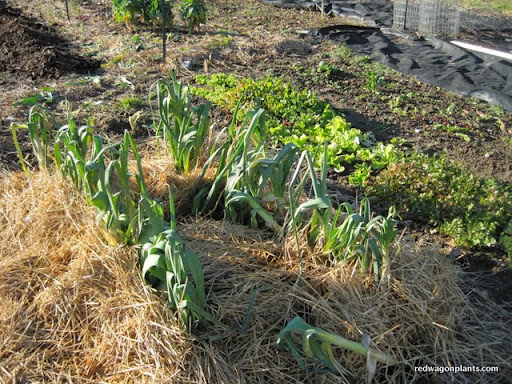
The straw keeps the soil from freezing around the leeks so that I can harvest them even in deep snow. The lettuce, arugula, cilantro and dill behind them will keep going a little while longer. I can cover them up with row cover, but most likely they will be eaten before I even need to do that. I will plant 2 or 3 times more next year so that I can have enough to take us through December.
I love this close up of dill with all of its fine texture.

Dill is one of the hardiest herbs to grow in cold weather and gives such brightness to late fall salads, potatoes, eggs, and fish. I use it quite a bit this time of year after pretty much ignoring it all summer long except for using it in a pickle jar or two or three.

I always bring in a few baskets of herbs. I don't do anything to them except cut them, pile them into a basket and leave them around the house. They smell great and love to go to work by the handful when I am making soups, broths and stocks. I don't think they object to being stuffed into a poultry cavity every now and then either. There is nothing like using herbs in big bunches of branches to feel like I am living a rich and luxurious life.
I want to say thanks to compost too.

Parts of the garden are ready for spring, and parts still have a ways to go, but there is so much satisfaction in seeing the raised beds awaiting next year. Soil building organisms busy making teeming, hot life. The ones who really get some of the credit for this are these lovelies......

Enjoy your next few days of rest if that is your luck and your lot. And thank you, deeply, for being a part of all this beauty and grace, coldness, sunshine, poop, and all.