
We are launching lunch! This week, we will be adding sandwiches, a savory vegetable tart, and a new salad. Come by for a lovely mid-day meal or snack in the gardens or around the big wooden tables. Mondays are very quiet and lovely - perfect for a work meeting or a little solo time with a book or journal.

July is Jungle Time and Plant of the Week
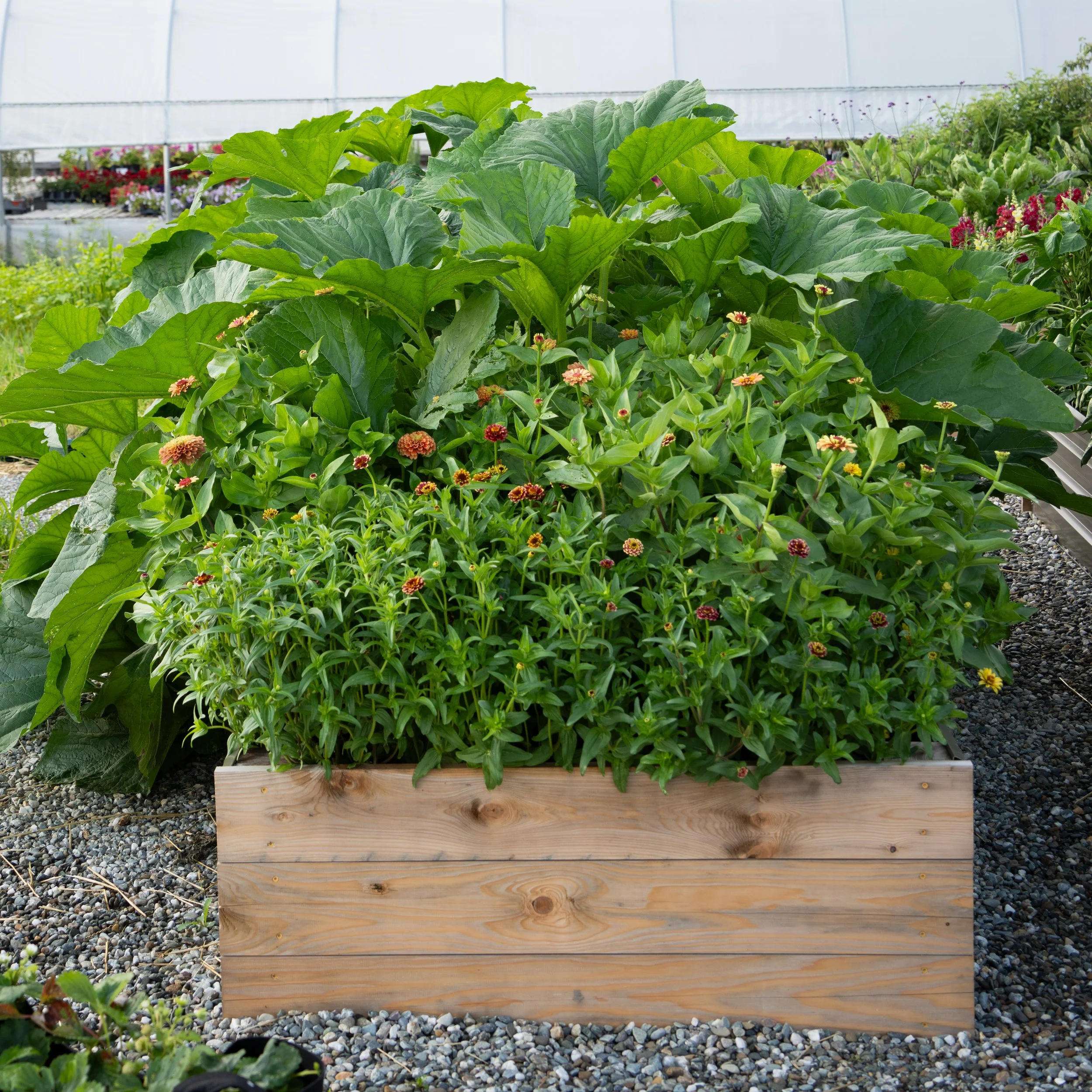
Height of summer means the plants are tall and towering. It is best to prune and stake a bit to give everyone a little breathing room for airflow and sunlight. In the vegetable garden, it also makes it easier to harvest. We recommend simple bamboo stakes and twine for simple supports in the vegetable and perennial gardens. With annual cut flowers, horizontally placed netting is the best. We have a couple of raised beds in the display garden that use horizontal netting so you can see how we do it.
In terms of pruning, cut back anything that is crowding other plants, branches that have broken, and anything dead or diseased. It will help plants in the long run even if it feels terrible to do it now.
Our plant of the week deal this week is a good one. ALL QUART ANNUALS are Buy Two, Get One FREE.
Bake Shop this Week

Anise Hyssop Appreciation Post
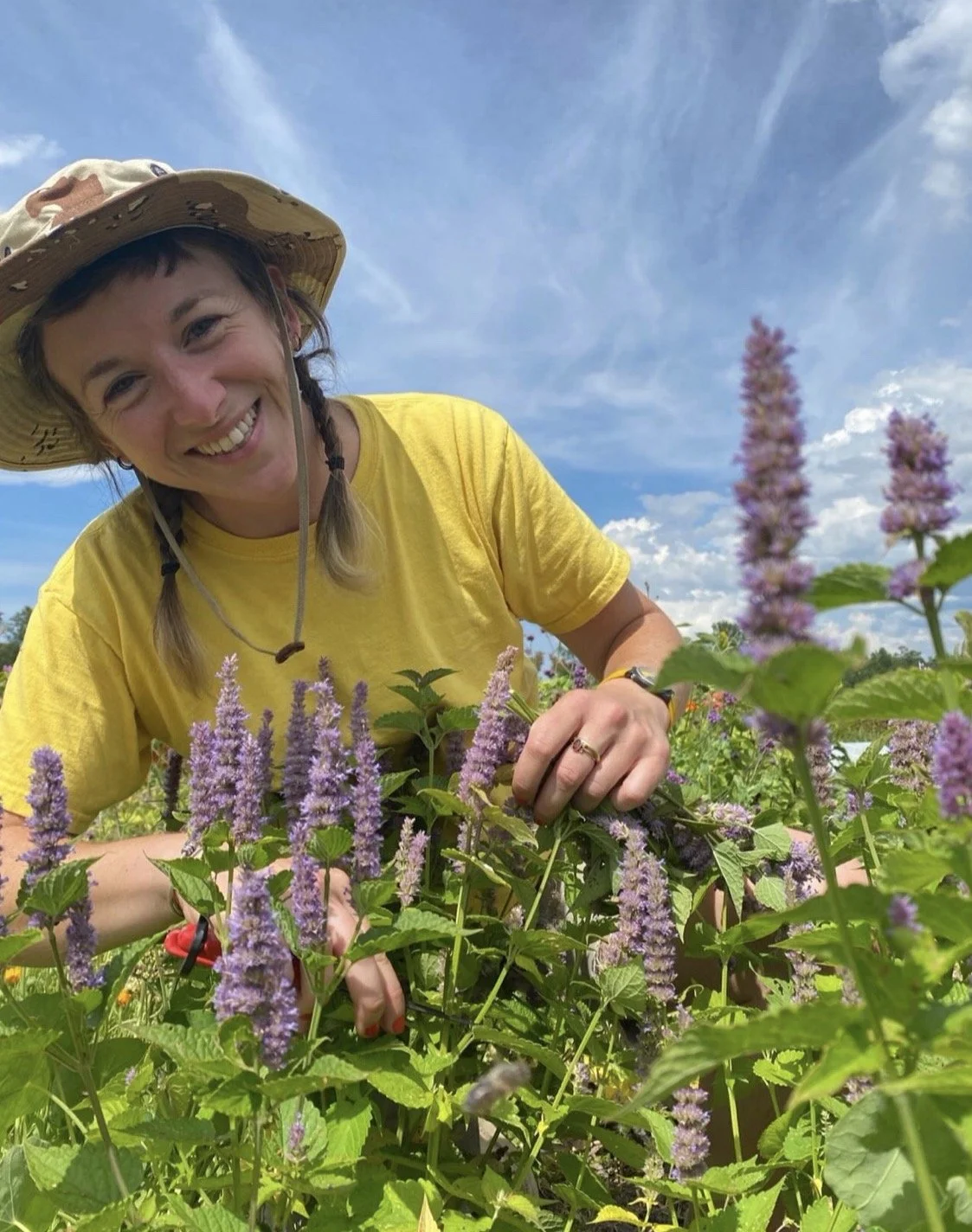
Anise hyssop appreciation post! This plant is an easy to grow perennial; it also self seeds so will pop up all around, but not too aggressively; it makes great tea; and it’s a pollinator magnet (see our stories).
We are offering this in the bake shop this week!
Anise Hyssop, Mint and Lemon Refresher
Drop into boiling water-
A handful of lemon verbena sprigs
A handful of anise hyssop sprigs
Juice of 1 lemon
1 to 3 TBS honey (to your taste)
1 small pinch of sea salt
Let cool, strain, and serve over ice.
This is a great and beautiful thing to keep in the fridge on hot days!
We’ve got big plants of lemon verbena and anise hyssop right now.
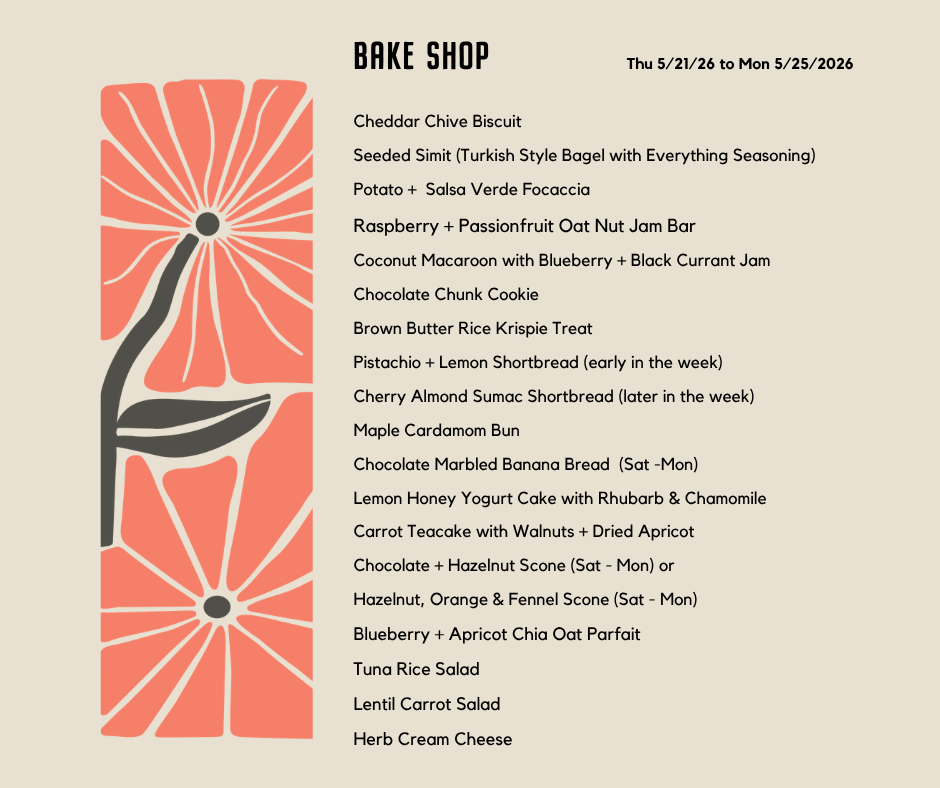
Bake Shop Menu this Week

Plant of the Week
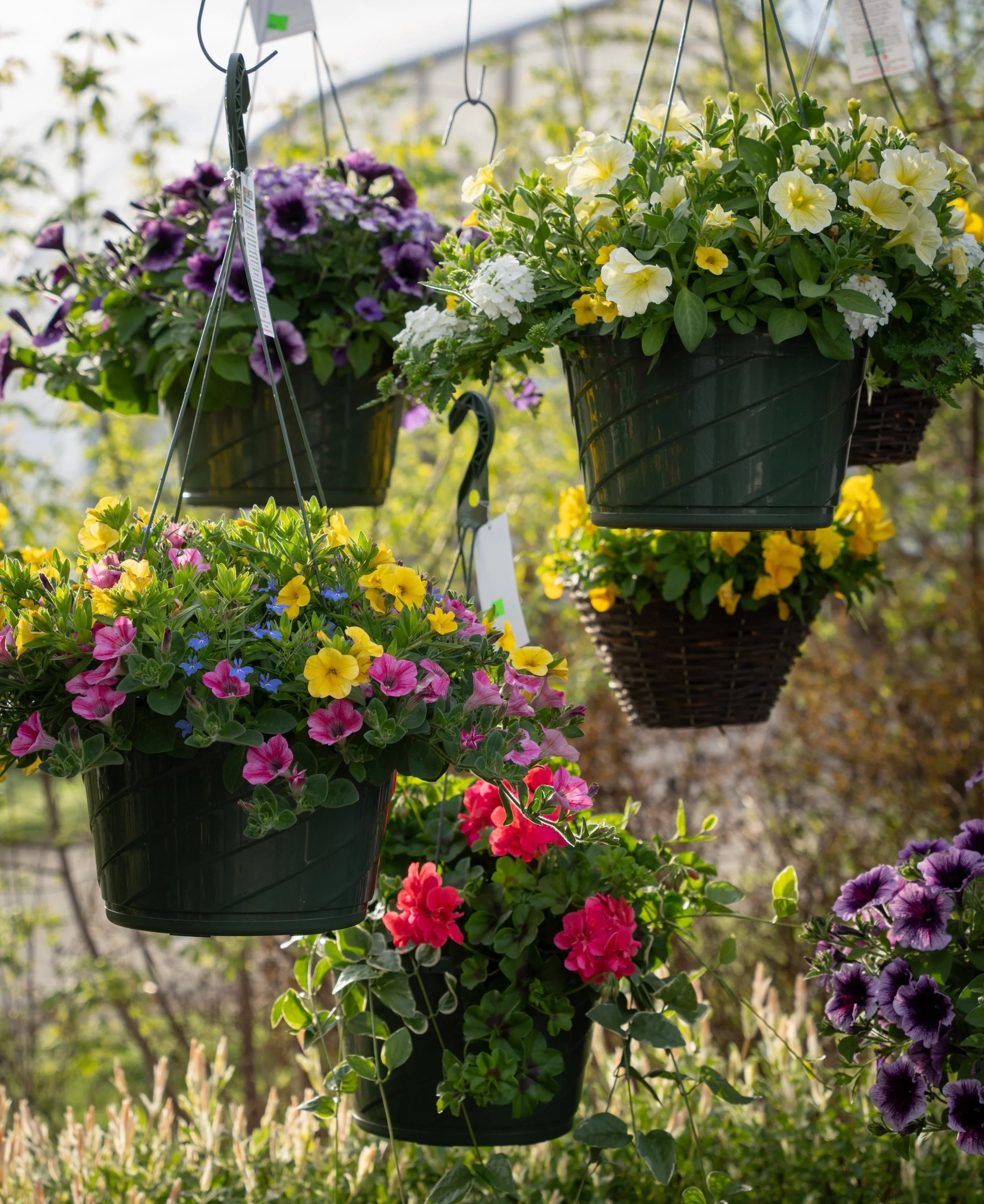
All of our hanging baskets are on sale this week (June 23 to June 30) - 25% off.
This is a great way to spruce up for summer. The hangers can come off and they can be used as planters wherever you need a pop of color.
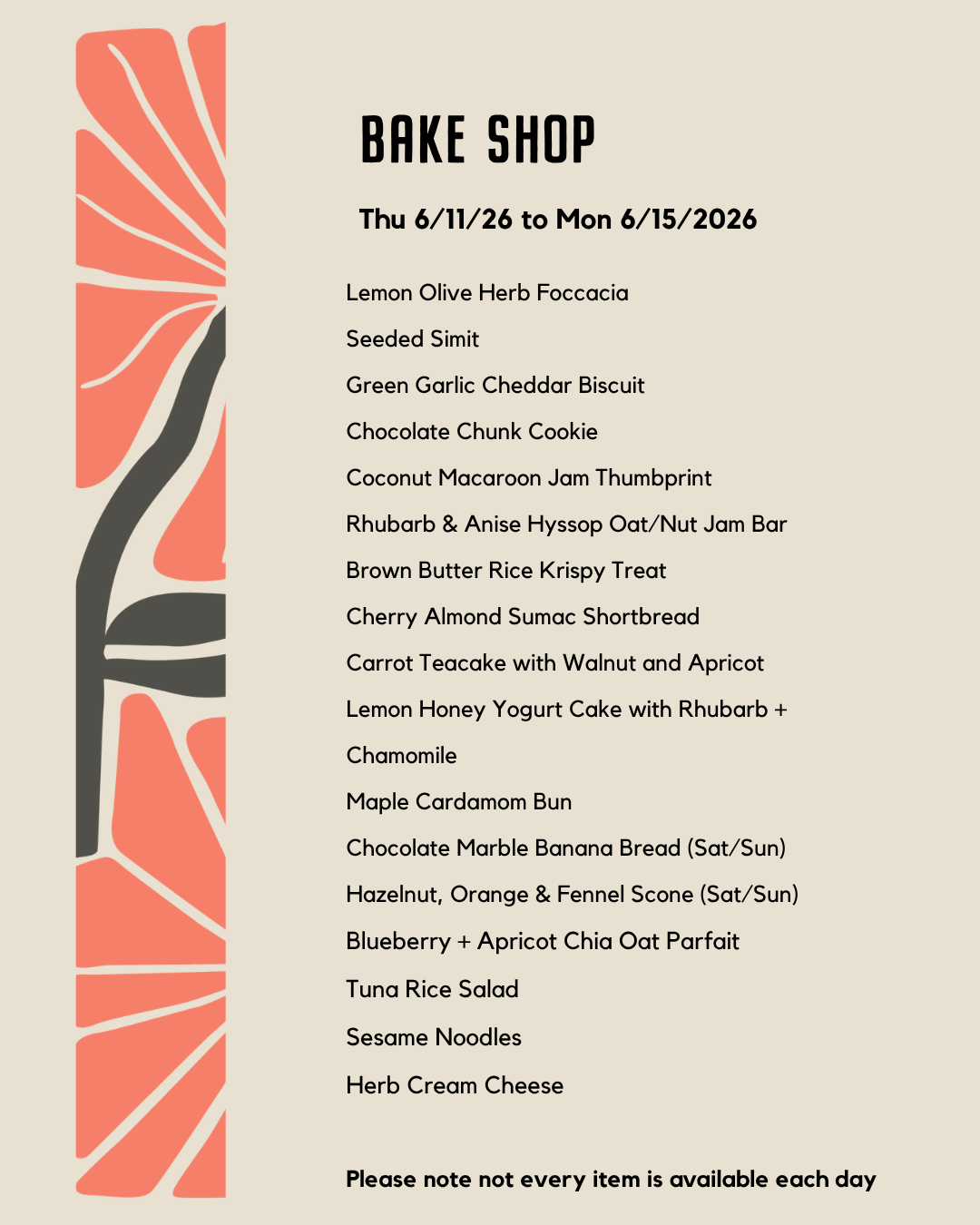
Bake Shop Menu 6/11/26 - 6/15/26
In the Garden, Early June Edition
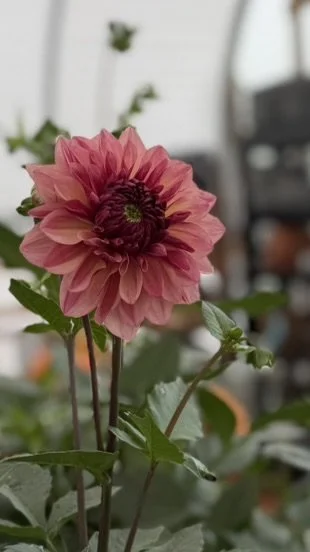
The weather has turned just enough towards warmth and my schedule has turned just enough towards leisure that I can now find time to do my own gardening projects. Early June is when I get to planting all the containers around our house and the heat loving crops in the raised beds and greenhouses at Red Wagon. I have had lots of help this year, from Sara, Rachel and Uli which has been most welcome and fun.
Here is what is new in the greenhouses that I am finding fun and exciting.
Huge Dahlias in big pots
New Guinea Impatiens for shady spots
Perennials for naturalized, native meadow plantings grown from seed that Chad has collected from his own meadow plantings.
Fun herbs like a frilly Parsley called ‘Minuette’, Culantro which tastes like a stronger cousin of cilantro but it does not bolt and it is a cool looking plant; Curry Leaf which is very ornamental with a tight, silver, thread-like appearance; dwarf sage which would be adorable in a tiny clay pot on a patio table.
Our current generation of zinnias includes my favorites, Oklahoma Salmon and Aztec Sunset
New generations of broccoli, lettuce, chard, melons, cucumbers, summer squashes and winter squashes.
This week’s hot tip - if you are looking for some budget perennials to fill in some spots or make a new bed, look at the herb selection in the plant shop. Anise hyssop, regular hyssop, oregano, thyme, sage, lavender, chamomile, garlic chives, lemon bergamot are all great additions to a perennial garden. They don’t need to stay in the herb garden. There are also some really fun annual herbs that self-seed and add a great splash texture, fragrance and color to all kinds of gardens. These include bronze leaf fennel, chervil, cilantro, dill, chamomile, and summer savory. Let them flower for some airy and delicate edible blossoms and let them make seed so that they will come back next year.
Happy gardening!
Julie
Bake Shop Menu this Week

It has been the best possible 16 years with Lily!
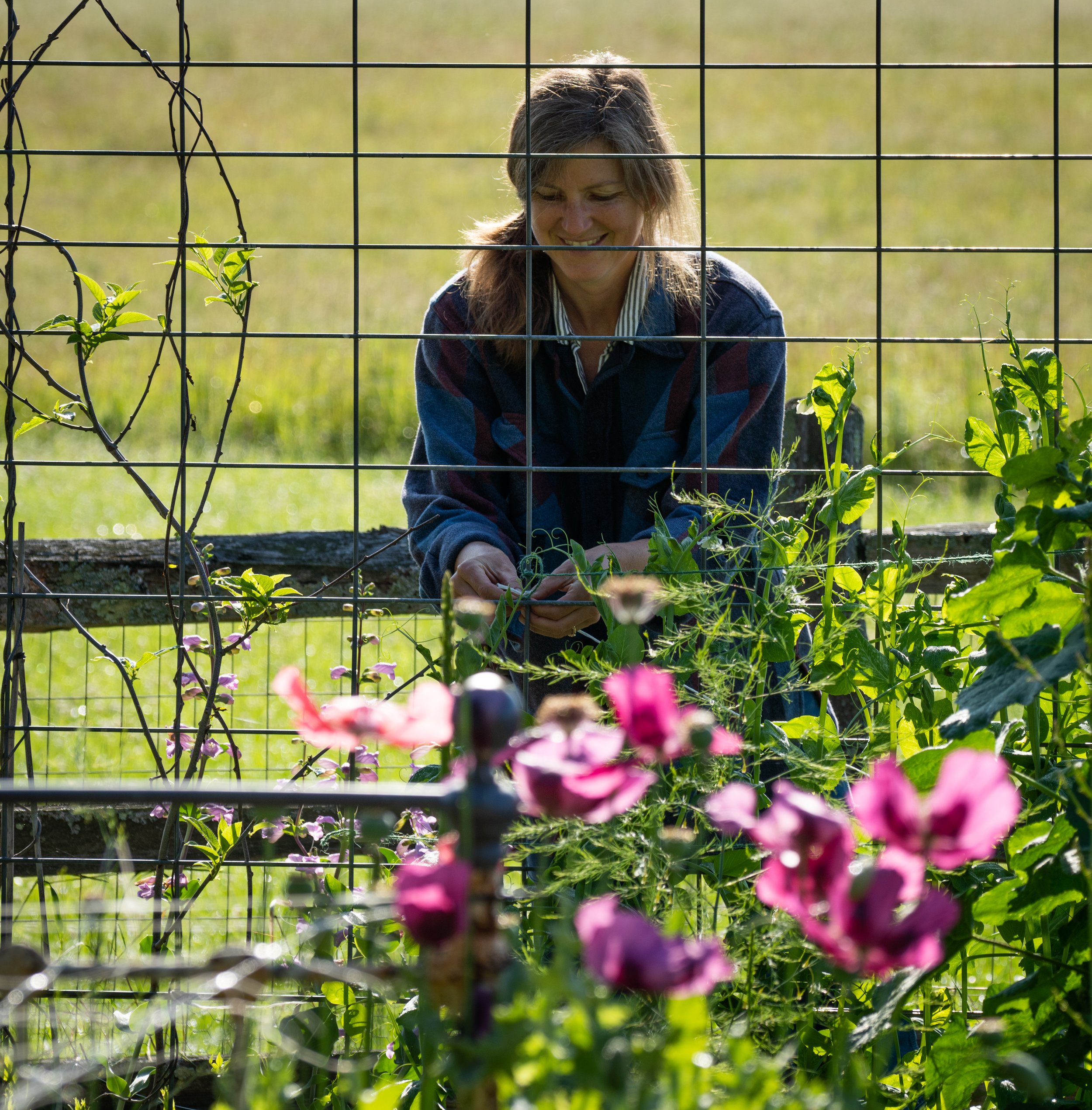
I have been procrastinating writing about this for 8 months, since last October, when Lily Belisle told me that she would be leaving at the end of the 2026 busy season, and that her 16 year career at Red Wagon would be coming to an end. Lily has been managing our retail operation for most of our 20 years, and deserves so much of the credit for what makes Red Wagon so special. She has been the steady hand that keeps us consistent, organized, beautiful and welcoming. She has trained countless people to excel at customer service; she has worked through heat, hail, cold, and sheer exhaustion season after season. Lily’s passion for gardening and plants comes through every day while patiently answering countless customer questions, taking great care of the plants in our displays and keeping the inventory moving at a break neck speed.
Alongside all of that hard work, Lily has been my ballast. The person that keeps everyone steady when the ideas spin out of control or the vision extends past reality a little too much. My tendency is to always push for more, and Lily has helped me remember over and over that days off are important, time in our own gardens is valuable (literally and metaphorically) and that there is deep beauty in living a balanced life. She has taught me to take time to look for those moments in the garden that are fleeting vignettes when the bloom, the light, and the neighboring plants all work together to achieve a fleeting sense of balance and harmony.
She forgives errors by calling them “whoopsies” and moving on.
Lily will be leaving at the end of June, but hopefully we can have her come back for the occasional watering shift, or potting up strawberries in March when the wind is howling and time in the greenhouse with friends feels extra special. We will miss you so much, Lily! Thank you for a glorious and special run. It has been a true pleasure and an honor to build this business with you.
With heavy hearts but many good wishes for the future, we love you, Lily!
- Julie
Bake Shop Menu this Week

Blueberries for June
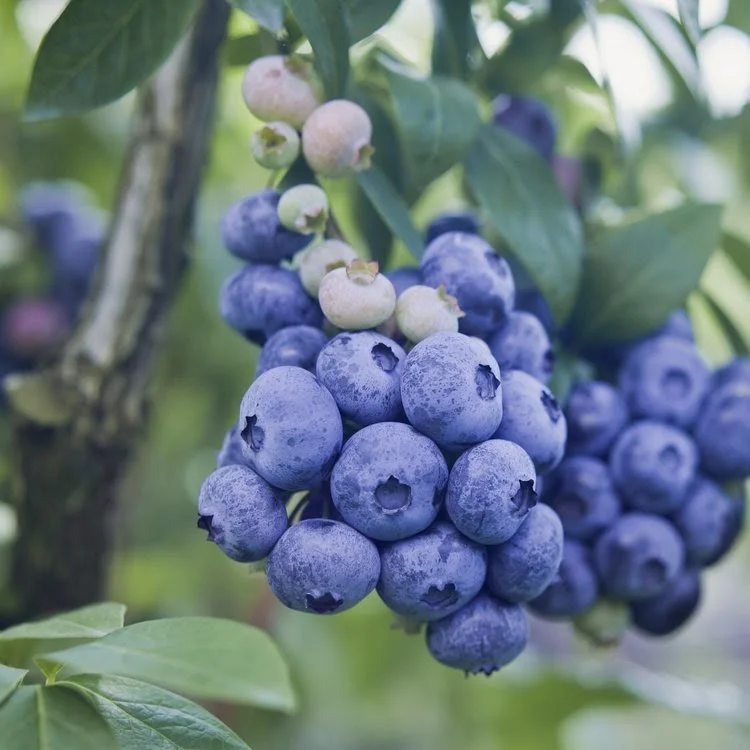
Growing blueberries in your own back yard can be very rewarding, and a collection of blueberry bushes makes for a great Father’s Day gift that will keep on giving for years to come.
Here are a few things to pay attention to when planning your new blueberry patch:
Cross-pollination: Like many other backyard fruits, you will need to plant at least two varieties to get good cross-pollination and fruit set. Following is a list of varieties that we carry or have carried in the past. Personally, my favorites are ‘Northland’ for their exceptional flavor reminiscent of wild blueberries and ‘Bluecrop’ for their large clusters that make for easy picking.
Your soil pH: Select a sunny site in your garden and then get your soil tested! Blueberries will only thrive in acidic soil and most garden soils will need to be amended with a soil acidifier. This is the same product you would use for hydrangeas.
Spacing: Give your blueberry bushes enough elbow room. Depending on the varieties chosen, this will be 4-6 feet of space between the plants. Check the tag on the plants you purchase to know their mature size and recommended spacing.
Take your time: Blueberry bushes can be planted any time of year but will require good watering (mulching helps!) and weeding especially in the first few seasons. As tempting as it is to let your berry bushes fruit as soon as possible, it is recommended to remove all flowers in the first year. This way your plants can put all their energy into growing a healthy root system. That will in turn give them more energy to bear more fruit the next season. Patience pays off.
For more growing and maintenance tips, please refer to this handy growing guide or come by in our greenhouses and ask one of our plant experts!
Bake Shop this week
Epistle from April: Ulupica, Grandmother of Peppers
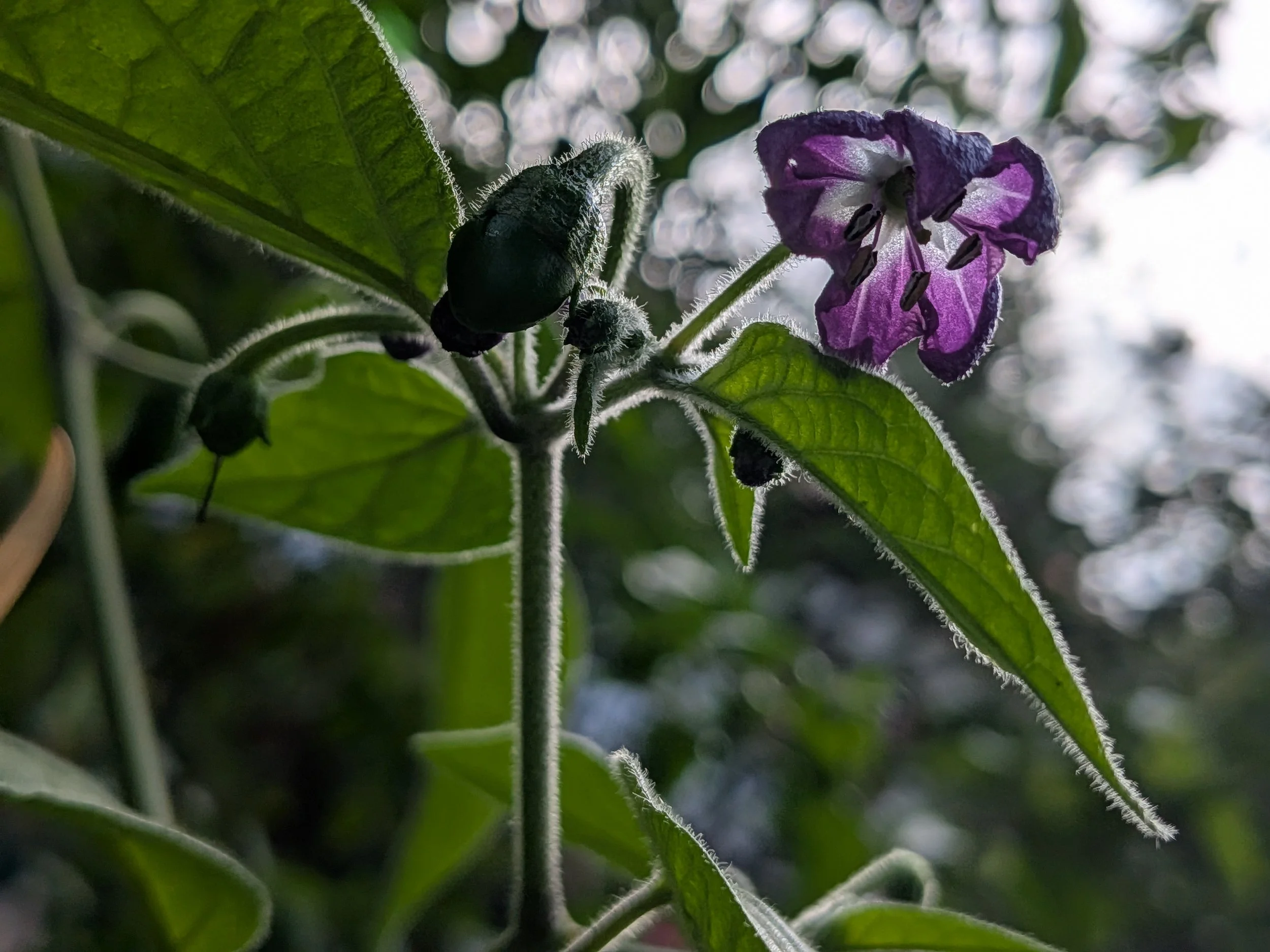
The ulupica in my yard, in bloom and fruiting
When I arrived in Cochabamba last August (early spring in Bolivia), my gardenmate Tatiana excitedly introduced me to a dry, leggy, woody weed, towering six feet tall in the middle of our garden bed. She assured me that, come the rainy season, we would be rich in tiny, spicy ulupica peppers. And so we were: as the months went by, small green pepper leaves were followed by beautiful dark purple flowers, which swelled into glossy, round berries with a serious sting for the palate. Tatiana taught me to smash one on the bottom of my bowl with the back of my spoon, and serve soup over it for an intensely spicy meal.
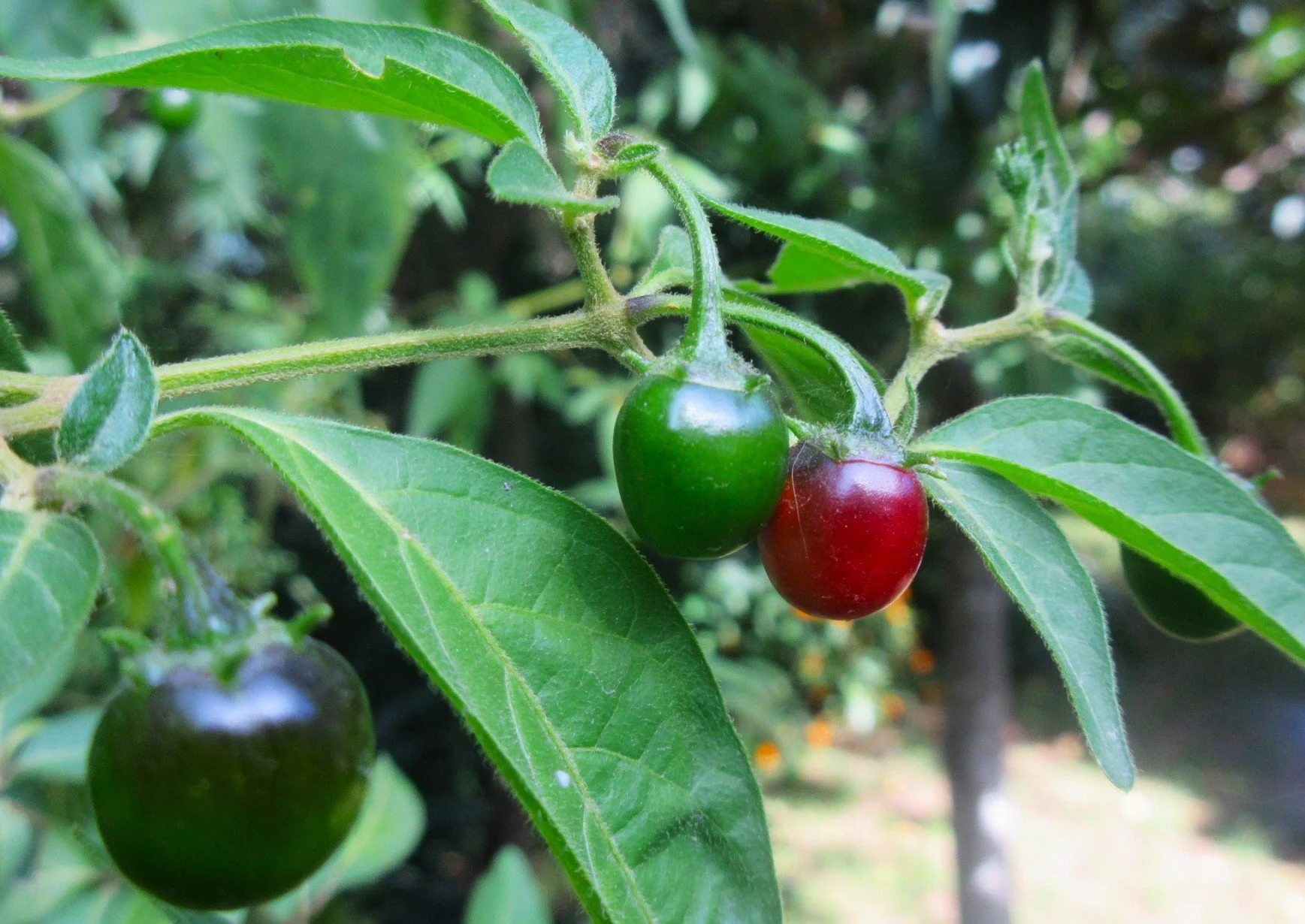
Our ulupicas turning red (aka even hotter!)
Months later, I saw a woman selling bunches of herbs and vegetables from a cloth on the sidewalk. There was also a small pile of pale green, peppercorn-sized berries, which she also called ulupicas, her side of the conversation translated from Quechua by her neighboring vendor. They both laughed wickedly when, after purchase, I comically pretended to toss my handful into my mouth. Those tiny ulupicas also proved to be very potent. It seems to me that, if served as pictured, this recipe for llama steak with ulupica sauce would be overpoweringly hot. Maybe they are mainly for show. Most estimates give ulupicas a 30,000 on the Scoville scale.
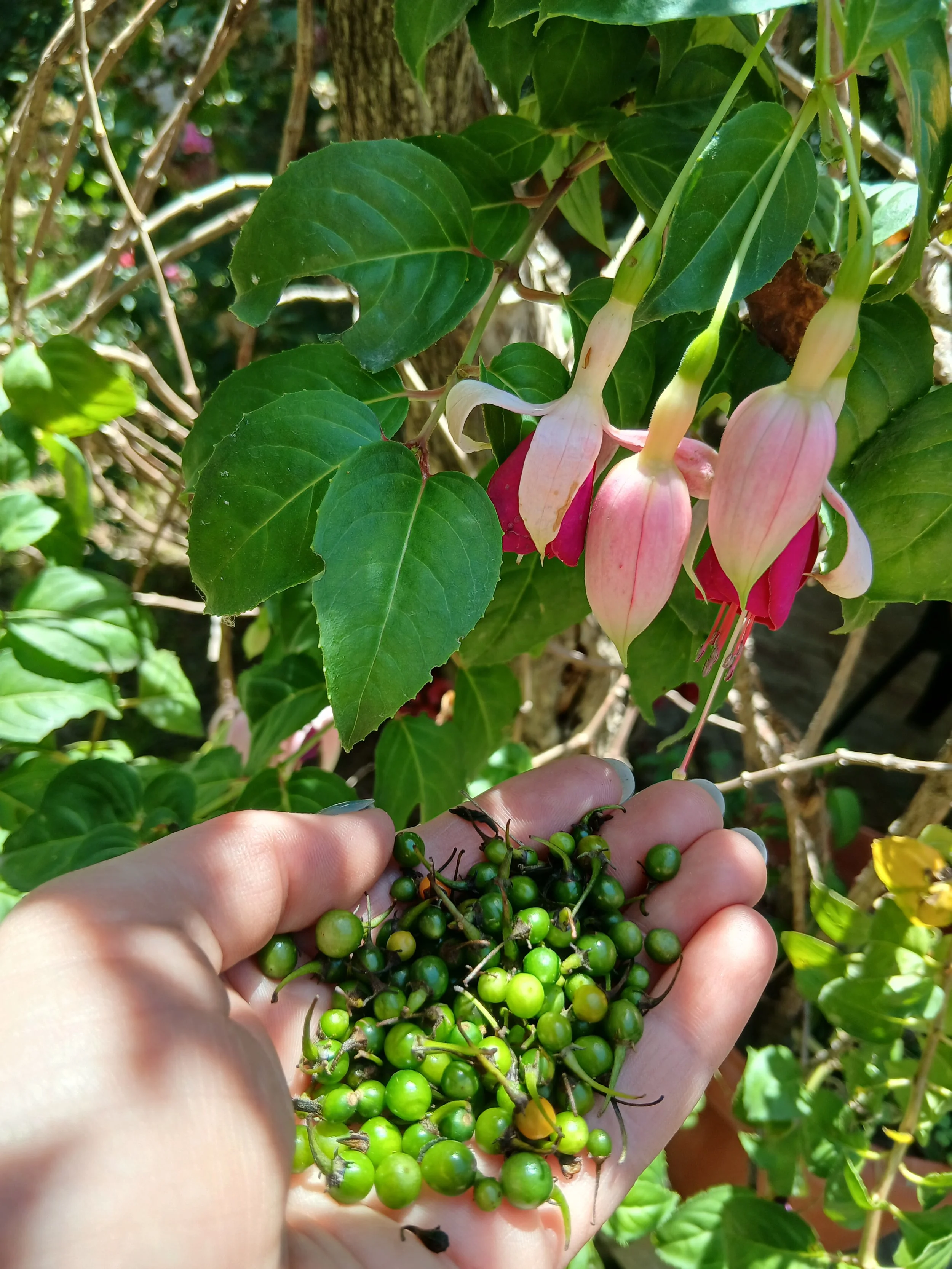
I am used to seeing hot peppers in Bolivia, called locotos, ajís, cumbarí, kituchos or uchus in the indigenous languages of Quechua and Aymara. Decades ago, I remember a housemate who used to alternate bites of her meal with bites from a fresh yellow, green or red locoto pepper, in absence of the ubiquitous Bolivian salsa called llajua. Llajua/llajwa/llasjua/yasgua/llasgua (indigenous languages haven’t all come to standardized spellings in Spanish) is made with locotos (though I have since learned, also with ulupicas or the distinctively shaped yellow ajís), an optional tomato (or tree tomato), and beloved herbs quirquiña (sold at Red Wagon as pápalo) and wacataya. Llajua is a required condiment at Bolivian meals, and is usually made in a blender these days, but traditionally made on a flat stone mortar, called a batan, mashed with a round stone pestle. In main dishes, dried red and distinctively shaped yellow ajís (chiles) make rich sauces for poultry, meat, potatoes and pasta. Fideos uchu, a popular Thursday lunch dish in Cochabamba, for which residents are willing to travel, serves several kinds of meat over noodles in a spicy broth.
But I had never seen, or even heard of, the ulupica before I met the one in my yard. I became even more enamored when light research revealed that botanists consider these wild-growing peppers, indigenous to the very valley I’m living in, to hold the genetic key to all the hot peppers of the world. In fact, Bolivia is still home to the greatest diversity of wild-growing hot peppers. Most varieties of wild peppers are not consumed by humans, but the ulupicas are, and have been for some time: archeologists have found hot peppers in Andean cooking vessels used over 6,000 years ago. Today, Bolivians continue to use Capsicum species in traditional medicine for colds, pain, digestion and inflammation.
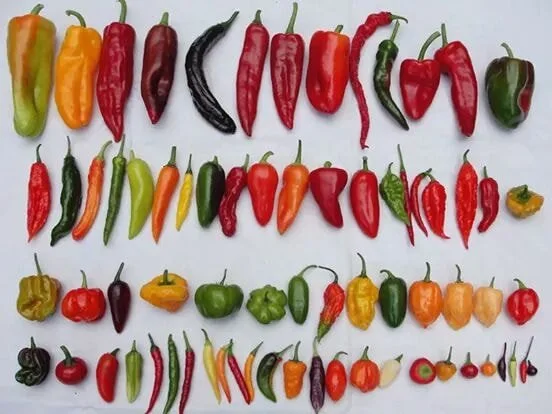
Some of the hot peppers grown in Bolivia
Ulupicas grow most happily in Andean valleys of 6,500 - 8,000 ft in altitude. Like many wild species, they have a natural resistance to sicknesses afflicting domesticated crops, and in this case, to the Tobacco Mosaic Virus (an infectious plant virus that primarily attacks Solanaceae crops like tomatoes, peppers, and tobacco). Plant breeders seeking to genetically fortify more contemporary Solanaceae species find this genetic trait of ulupicas very compelling.
For the taxonomically inclined, I found that ulupicas were very likely documented by non-Andean botanists beginning with the 1911 collection of German botanist Otto Buchtien (whose impressive herbarium of 45,600 Bolivian and Chilean species is now in the US Museum of Natural History), and then catalogued in 1953 by American Charles Bixler Heiser. Later botanists looking to identify the oldest species of hot peppers in the world, including American botanist W. Hardy Eshbaugh in the 1970’s, and more recently Bolivian botanists Rita del Solar y Lupe Andrade, have concluded that the southern valleys of Chuquisaca and Cochabamba, Bolivia are the origins of the genus Capsicum. Furthermore, many botanists agree that ulupica peppers belong to the exact ancestral group of wild Capsicum from which all domesticated hot and sweet peppers evolved and are the closest living relatives to an original progenitor pepper. In 2022, a national law declared 30 species of native hot peppers to be ‘immaterial cultural patrimony of Bolivia.’
As is often the case, I found that the common name ‘ulupica’ actually comprehends a range of Capsicum species, including but not limited to the two I’ve seen: the much taller plant, C. cardenasii, which which grew the plump 7-9 cm berries in my garden, and the smaller C. eximium, which produces the miniscule peppercorn-sized fruits I bought at the market… I think. A lovely publication of the Bolivian National Museum of Ethnography and Folklore, ‘El Uchu en padilla,’ lists the common names of nine different varieties of ulupica, all currently classified under the same scientific name: Capsicum eximium Hunz.
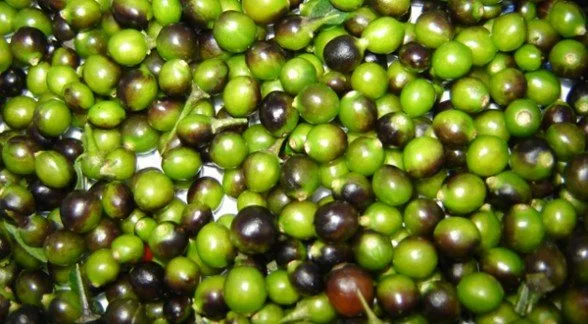
Bolivia’s ulupicas, grandmothers of peppers, are a quiet presence on the culinary scene, given that they grow mainly in the wild. Products made with foraged peppers are few and far between because the harvest is so seasonal. In a market in Cochabamba, where they are plentiful, a vendor might sell 4 pounds of ulupica per month. Some Bolivians might not come to know the ulupica in its vegetable state, but rather only as an idiomatic term for a person of small stature but irascible character.
It’s now mid- May. As Vermonters are now considering whether to plant their peppers or wait for warmer soil, the ulupica in my garden in the southern hemisphere is dropping its leaves and going dormant for the cool winter weather. I myself am starting to prepare to travel back to Vermont in early June, for my third summer in one year. I can imagine the tables of peppers at Red Wagon, having made their ways to us from across the globe, now labeled with their colorful tags, coveted by their dedicated pepper-growing fans. When I consider all of those wonderfully different pepper descendants, their range of sizes, rainbow of colors and diversity of cultural and culinary traditions, I’m so very honored to have had the chance to meet my ulupica in her ancestral home.
***
Do you have pepper stories? Do you have more information about ulupicas, Capsicum and botanical pepper origins? I would love to hear from you at april (at) redwagonplants.com.
Bake Shop Menu this Week
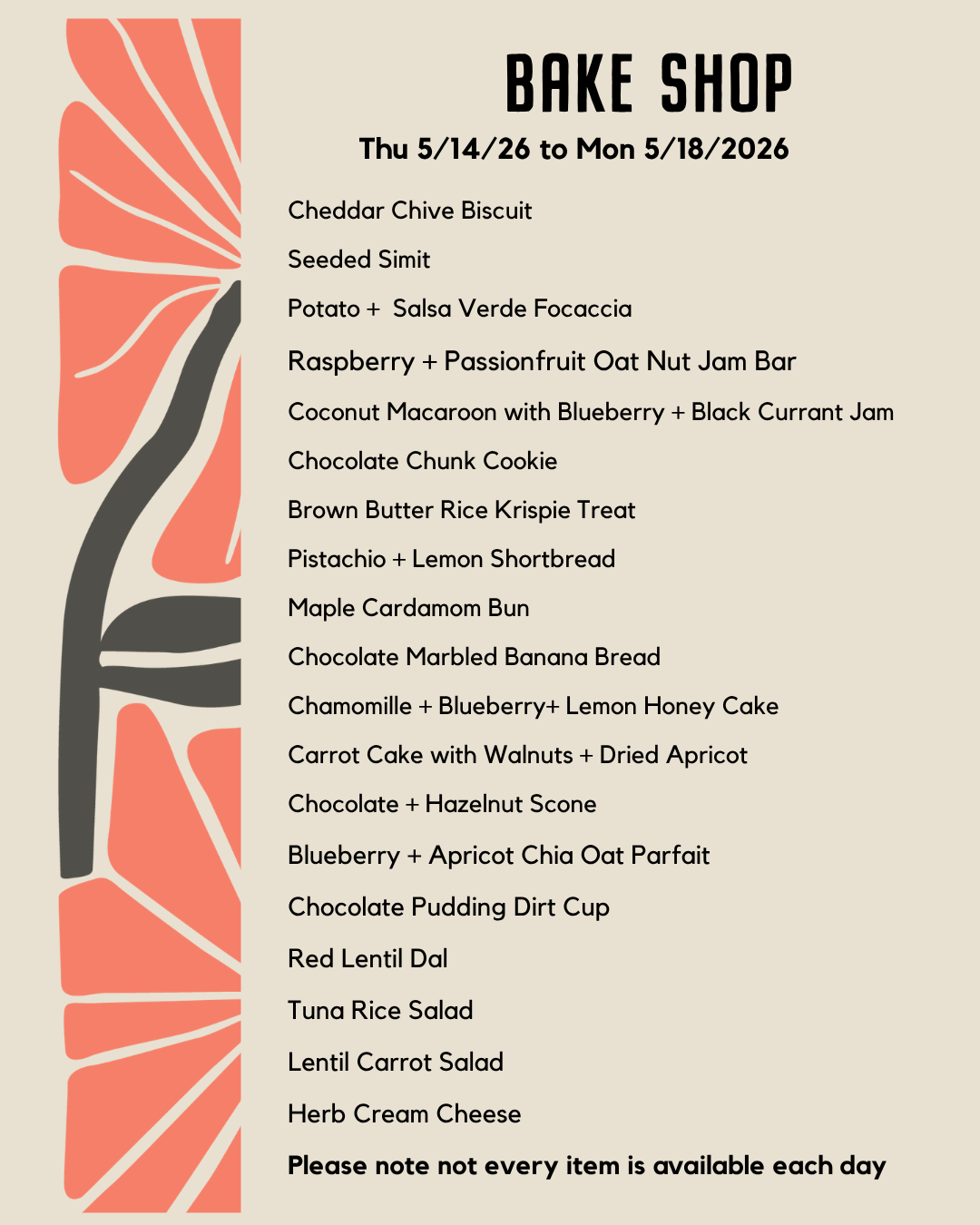
Our Bake Shop is open 8 AM to 3 PM Thursdays through Mondays.
Head Baker - Amanda Wildermuth
In the Garden this week
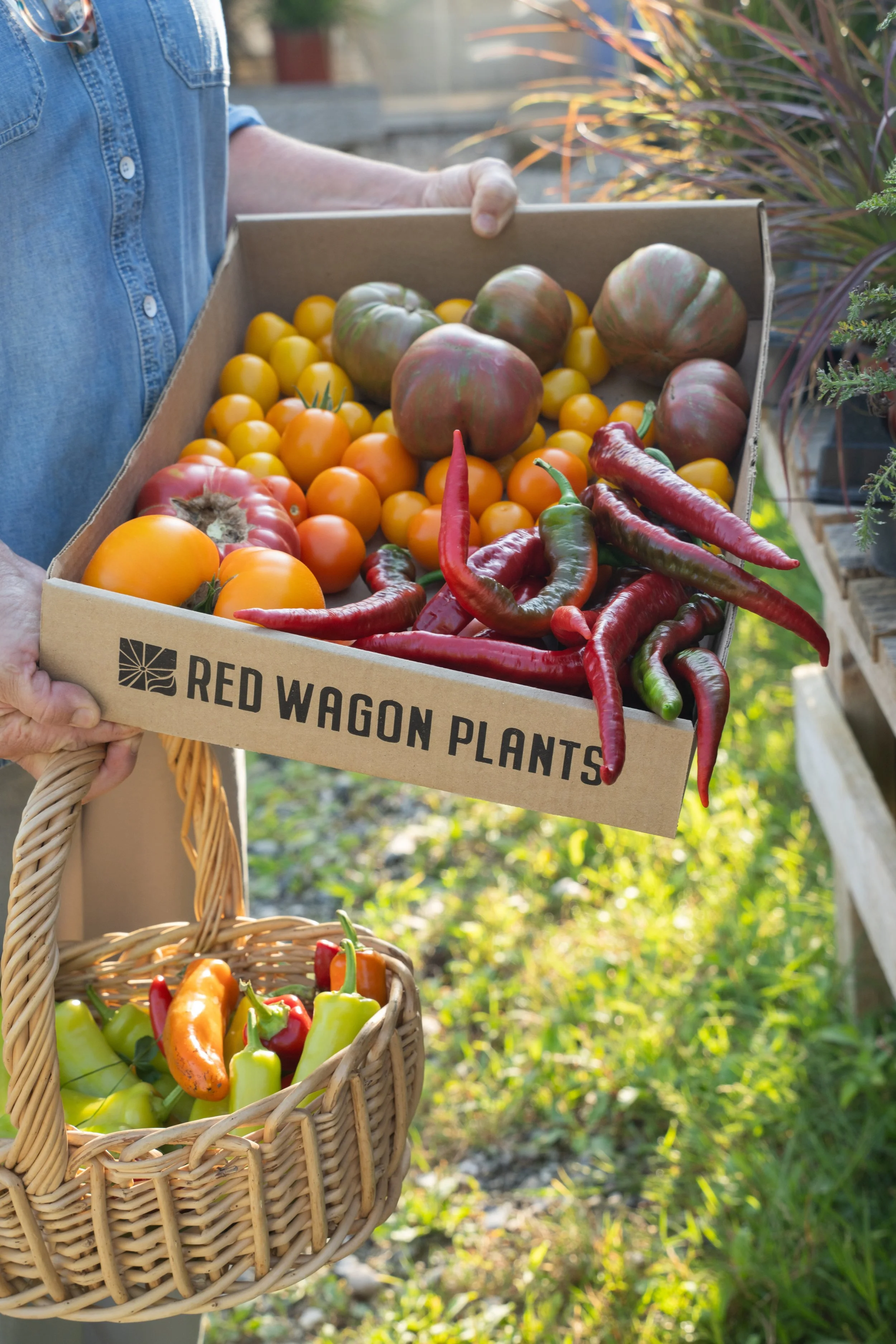
In the basket - Hungarian Hot Wax peppers. In the box - Jimmy Nardello peppers, Esterina cherry tomato (the little yellow ones), Clementine tomato (small orange ones), not sure what the big yellow tomato is, Prudens’ Purple tomato and Berkeley Pink Tie Dyed tomato (the ones on top that are pink with greenish stripes). Now you know some of our favorite varieties!
They’re here! Tomato, pepper and eggplant seedlings are now for sale in the Plant Shop. It has been a very cool spring, so we have waited until now to protect the tender fruiting plants. It is still too early to plant them into the ground, but now is a good time to take home your favorites and harden them off and get to know them a bit. The soil needs to be 50 F which takes about a week of night time temperatures being in the 50’s. Test your soil temperature at about 4” deep (a digital meat thermometer works). Maybe the end of next week will be a good time to plant. In the meantime, prep your beds by adding compost, and making sure the soil is loose and weed-free.
Please note: We don’t have every single variety available at the same time, but we will rotate through all of them as the different generations mature. If there’s a plant that is dear to your heart and you don’t see it on your first visit, we are happy to take your name and number and give you a call when it’s ready.
Just getting started, or want to try something new?
Tomatoes, fragrant and fresh-off-the-vine, are one of the best parts of summer. Don’t be afraid to baby these heat-loving crops - they will pay you back with greater growth and yields in later on.
We suggest trying out a few varieties of different kinds (determinate, indeterminate and cherry) in order to have a harvest that spans the season. Plant your tomatoes at least 3 feet apart to allow for adequate air flow. Here is a post on our blog where you can learn about different categories of tomatoes, and see our recommended tomato planting strategy. When they do grow (often taller than expected!), here are our favorite methods of tomato pruning and trellising that could do wonders for the health and productivity of your plants.
Peppers and eggplant also enjoy being transplanted once the soil warms up. One planting is usually plenty, but again, an assortment of varieties will keep the harvest varied, staggered and interesting. We carry many different sweet and hot peppers, and Asian, Italian, heirloom, full-sized and mini eggplants. This could be the year you discover a new favorite. For newer gardeners, we recommend Lunchbox pepper and Hansel eggplant. They both produce small fruit and are easy to grow and very abundant.
Bake Shop Menu this Week

Garden Tips for this Week of May 4th.
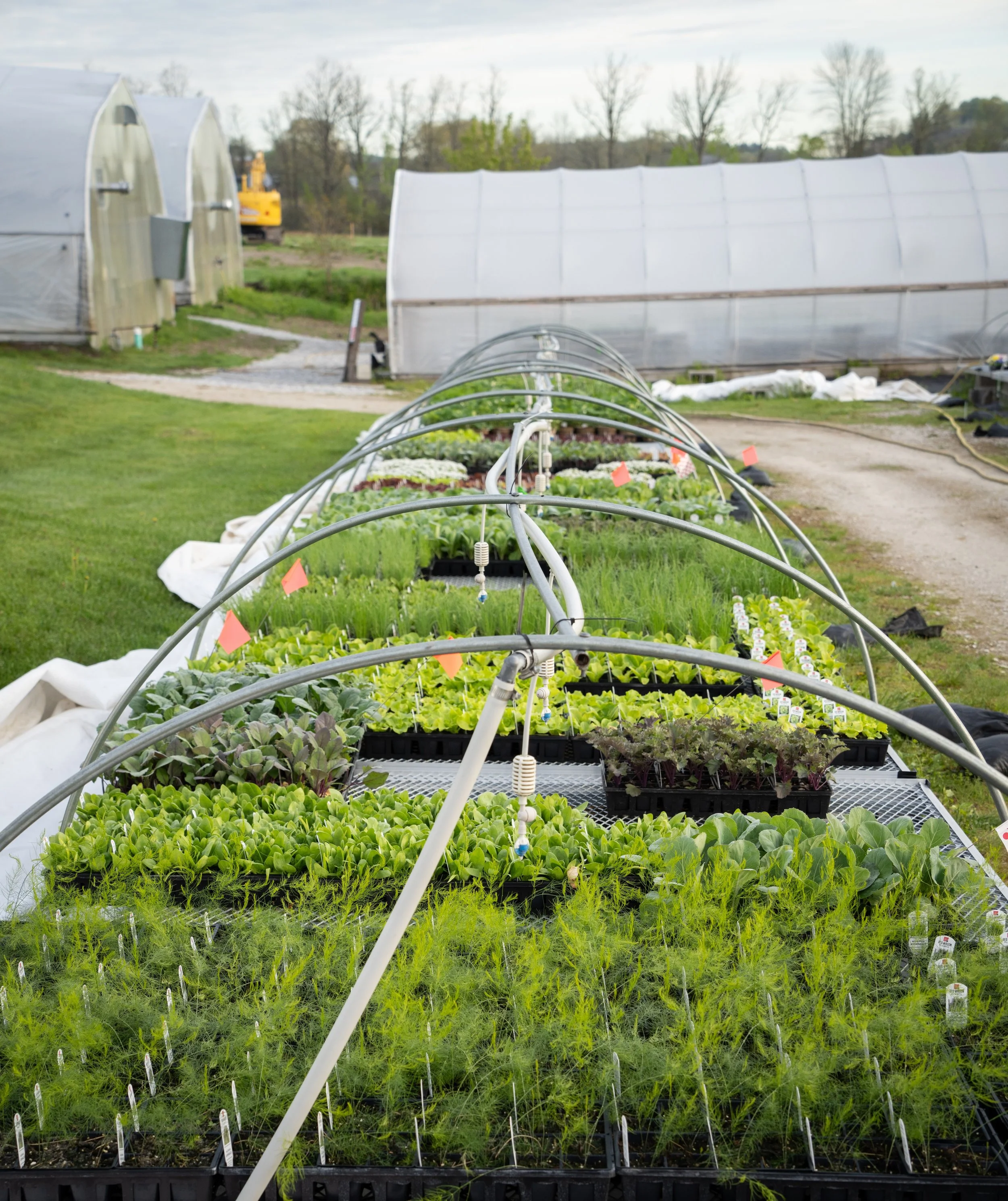
Plant potatoes - the old adage is to plant potatoes when the dandelion are blooming. In our gardens the soil is dry enough to do so, and now is a good time to do it. Our seed potatoes come from Chappelle’s farm and whatever they don’t grow themselves, they source from trusted sources in Maine.
Tiptoe around the garden beds so as not to disturb perennials. It is hard to weed and clean up the garden without doing some damage to young shoots of perennials coming out of dormancy. Using a yoga mat to kneel on, wooden boards to move around and walk on, or a small piece of plywood to stand on are all good strategies to disperse weight, protect plants and not compact the soil too much.
This is our annual reminder to spy spots for future spring bulbs, and mark them out on a photo so you remember where to plant them come fall. You can also use plant stakes, survey tape on bamboo sticks and other ways to indicate “this is the spot” come fall bulb planting time. The spring garden and the fall garden are stupefyingly different from one another and it is impossible to remember where you wished there was a clump of early blooming daffodils when the time comes to plant in October or November. We really like Brent and Becky’s bulbs for ordering online.
The ruby-throated hummingbirds are back! Now is a great time to put out hummingbird feeders until more nectar sources are available from the plant world. While feeding them sugar water might seem like an unnatural process, we have paved over so much of their habitat with storage unit and dollar stores that one could say the natural order of things is fairly mixed up with human intervention already. Thank you to all of our kind readers who have shown us photos of the hummingbirds at their feeders already.
Plant your onions if you have not already done so!
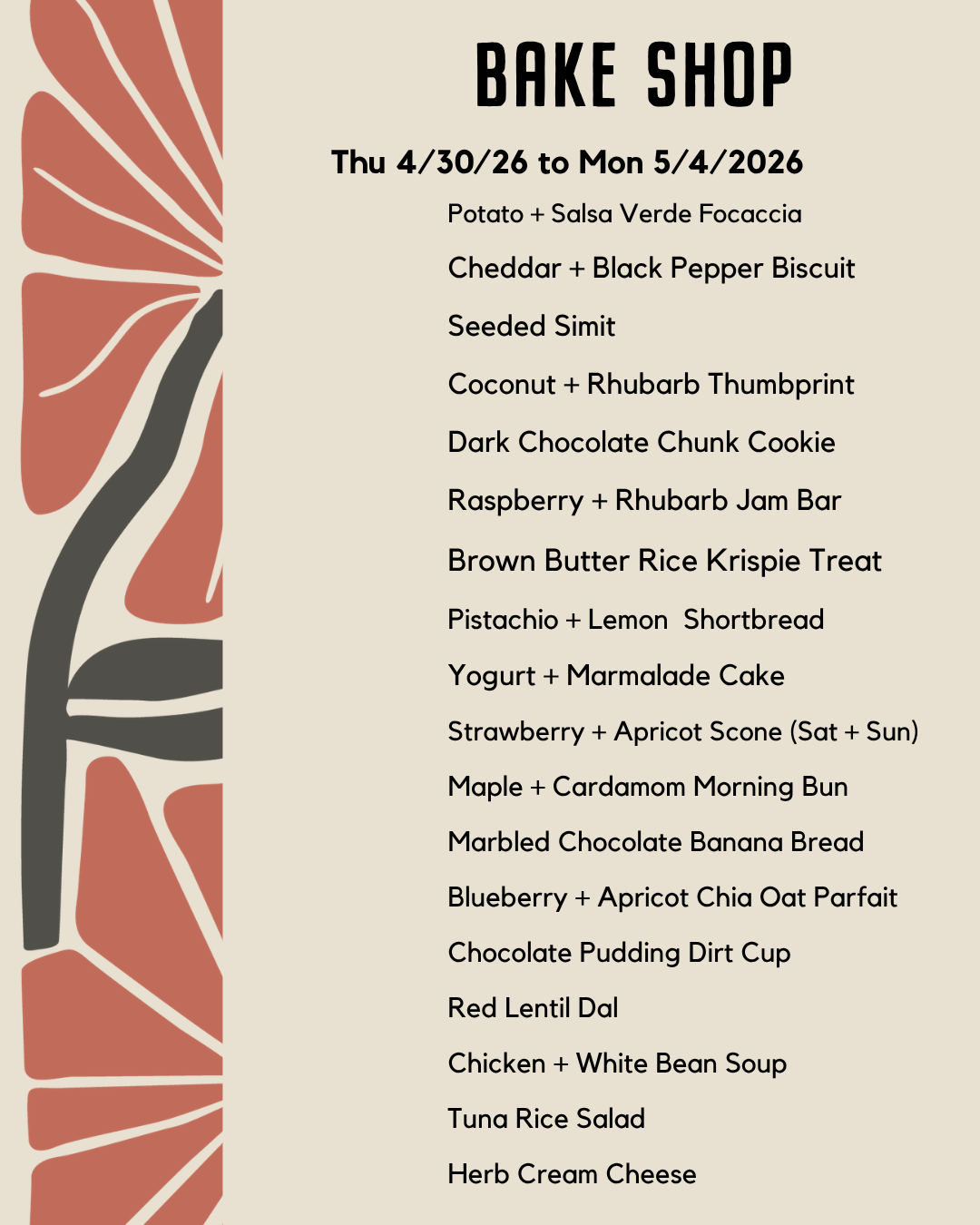
Bake Shop Menu
Tasks for the Week
Here is our hot take on what to do in the garden this week.
First, enjoy the beautiful weather. More rain and cold is predicted for later in the week, so hopefully you can find a minute or two to just bask in the sun while watching your garden come to life. The bees are starting to buzz, the early bulbs are putting on a show, and many perennials are popping through the earth and heading towards the light. Photosynthesis is a wonder.
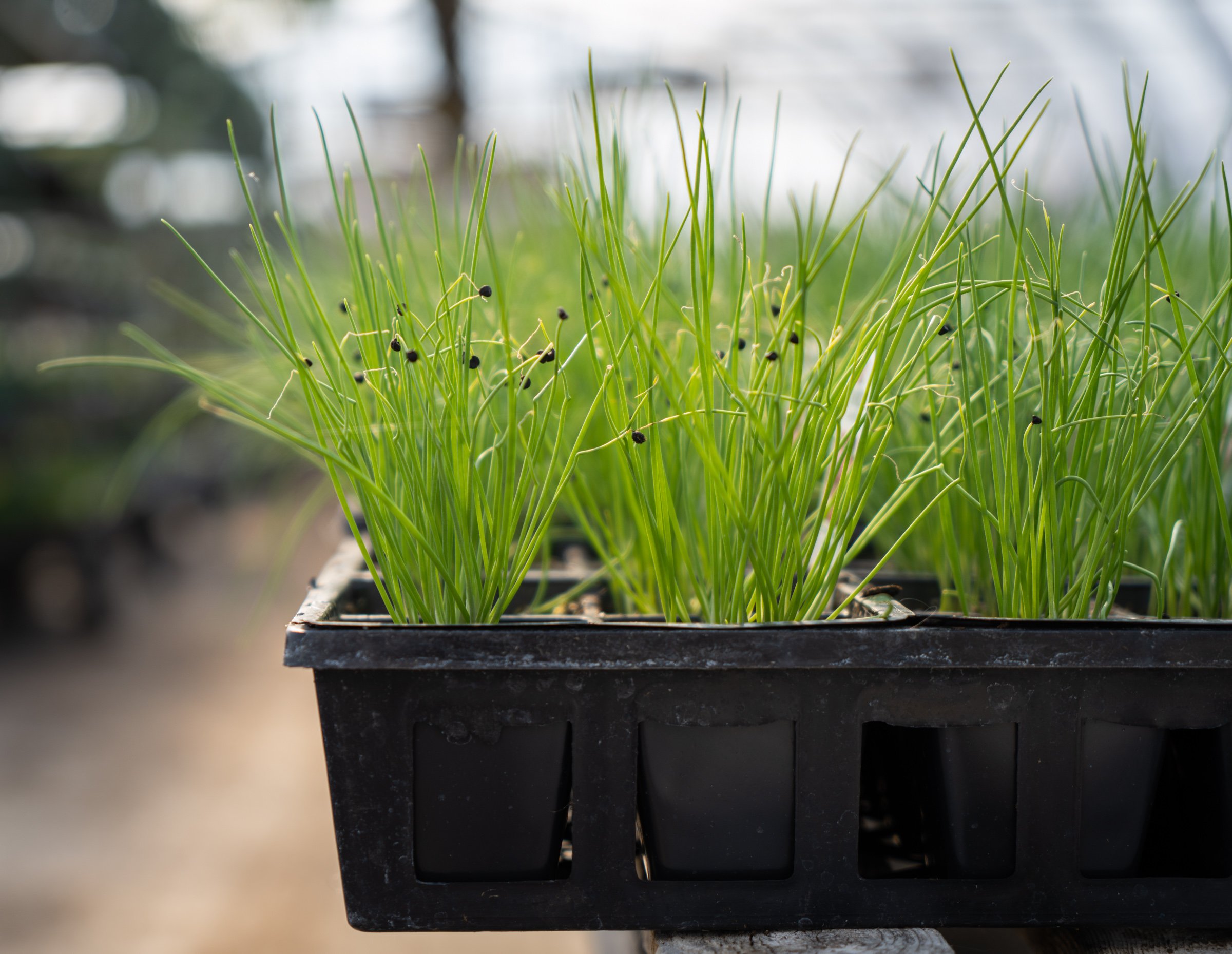
If you have not done so yet, it is time to plant onions. Our packs of onions have about 100 plants in them. Pull them apart, gently and when fully watered. Plant them individually, 4 inches apart, 2 to 3 inches deep. It is ok to cut off the tops of the plants so that they are not too floppy.
Also, it is time to plant some salad greens, cooking greens, broccoli, fennel, and more. All of the 4-pack vegetables we are offering are cold tolerant and ready to plant. We encourage multiple generations, so just a few each week, and not all at once. Spread the planting out and you will have a well timed harvest.
From seed, it is time to sow radishes, carrots, beets, lettuce for cutting at the baby stage (if you prefer full heads, we recommend transplanting seedlings), spinach, arugula, mustard greens. Peas too if you have not already done so.
Herbs that can be planted now: mint, parsley, cilantro, dill, chives. Herbs to do from seed now: dill, cilantro.
Flowers that can be planted now: pansies, violas, nemesia, snapdragons, argyranthemum, osteospermum, alyssum, and lobularia.
Flowers that can be started from seed now calendula, snapdragons.
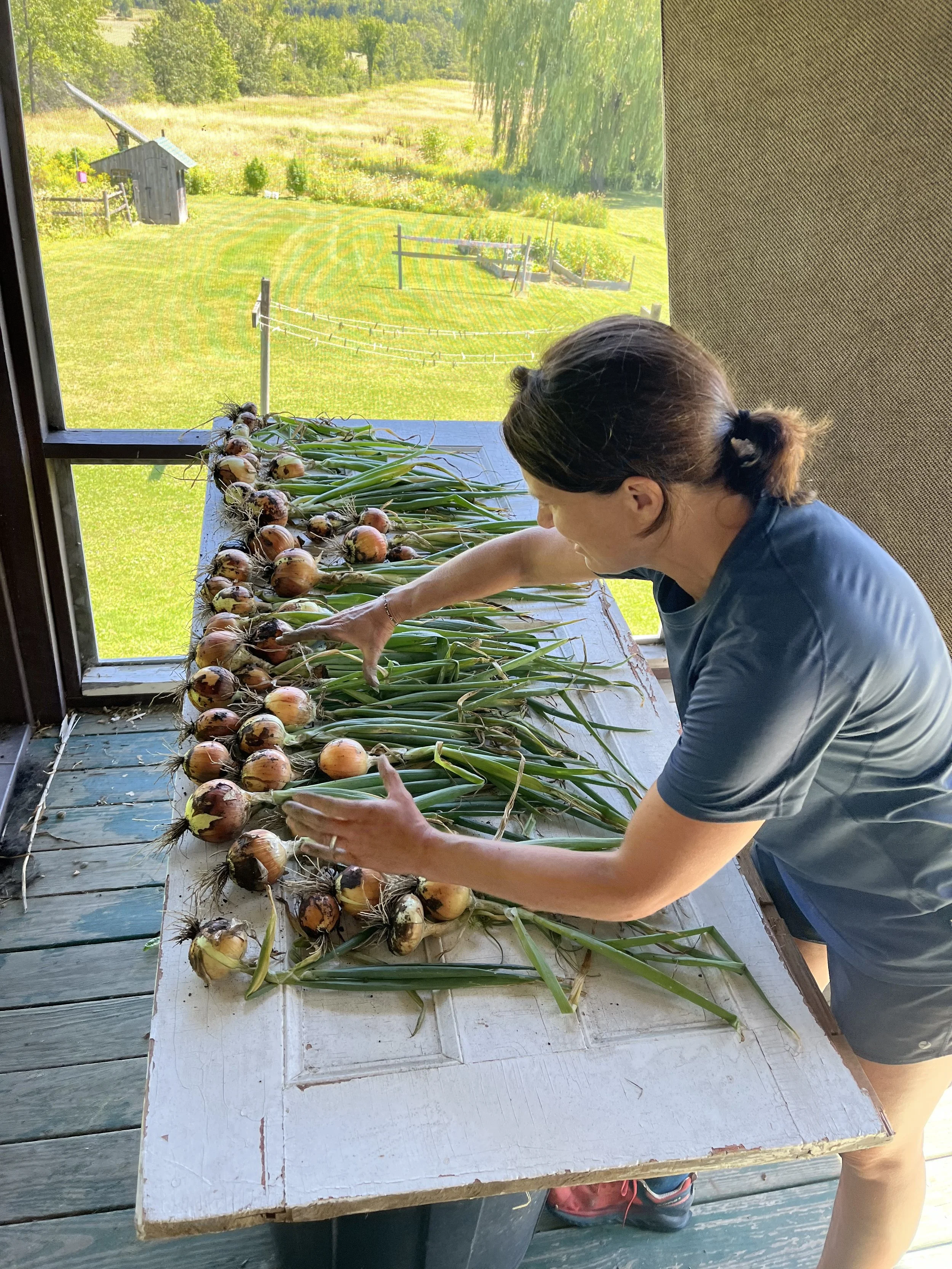
Nicole sent us this picture of her onion harvest a few years ago.